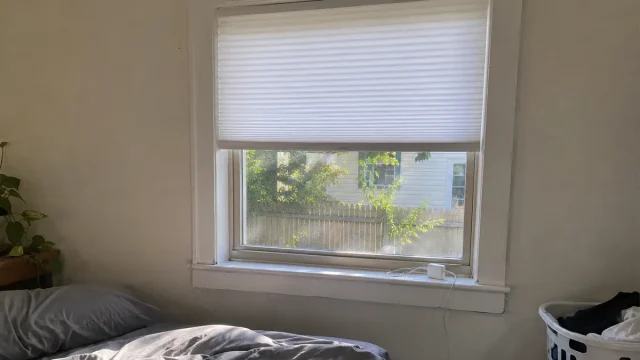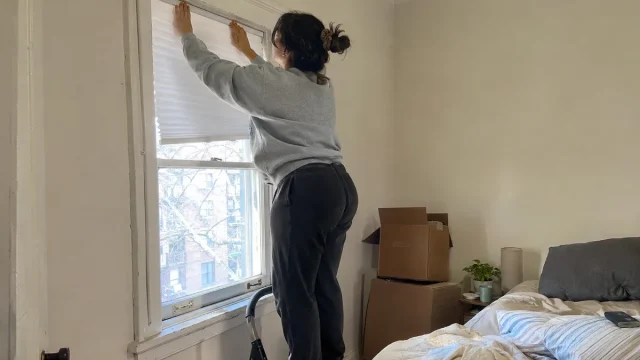

Moving into a rental usually comes with one awkward surprise. The bedroom window is bare, the neighbors can see straight in, and the lease says you can’t drill. Good news: no drill blinds for windows are a solid option these days. You can get cordless cellular shades that lock into the frame with a tension lever, faux wood blinds that hang on adhesive brackets, and clip-in blinds that grip the window beading.
Most pages ranking for this search are store pages selling a single system. This guide compares all of them, across brands, and covers what stores tend to skip: which windows each mount fails on, what can still damage paint, and how to take everything down on move-out day without losing part of your deposit.
Quick answer: The best no drill blinds for windows are cordless tension-mount shades if your window has a deep, solid frame, and adhesive-bracket shades if the frame is shallow or vinyl. Stick-on pleated shades cost under $15 and work for short leases. For uPVC windows with rubber beading, clip-in blinds hold best. Measure your frame depth before you buy anything.
Key takeaways
-
Tension mounts need about 1½ to 2½ inches of frame depth and a straight, solid frame. Most brands advise against using them on PVC or vinyl frames.
-
Adhesive brackets work on most smooth surfaces, but at least one major brand describes its adhesive as permanent. Read the product page before you stick anything.
-
Don’t put adhesive on paint that’s less than 30 days old.
-
Many tension systems top out at around 72 inches wide.
-
Photograph every window before you install and again after you remove.
-
Get your landlord’s OK in writing, even for no-drill products.
Table of Contents
Can You Put Up Blinds in a Rental Without Drilling?
Yes, in most cases. Leases usually ban holes and “alterations,” and a tension shade that presses against the frame leaves nothing behind. Adhesive is more of a gray area, because it can lift paint, and some landlords count that as damage. Here’s how the common options usually sort out.
| Usually fine | Ask your landlord first | Avoid in a rental |
|---|---|---|
| Tension shades inside the window frame | Adhesive brackets on painted trim | Screws, wall anchors or nails |
| Clip-in blinds on uPVC windows | Tap-in curtain brackets (they leave tiny pin marks in the trim) | Adhesive on fresh or chalky paint |
| Curtain brackets that hook onto existing blinds | Taking down the landlord’s blinds | Double-sided carpet tape or glue |
| Static-cling privacy film on glass | Stick-on shades on a humid bathroom window | Anything that blocks a window lock or fire exit |
One detail people miss: “no drill” doesn’t always mean “no mark.” Kwik-Hang curtain brackets, for example, use small built-in pins that tap into the top of the trim like a thumbtack. That’s tiny, but it’s still a mark, so mention it if your lease is strict.
No Drilling Blinds for Windows: 5 Mount Types Compared
Every no drilling blind for windows uses one of five holding methods. Check which one fits your frame before you think about colors or fabric, because picking the wrong mount is the main reason renters say these products “don’t work.”
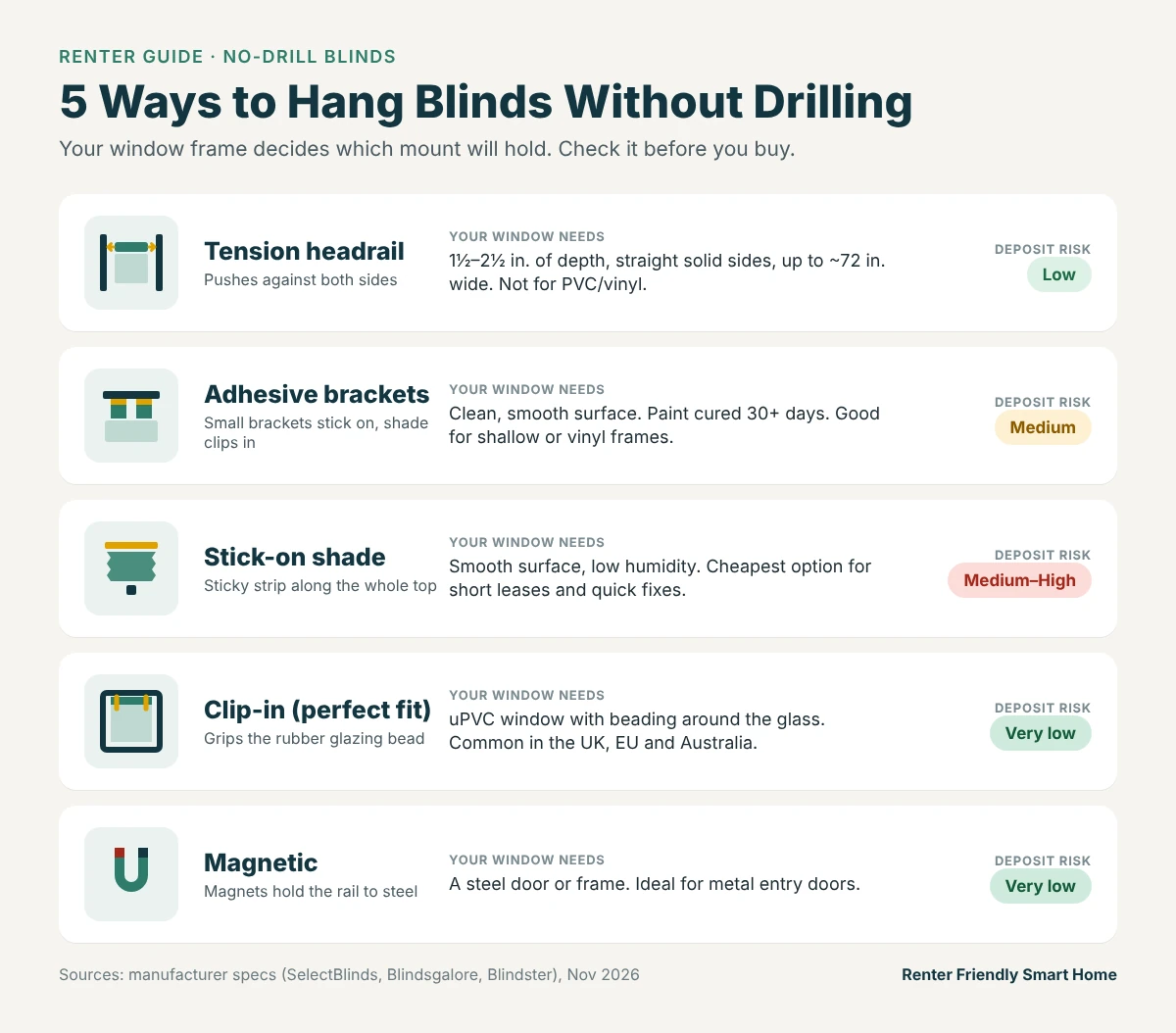
A quick way to think about it: tension pushes, adhesive sticks, clip-in grips and magnets pull. Your frame decides which of those four it can handle.
| Mount type | How it holds | What your window needs | Deposit risk | Best for |
|---|---|---|---|---|
| Tension headrail | Expands sideways and presses on both sides of the frame | 1½–2½ in. depth, straight solid sides, up to about 72 in. wide | Low (pad soft frames) | Blinds you’ll use every day |
| Adhesive brackets | Small brackets with 3M-type tape; the shade clips in | Clean, smooth surface; paint cured 30+ days | Medium | Shallow or vinyl frames |
| Stick-on headrail | A sticky strip runs along the whole top of the shade | Smooth surface, low humidity | Medium to high | Short leases, quick fixes |
| Clip-in (perfect fit) | Brackets slide under the rubber glazing bead | uPVC window with beading | Very low | UK, EU and AU style windows |
| Magnetic | Magnets hold the rail to steel | A steel door or frame | Very low | Metal entry doors |
Tension mounts
These behave most like regular blinds. Once the headrail locks, the shade goes up and down like a screwed-in one. Blindsgalore says its tension shades need straight, sturdy frames about 1.5 to 2.5 inches deep, and it doesn’t recommend them for PVC frames, very shallow sills, or windows wider than 72 inches. One thing stores rarely mention is that overtightening can dent a soft drywall return. A felt pad behind each end cap spreads the pressure.
Adhesive brackets and stick-on shades
Adhesive is the go-to when the recess is too shallow or the frame is vinyl. SelectBlinds actually recommends its adhesive Stick2Fit as an outside mount for vinyl and PVC frames, and suggests letting the shade extend 1.5 to 2 inches past the opening on each side. The catch is how long it lasts and what happens when you remove it. Blindster’s No Tools brackets use 3M adhesive, and the company calls them a “permanent” install. Read that as a warning for a rental.
Clip-in and magnetic
Clip-in “perfect fit” blinds are standard in the UK and Ireland. Blinds Direct says they only fit uPVC windows and doors, because the frame clips into the plastic around the glass. Magnetic rails only make sense on steel doors. Both leave essentially nothing behind.
Best No-Drill Blinds for Windows, by Type
These picks are based on manufacturer specs, retailer listings and patterns in buyer reviews, checked in November 2026. We didn’t run hands-on tests. We compared brands so you’re not stuck with one store’s catalog.
| Product | Mount | Style | Price guide (Nov 2026) | Good to know |
|---|---|---|---|---|
| Project Source No-Drill Cordless Cellular (Lowe’s) | Twist-knob tension | Light-filtering cellular | Budget, off the shelf | Easy install; some buyers say the hold isn’t as firm as screws |
| SelectBlinds Click2Fit / Twist2Fit / Stick2Fit | Tension or adhesive | Cellular, roller, Roman | Custom, mid-range | Tension versions are inside mount only; not for PVC |
| Blindster No Tools | 3M adhesive brackets | Cellular, top-down/bottom-up, faux wood, aluminum | Custom, from about $30 for small sizes on sale | Brand calls the bond permanent; 30-day paint cure |
| American Blinds No Drill | No-drill brackets | Aluminum mini, cellular, Roman | Aluminum mini about $42 on sale | Usually made in about 5 business days |
| Levolor custom cellular, no-drill headrail (Lowe’s) | Tension | Premium cellular | Higher | Better fabric; longer lead time |
| Redi Shade No Tools | Stick-on strip | Pleated paper or fabric | About $9 (Ace, 48 x 72 in.) | Cheapest fast fix; adhesive complaints are common |
| IKEA SCHOTTIS | Stick-on strip | Pleated polyester, blackout option | Under $15 | Light leaks at edges; may lift paint |
| Perfect-fit clip-in (Blinds 2go, Blinds Direct) | Clip-in | Roller, Venetian, pleated, shutter | Custom | uPVC only |
Cellular and cordless shades
Cellular (honeycomb) shades are the most popular no-drill style because they’re light, they insulate, and they come in both tension and adhesive versions. Lowe’s review summaries for the Project Source no-drill cellular say most buyers had it up in under ten minutes. Blindster’s top-down/bottom-up version is the pick for ground-floor windows, since you can let daylight in from the top while the bottom stays covered.
Roller shades
Roller shades give a cleaner, more modern look and suit kitchens if you pick a wipeable fabric. Tension rollers are the most stable. Roller fabric on adhesive brackets is fine if the shade is narrow and light.
Blackout
Every inside-mounted shade lets a little light in around the edges. Blindster says so plainly on its blackout cellular page. If you work nights or need a truly dark room, plan to pair a blackout shade with curtains.
Wood, faux wood, Venetian and mini blinds
Slatted blinds are heavier than fabric shades, so stick to faux wood or aluminum on adhesive brackets and avoid real wood. American Blinds and Blindster both sell no-drill aluminum minis.
Roman, zebra and motorized
Roman and zebra shades are mostly available with tension headrails, and motorized no-drill rollers with rechargeable batteries now exist too. They cost more, so save them for the window you use most. For a ranked list of the easiest tool-free installs, go to No-Tool, No-Screw Window Blinds: Easiest Installs Ranked, and for every shade style in one place, Best No-Drill Window Shades.
How to Choose No Drill Window Blinds: The 5-Minute Fit Check
This step saves the most money, and most store pages skip it. Picture a common case: you order a tension shade for a sleek vinyl window, it arrives, and there’s barely an inch between the glass and the edge of the frame. Now you’re paying return shipping on a custom size. Five minutes with a tape measure and your phone flashlight prevents that.
-
Read the lease. If it bans adhesive too, you’re down to tension, clip-in or curtains. A two-line message to your landlord gives you a written record.
-
Measure the depth. Go from the glass (or the window lock, whichever sticks out more) to the front edge of the frame. Under about 1½ inches, a tension headrail probably won’t fit.
-
Tap the frame. Hollow plastic usually means vinyl or PVC, so skip tension. Solid wood, metal or plaster is ideal. A painted drywall return needs pads behind tension ends.
-
Check that it’s square. Measure the width at the top, middle and bottom. If they differ by more than about ¼ inch, a tension rail may grip unevenly. Order using the narrowest number.
-
Think about the room. Steam and direct afternoon sun both weaken adhesive. Bathrooms and hot south-facing windows suit tension or clip-in better.
| Measurement | How to take it | Why it matters |
|---|---|---|
| Inside width (3 spots) | Top, middle, bottom; use the narrowest | Sets the size for tension and inside-mount shades |
| Height (3 spots) | Left, center, right; use the longest | Makes sure the shade covers the whole glass |
| Depth | Glass or lock to front edge of the frame | Decides tension vs adhesive |
| Flat trim width | The flat face around the window | Outside-mount adhesive needs room to stick |
| Handles and cranks | Open the window and note what sticks out | The shade can’t block the lock or crank |
| Surface | Smooth, textured, glossy, flat paint? | Adhesive fails on texture and fresh paint |
Deposit-risk score: check your window before you buy
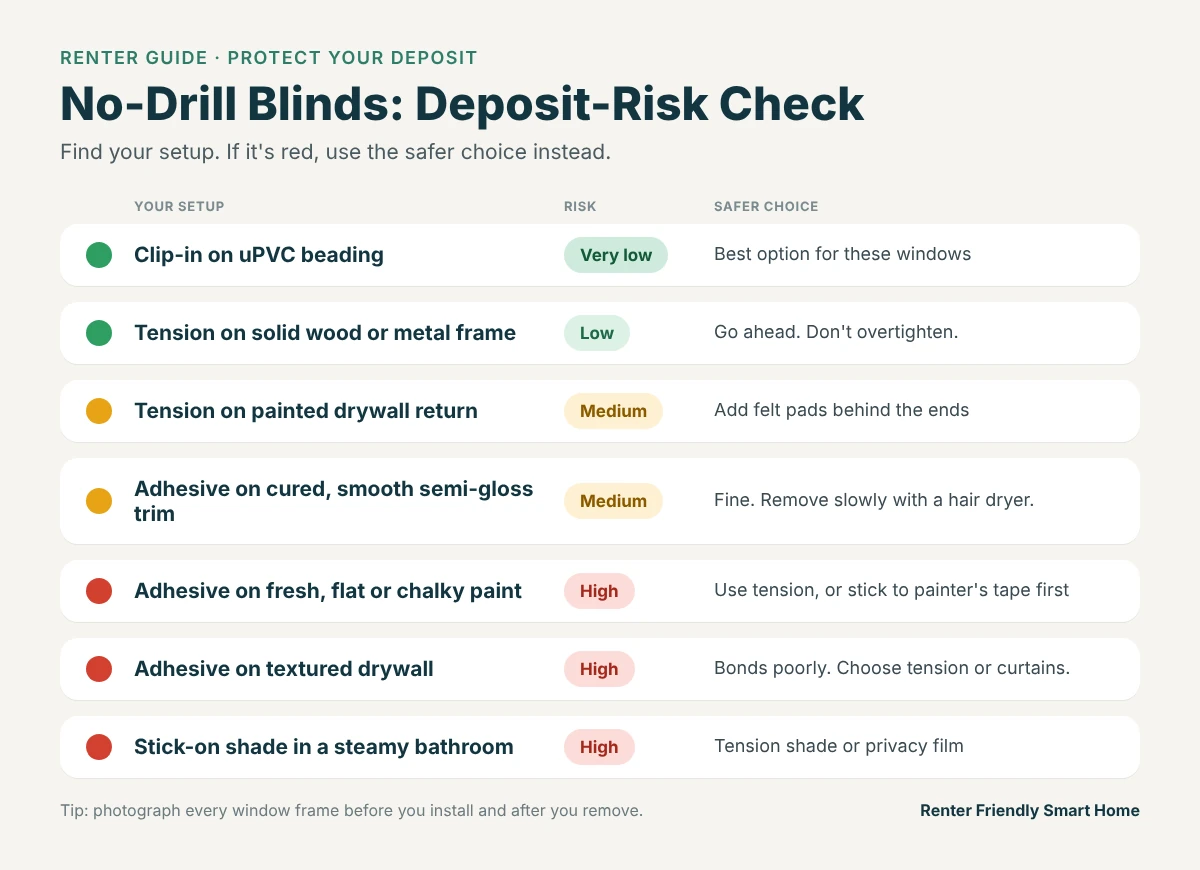
We haven’t seen any competitor page rate removal risk. Find your setup below and pick the safer choice when the risk is high.
| Your setup | Risk | Safer choice |
|---|---|---|
| Tension on solid wood or metal frame | Low | Go ahead; don’t overtighten |
| Tension on painted drywall return | Medium | Add felt pads or cardboard squares behind the ends |
| Adhesive on cured, smooth semi-gloss trim | Medium | Fine; remove slowly with heat |
| Adhesive on fresh, flat or chalky paint | High | Use tension, or stick to painter’s tape first |
| Adhesive on textured drywall | High | Bonds poorly; choose tension or curtains |
| Stick-on shade in a steamy bathroom | High | Tension shade or privacy film |
| Clip-in on uPVC beading | Very low | Best option for these windows |
No Drill Window Treatments for Tricky Spots
Some windows need a different plan. Here’s a quick guide, with links to the full articles.
| Spot | What works | Full guide |
|---|---|---|
| Bathroom | Tension shade or static-cling film; avoid stick-on | W-BATH |
| French and patio doors | Adhesive or magnetic shades; check handle clearance | W-DOOR |
| Street-facing windows | Top-down/bottom-up or solar fabric you can see out of | W-PRIV |
| Kids’ rooms | Cordless only; skip paper shades that tear | W-CELL |
| Bedrooms | Blackout shade plus curtains for edge gaps | W-BLACK |
No Drill Window Coverings Beyond Blinds: Curtains
Sometimes the best no drill window covering is a curtain. Plenty of rentals come with vinyl blinds you’re not allowed to remove. Instead of fighting them, hang curtains in front.
-
NoNo Bracket: hooks onto the headrail of existing blinds, so nothing touches the wall. Renters on Reddit recommend it often, though some buyers say it only handles lighter curtains.
-
Kwik-Hang: taps into wooden trim and holds up to 20 lbs per set. The trim needs to be at least ½ inch wide, and the brand doesn’t recommend it for PVC, MDF, metal or oak trim.
-
Tension rods: fine for café curtains or sheers inside the frame.

Landlord and Deposit: Install and Remove Without Damage
Ask first, in writing
A short message is enough. Try something like:
“Hi, I’d like to put up no-drill blinds that use a tension rail (or adhesive brackets) inside the window frame. No screws or holes. I’ll take them down and clean the frames when I move out. Is that OK?”
Save the reply with your lease. If adhesive is a no, ask about tension instead, since nothing sticks to the frame.
Install like you’re already planning the move-out
-
Photograph each bare frame up close, corners included, before you start.
-
For adhesive, clean with rubbing alcohol, let it dry, press each bracket firmly for about 30 seconds, and wait the time listed in the instructions before clipping the shade in.
-
For tension, tighten until the rail doesn’t move when you tug it gently, then stop.
-
Keep the box, the instructions and any spare brackets.
Removing no drill blinds without damage
-
Release tension slowly. Small pressure marks on painted wood often fade after a day.
-
Warm adhesive for 30 to 60 seconds with a hair dryer, then slide dental floss behind the bracket and saw gently instead of pulling.
-
Roll off leftover residue with your thumb, then use a citrus-based remover, and finish with soapy water.
-
Rehang the landlord’s original blinds if you took them down, and take your after photos.
Thinking of updating the landlord’s blinds instead?
How Much Do No Drill Blinds Cost?
Prices depend on size and sales. These are the numbers we found in November 2026.
| Tier | Example | Typical price |
|---|---|---|
| Stick-on pleated | Redi Shade, IKEA SCHOTTIS | About $9–$15 per window |
| Custom adhesive-bracket | Blindster No Tools cellular | From about $30 for a small window on sale |
| Custom no-drill blinds | American Blinds No Drill aluminum | About $42 on sale |
| Motorized no-drill | Rechargeable roller shades | From about $125 on sale |
For a six-window apartment with small windows, stick-on shades run about $55 to $90 total. Custom adhesive cellular shades start around $180, and mixing in a motorized shade for the bedroom pushes you past $300. Larger windows cost more. If you’re on a lease shorter than a year, the cheap route usually makes sense. Two years or more, a custom shade you can take with you often pays off.
6 Mistakes That Cost Renters Their Deposit
-
Sticking adhesive to fresh paint. Blindster says its brackets aren’t for paint cured less than 30 days.
-
Skipping the cleaning step. Dust and grease are the usual reason brackets drop a week later. One Blindster buyer said all seven brackets failed to stick.
-
Measuring once. A custom shade is made to your numbers, and many can’t be returned.
-
Putting heavy blinds on adhesive. Keep adhesive for light fabric shades and vinyl or aluminum slats.
-
Cranking the tension. Too tight can dent soft frames or bow vinyl.
-
Ripping adhesive straight off. Heat it and floss it. Pulling is how paint comes off with it.
Where Can I Buy No Drill Blinds?
If you need no drill blinds nearby today, check Lowe’s (Project Source no-drill cellular, Redi Shade), Home Depot, Ace Hardware, Walmart and IKEA. You’ll find ready-made sizes and stick-on shades on the shelf.
Searching store sites for blinds for windows no drill tends to mix in regular blinds that need screws. Filter by mount type, or look for words like tension, Click2Fit, No Tools or peel-and-stick in the product name.
For custom sizes, online is better. SelectBlinds, Blindsgalore, Blinds.com, American Blinds and Blindster all sell no-drill lines. In the UK, Ireland and Australia, look at Blinds 2go, Blinds Direct and BlindsOnline for clip-in options.
How to shop deals on no drill window blinds
-
Custom blind sites often run their biggest sales around Black Friday and in spring. Several were already discounting in mid-November 2026.
-
Order free fabric samples before you commit.
-
Compare the price per window, and remember that cheap stick-on shades may need replacing within a year.
-
Check whether custom sizes can be returned. Many can’t.
Frequently Asked Questions
Are no drill blinds for windows worth it?
Yes, for most renters. They give you privacy and light control with no screw holes, and tension or clip-in versions can move with you. They’re less suited to very wide windows and heavy blinds.
Do no drill blinds actually stay up?
They do when the mount matches the window. Tension shades hold well in deep, solid, square frames. Adhesive shades fail most often on dusty, textured or freshly painted surfaces.
Can I use no drill blinds on vinyl windows?
Most brands advise against tension mounts on PVC or vinyl frames. Use an adhesive outside mount, or clip-in blinds if the window has uPVC beading.
Do no drill blinds block all light?
No inside-mount shade blocks every bit of light, because small gaps remain at the edges. Choose blackout fabric and add curtains if you need a fully dark room.
What are the best no drill blinds for renters on a budget?
Stick-on pleated shades such as Redi Shade or IKEA SCHOTTIS cost under $15 per window. For something that lasts longer, a ready-made tension cellular shade from a home store is the next step up.
Can I take no drill blinds with me when I move?
Tension and clip-in blinds usually come out cleanly and can be reused if your new windows are the same size or slightly smaller. Adhesive and stick-on shades are usually one-time use.
The Bottom Line
The best no drill blinds for windows aren’t one product. They’re the mount that fits your frame. Deep, solid frame: go with tension. Shallow or vinyl: adhesive brackets on clean, cured paint. uPVC with beading: clip-in. Landlord’s blinds you can’t touch: curtains on brackets that hook onto them. Measure first, ask in writing, take photos, and remove everything slowly. That’s how you keep the privacy now and your deposit later.
More no-drill window guides
Also for renters: Window AC With Heat Pump: Midea & Best Options for Renters