Do Landlords Allow Security Systems? What Renters Should Know
Last Updated: December 2025
If you’re renting, it’s completely normal to wonder whether you’re allowed to install a security system in your apartment. Most renters want better safety and peace of mind, but no one wants to violate their lease or risk their deposit. Thankfully, modern smart security devices are far more renter-friendly than old wired systems — and most landlords allow them when they’re installed correctly.
👉 For a complete look at what a renter-safe setup looks like, check our guide on creating a no-drill smart security system for apartments.
Many landlords today understand that renters want more control over their space, and as long as the devices are removable and don’t cause damage, they’re usually allowed.
🔍 What Most Landlords Allow (Renter-Friendly Devices)
Most property owners are comfortable with non-permanent security devices that attach with adhesive or simply sit on a shelf. These include:
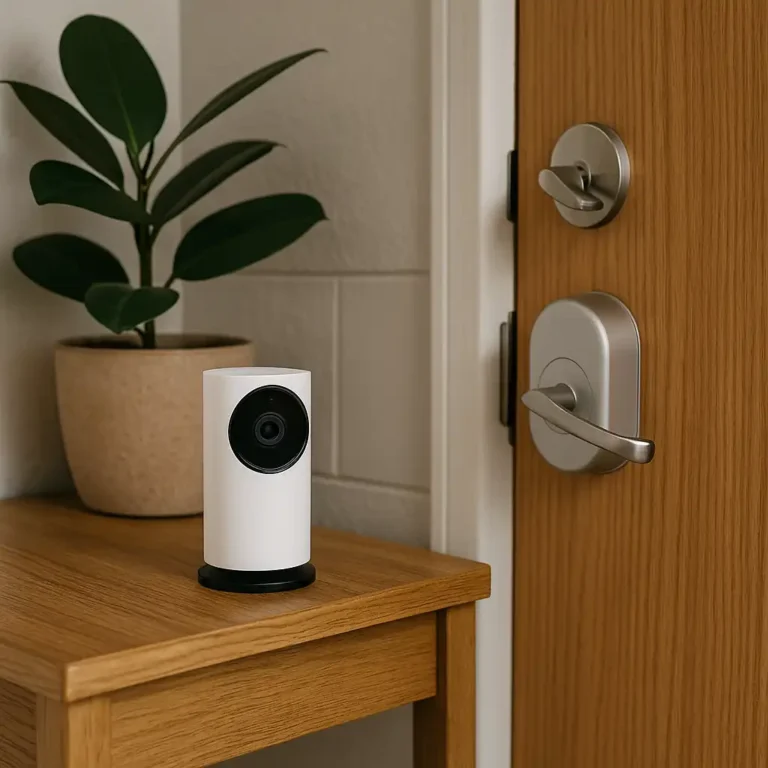
- Indoor security cameras
- Battery-powered, adhesive-mounted video doorbells
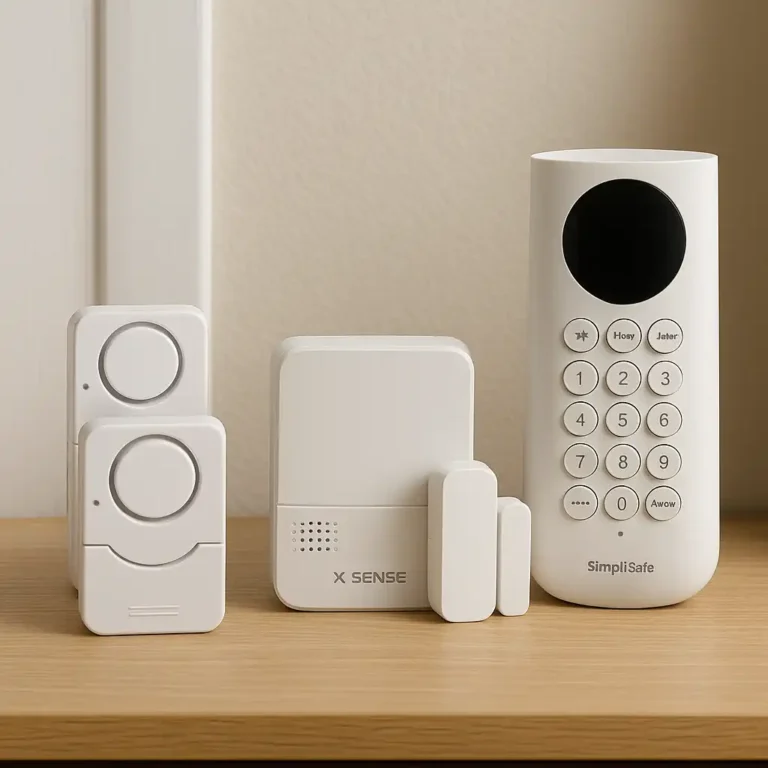
- Peel-and-stick window and door sensors
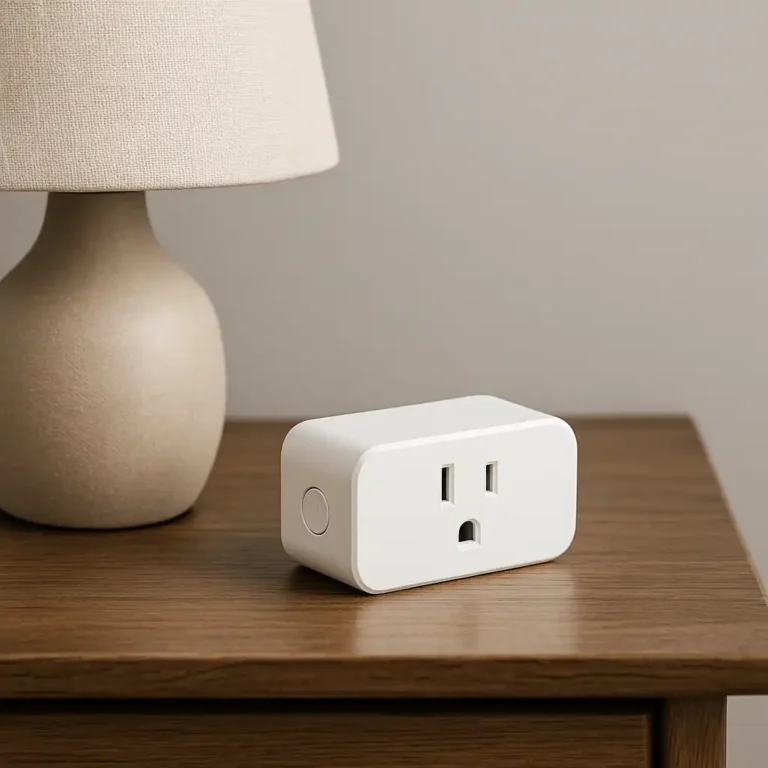
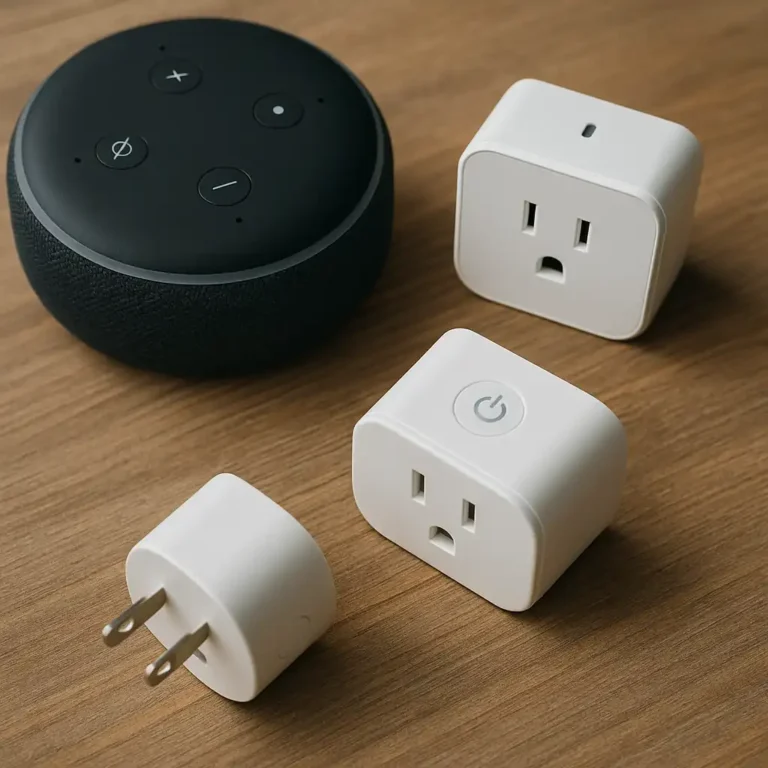
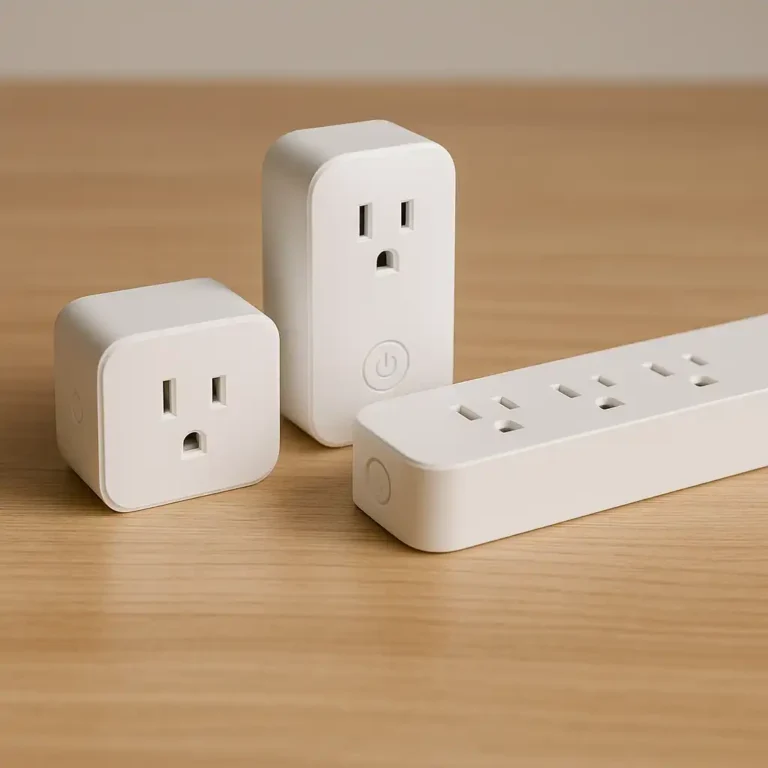
- Plug-in smart hubs and automation devices
If you can remove the device cleanly when moving out, it typically doesn’t violate the lease.
🔍 What Landlords Usually Don’t Allow
Anything that alters the structure or original hardware normally requires written approval. Examples include:
- Hardwired alarm systems
- Drilling into walls, ceilings, or doorframes
- Replacing the existing lockset
- Running cables through walls
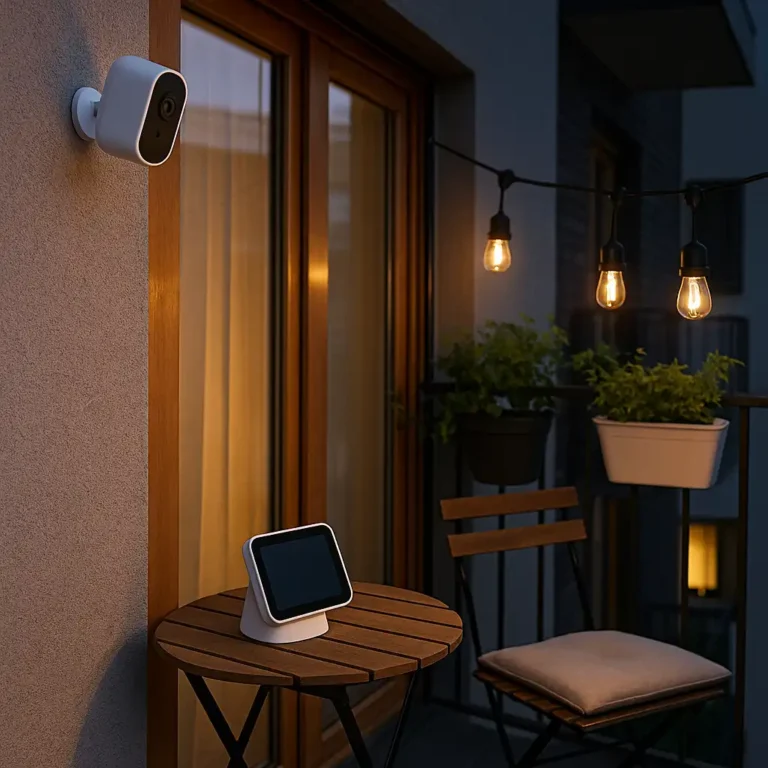
- Mounting outdoor cameras on shared exterior areas
If tools, screws, mounting brackets, or new wiring are required, assume it’s not allowed without permission.
🔍 Privacy Rules Renters Must Follow
Even when your landlord allows security devices, you still need to follow local privacy laws. The following are almost always prohibited:
- You cannot record shared hallways
- You cannot point cameras into neighbors’ spaces
- You cannot mount devices on common-area walls
- You cannot record audio in areas where others expect privacy
Indoor cameras are generally safe since they face only your own space. Anything facing outward must be positioned carefully.
🔍 What Your Lease May Say
Some leases include general language about “alterations,” “fixtures,” or “modifications.” These terms usually refer to permanent changes like drilling or wiring — not removable smart sensors and plug-in devices. If the wording feels unclear, a quick message to your landlord is the easiest way to confirm.
🔍 Best Renter-Safe Security Options
If you want a security system without risking your deposit, stick with devices built specifically for rentals:
- Battery-powered video doorbells that use adhesive mounts
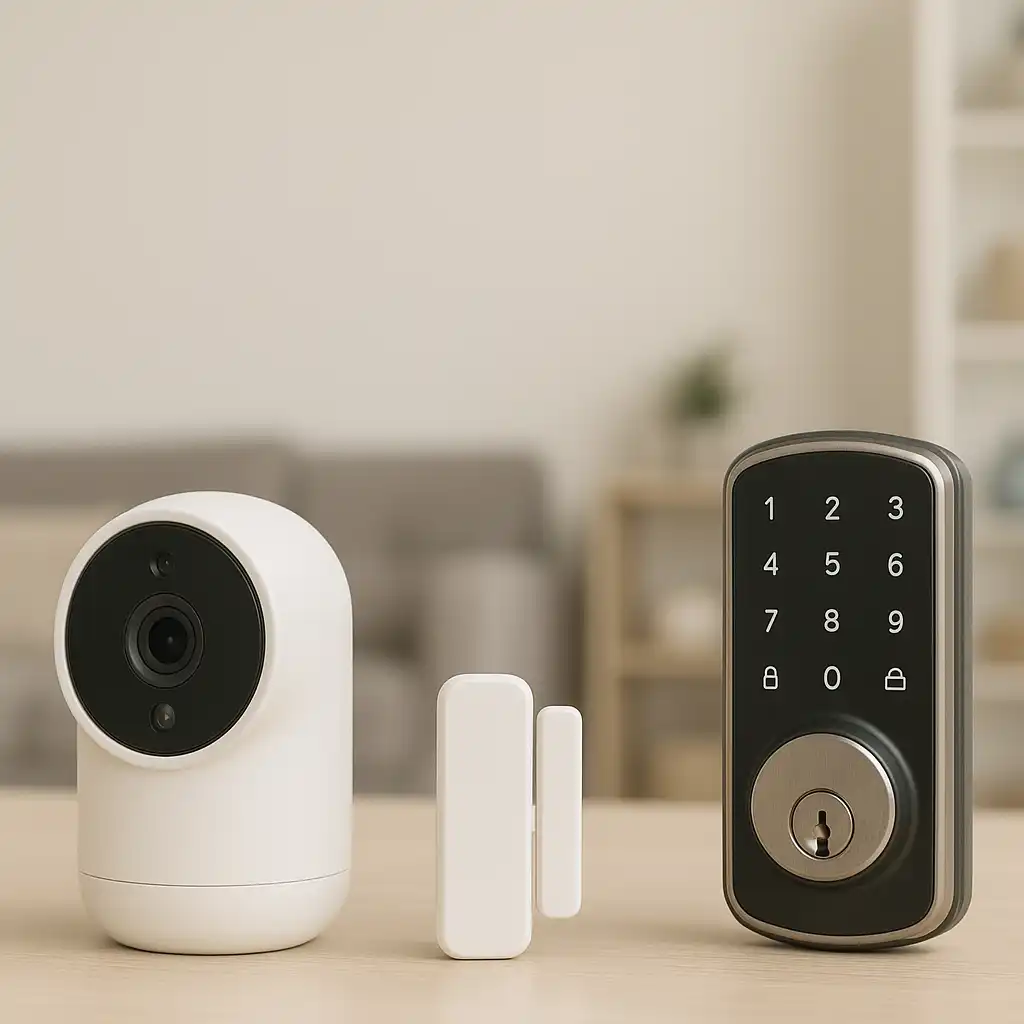
- Indoor cameras that sit on shelves or attach with peel-and-stick pads
- Smart locks with no-drill mounting brackets
- Peel-and-stick alarms and sensors
All of these options are easy to uninstall, reuse, and take with you when you move.
📌 Key Takeaways
- Most landlords allow removable, non-drilling security devices
- Permanent changes (like wiring or drilling) typically require approval
- Privacy laws limit where cameras can be aimed or placed
- Peel-and-stick sensors and plug-in cameras are almost always renter-safe
- Renter-friendly systems are easy to remove, reuse, and take to your next apartment
🟢 FAQs
Q: Are indoor cameras allowed in apartments?
Yes. Since they’re not installed permanently, they’re typically allowed in all rentals.
Q: Are adhesive video doorbells permitted?
In most apartments, yes — as long as they don’t require screws or drilling.
Q: Should I notify my landlord?
Optional, but helpful if your lease includes strict rules about modifications.
Q: Can renters use smart locks?
Yes, as long as the existing lock remains untouched or the smart lock uses a removable bracket.
✅ Conclusion
Most landlords allow some form of security system as long as it doesn’t involve drilling, wiring, or altering the property. Renter-friendly devices like peel-and-stick alarms, adhesive-mounted video doorbells, and plug-in smart cameras offer a safe, flexible way to protect your apartment without risking your deposit. With the right setup, apartment security becomes simple, reversible, and move-out friendly.