
Soundproofing apartment noise as a renter comes down to three things: seal the gaps, add mass where sound comes through, and soften the hard surfaces inside your rooms. You can't tear open walls or add drywall, but you can cut a lot of noise with door seals, heavy curtains, rugs, and furniture placed with a plan. Most renters get the biggest result from the door and the floor, and they get it for under $150.
Also read: Best No-Drill TV Wall Mounts for Renters (2026) · Troubleshooting Connectivity Issues in Multi Device Smart Home Setups
Quick answer
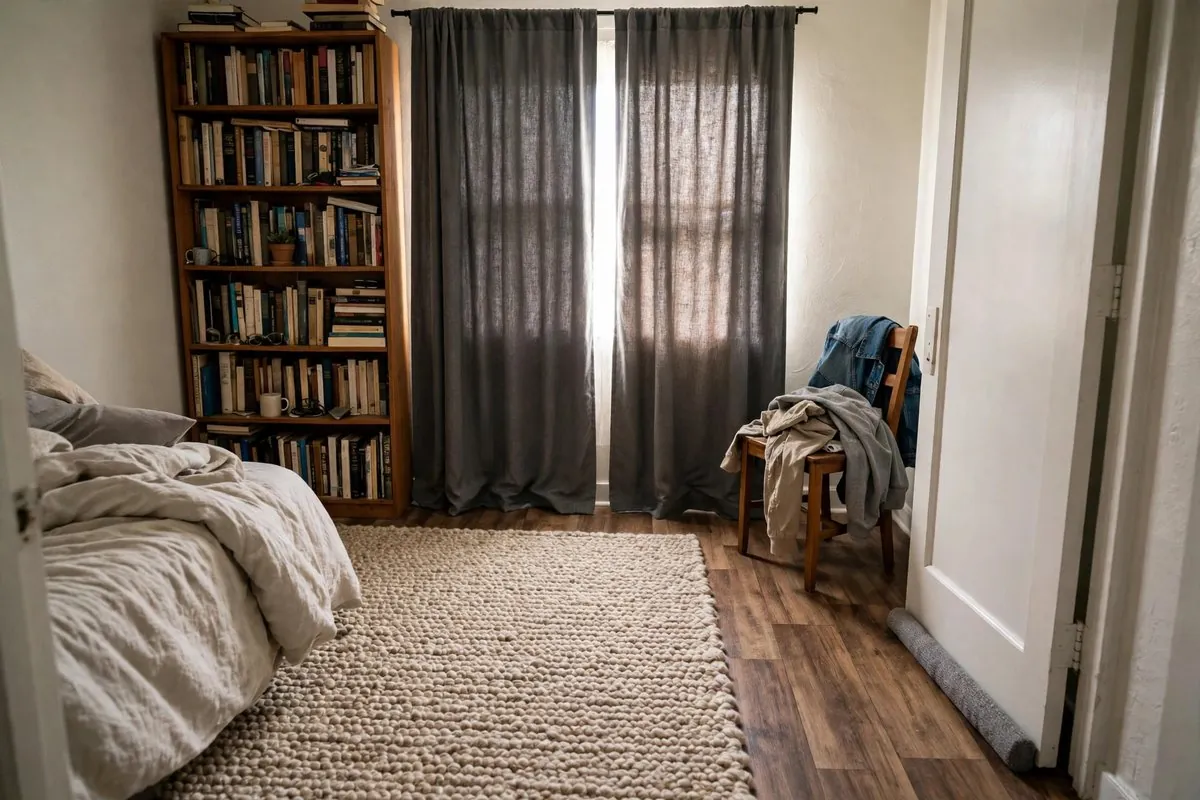
To soundproof an apartment without drilling, start with the door: add a door sweep and weatherstripping to close the gaps. Then cover hard floors with a dense rug and pad, hang heavy curtains, and put full bookcases or upholstered furniture against noisy shared walls. Acoustic foam reduces echo inside a room, but it barely blocks noise from neighbors. A white noise machine handles what's left.
Key takeaways
- Sound leaks through gaps first. A 1/2-inch gap under a door lets in a surprising amount of noise.
- Blocking noise needs mass and sealing. Absorbing noise (foam, panels) only cuts echo.
- Bass and footsteps are the hardest problems. Rugs help your downstairs neighbor more than they help you.
- Most renter fixes are removable with no tools: draft stoppers, rugs, curtains, and furniture.
- Mass-loaded vinyl works, but it's heavy and expensive. Use it in targeted spots.
What renters can and can't do to soundproof an apartment
Renters can add things to the apartment. Renters usually can't change the building.
That line decides almost every soundproofing choice you'll make.
| Usually fine without asking | Ask your landlord first | Usually not allowed |
|---|---|---|
| Rugs, rug pads, and floor mats | Adhesive door sweeps or weatherstrip | Adding drywall or insulation inside walls |
| Heavy curtains on tension rods | Replacing a hollow-core door | Changing windows |
| Freestanding bookcases and furniture | Window inserts that press into the frame | Drilling for acoustic panels or rails |
| Draft stoppers and door snakes | Acoustic caulk around trim | Removing flooring |
| Freestanding acoustic panels | Swapping door hardware | Anything that affects fire doors |
One important warning: many apartment entry doors are rated fire doors. Don't add anything that stops them from closing and latching on their own. Check with your building before you put a thick seal on the entry door.
How does noise get into an apartment?
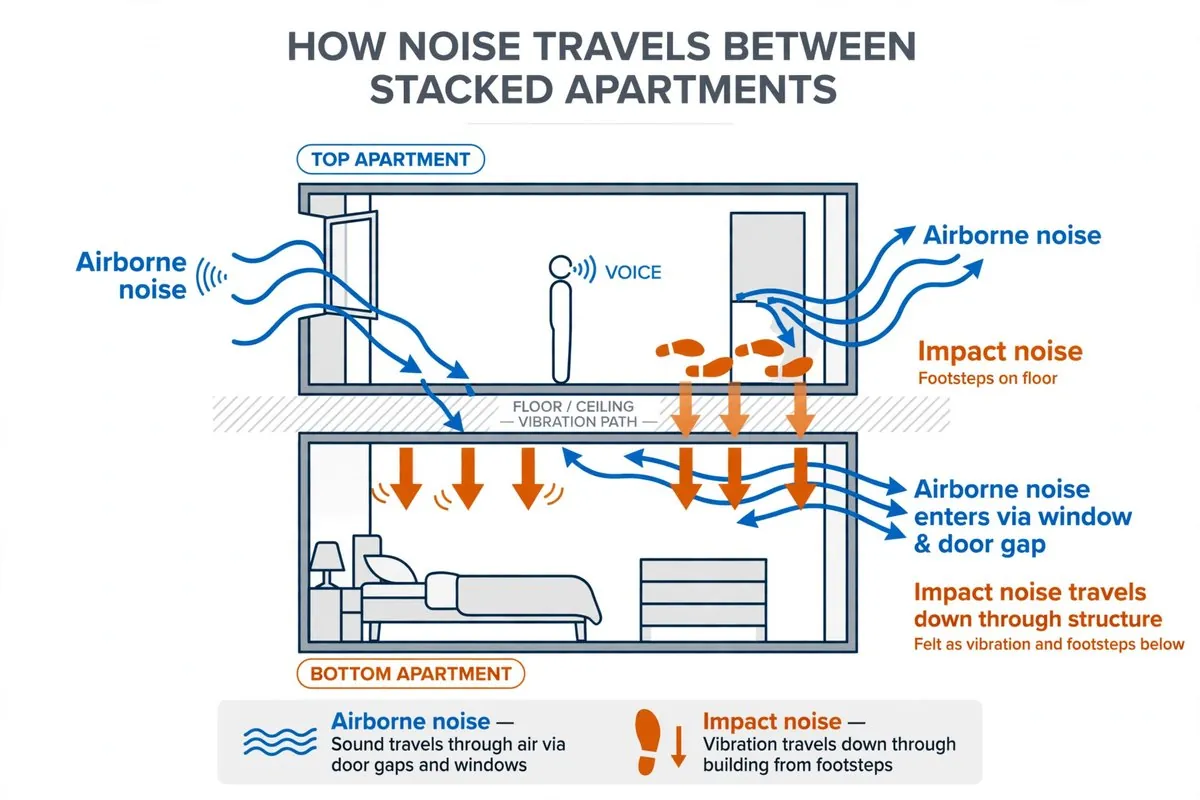
Noise gets in two ways: through the air and through the structure. Knowing which one you have saves you money.
Airborne noise
Voices, TVs, music, and traffic travel through the air. They slip through gaps around doors, windows, outlets, and vents, and they pass through thin walls. Sealing gaps and adding mass are the best defenses.
Impact noise
Footsteps, dropped objects, chairs scraping, and bass from speakers travel through the building's structure. This is the hardest type for renters to fix, because the energy moves through floors and framing that you can't change.
A 10-minute noise audit
Before you buy anything, figure out where the noise actually comes from:
- Pick a quiet time when the problem noise is happening.
- Walk the room and listen close to each wall, the door, the window, and the floor.
- Slide a sheet of paper under the door. If it passes easily, you have a gap problem.
- Hold your hand near outlets and window edges. Drafts mean air (and sound) paths.
- Note whether the noise is high-pitched (voices, TV) or low (bass, footsteps).
- Write down the top two sources. Fix those first.
Soundproofing apartment options compared
Here's how the common renter-friendly fixes compare. Costs are typical ranges checked November 2026 and vary by size and retailer.
| Fix | Blocks or absorbs? | Best for | Renter-friendly? | Typical cost |
|---|---|---|---|---|
| Door sweep or draft stopper | Blocks (seals gap) | Hallway noise, voices | Yes (stick-on or slide-on) | $10 to $40 |
| Weatherstripping on door frame | Blocks (seals gap) | Voices, TV | Usually, ask first | $10 to $30 |
| Thick rug with dense pad | Absorbs, reduces impact | Echo, your own footsteps | Yes | $80 to $300 |
| Heavy or acoustic curtains | Absorbs, slight blocking | Street noise, echo | Yes, on tension rods | $40 to $150 per window |
| Full bookcase against shared wall | Adds mass | Neighbor voices, TV | Yes | Furniture you may own |
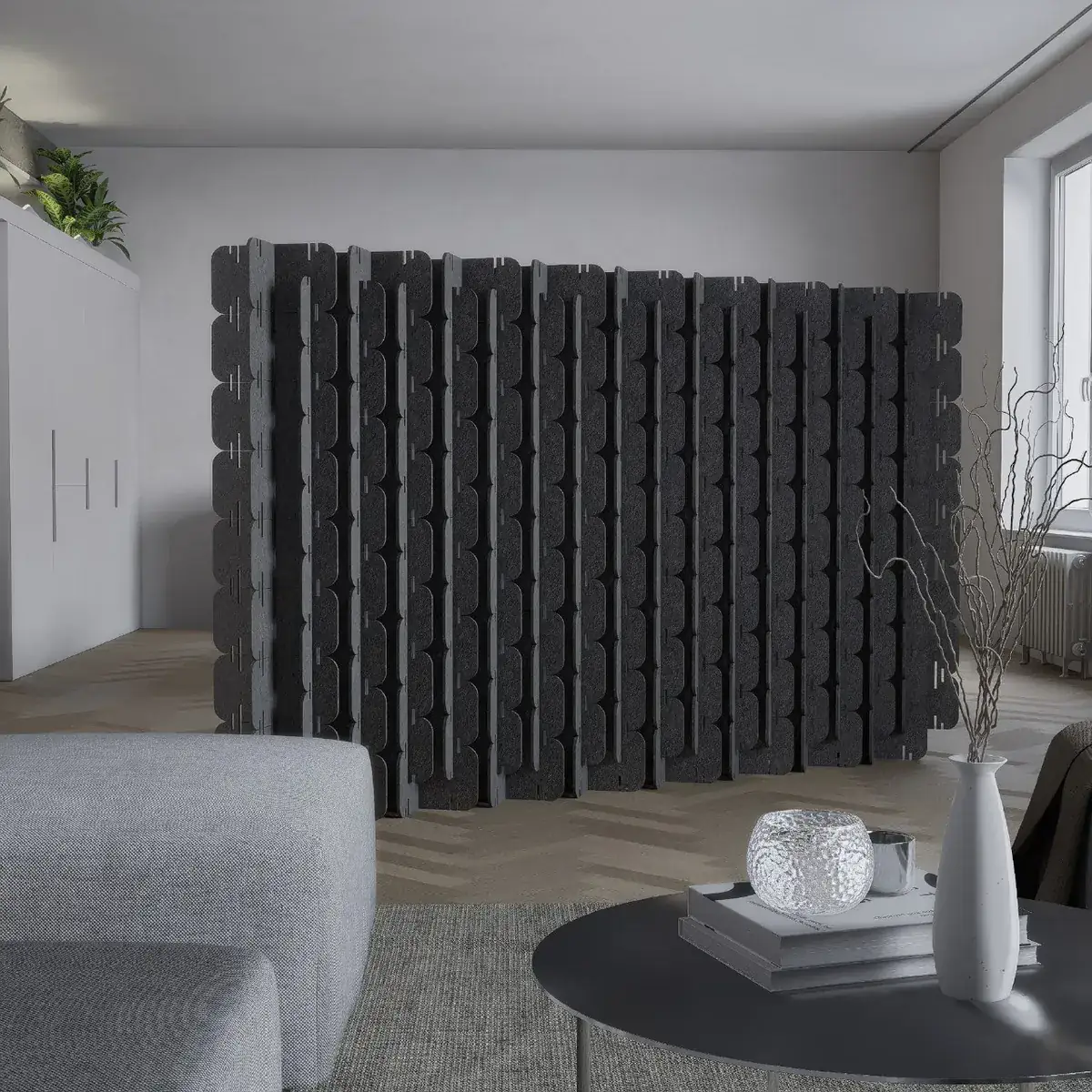
| Freestanding acoustic panels | Absorbs | Echo, home office calls | Yes | $50 to $300 |
| Mass-loaded vinyl behind furniture | Blocks (adds mass) | Shared wall noise | Yes if not attached | $2 to $5 per sq ft |
| Window insert | Blocks | Traffic noise | Ask first | $150 to $600 per window |
| White noise machine | Masks | Anything left over | Yes | $20 to $60 |
The pattern is clear. Gap-sealing fixes are the cheapest and most effective first step. Mass is second. Absorption is mostly about echo.
How to soundproof an apartment, step by step
Work from the cheapest, highest-impact fix to the most expensive one. Test after each step so you don't overspend.
Step 1: Seal the door
The door is often the weakest spot. Hollow-core interior doors and gaps underneath let voices and TV sound straight in.
- Measure the gap under the door.
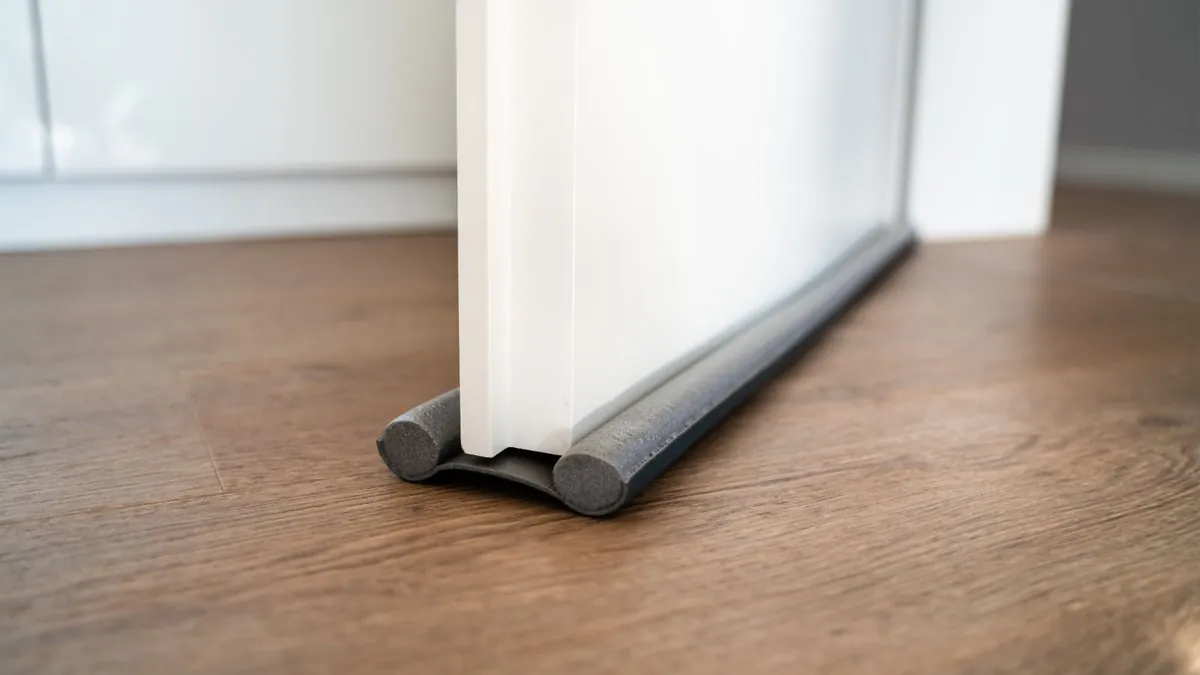
- Add a slide-on draft stopper or a stick-on door sweep.
- Add self-adhesive foam or rubber weatherstrip to the frame where the door closes.
- Test that the door still latches easily.
- Check again after a week, because foam compresses.
For more detail on entry and bedroom doors, read How to Soundproof an Apartment Door Without Drilling.
Step 2: Cover the floor
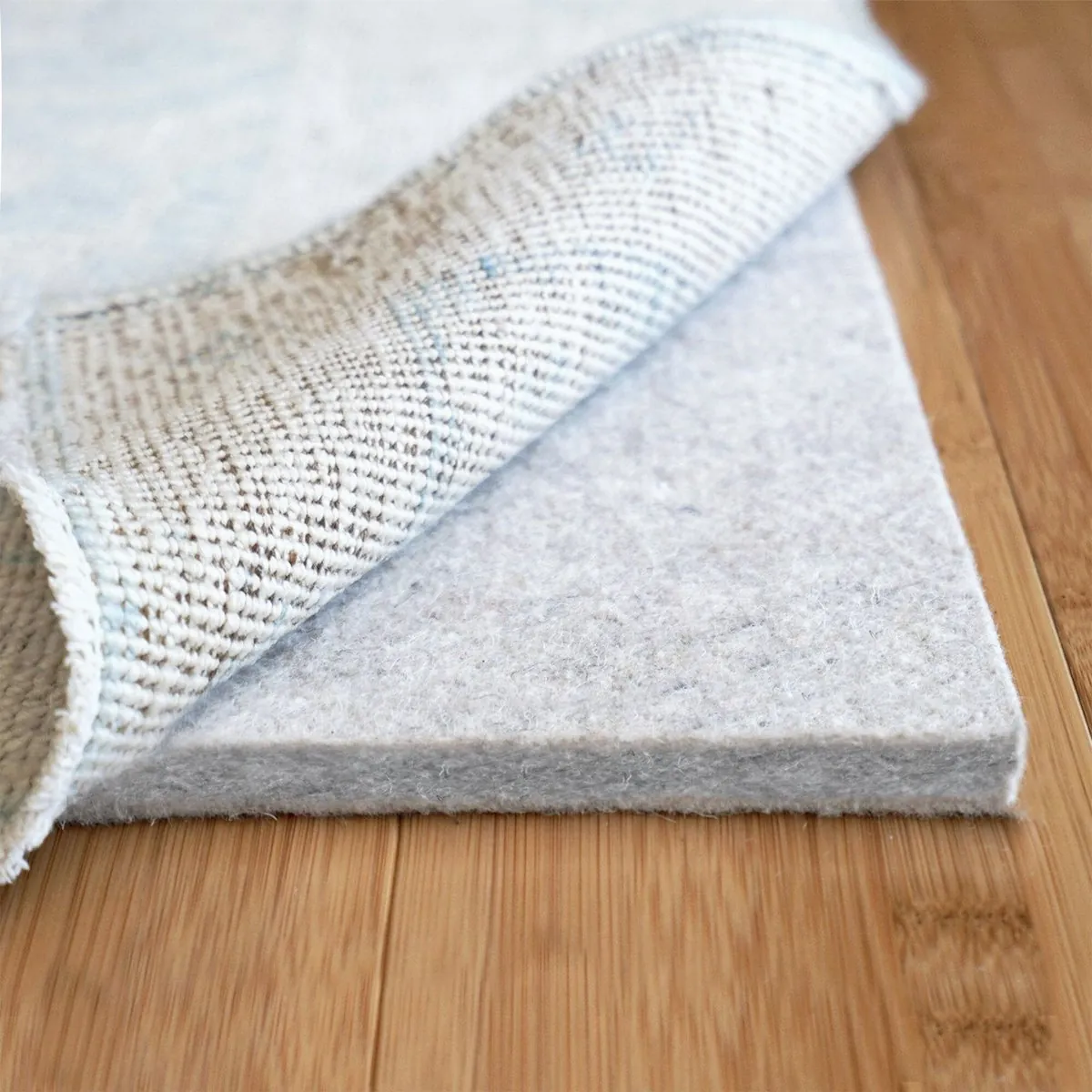
A thick rug with a dense pad cuts echo in your room and reduces the impact noise you send downstairs. If you have hard floors, this is a must, and many leases actually require rugs on a percentage of the floor.
Layer it like this: a dense felt or rubber-felt pad, then the rug. You can also slip thin mass-loaded vinyl under the pad for extra blocking. Our guide to How to Soundproof Floors in an Apartment (Rugs, Mats & Underlay) compares pad types and thicknesses.
Step 3: Treat the windows
Street noise comes in through the glass and the gaps around the frame. Heavy curtains help with mid and high frequencies, especially when they're floor-length and wider than the window.
Hang them on tension rods or no-drill brackets so you don't make holes. Our No-Drill Curtain Rods: Types, Weight Limits & How to Hang Them guide shows which rods hold heavy fabric, and Soundproof Curtains for Apartments: Do They Work? explains what curtains can and can't do.
Step 4: Add mass to shared walls
Move your fullest bookcase, wardrobe, or upholstered headboard against the noisy wall. Mass and density are what slow sound down.
For a stronger fix, put a panel of mass-loaded vinyl behind the bookcase without attaching it to the wall. It's heavy, so keep it standing on the floor and supported by the furniture.
Step 5: Soften the room
Bare walls and hard floors bounce sound around. That makes every noise feel louder. Add soft things: rugs, curtains, upholstered furniture, a fabric wall hanging, or freestanding acoustic panels.
This step won't stop your neighbor's TV, but it makes your room feel calmer and helps a lot with video calls.
Step 6: Deal with the ceiling
Footsteps from upstairs are the hardest renter problem. You can't add insulation or a dropped ceiling without permission. Your best tools are a polite conversation with your neighbor about rugs, and masking noise at night. Read How to Soundproof an Apartment Ceiling (Renter-Friendly) for options that don't require construction.
Step 7: Mask what's left
A white noise machine or a fan covers the noise you can't block. It's cheap, effective for sleep, and fully portable.
Blocking vs absorbing: why foam panels disappoint
Acoustic foam absorbs sound reflections inside a room. It doesn't block much sound from passing through a wall. That's the most common soundproofing mistake renters make.
Here's the difference in plain terms:
- Blocking stops sound from passing from one space to another. It needs mass (heavy, dense material) and airtight seals.
- Absorbing soaks up sound bouncing around inside a room. It needs soft, porous material like foam, fabric, or mineral wool.
If your goal is "I can't hear my neighbor," you need blocking. If your goal is "my apartment sounds echoey and my calls sound bad," you need absorbing.
What STC means
STC, or Sound Transmission Class, is a lab rating for how well a wall, door, or window blocks airborne sound. Higher is better. It's useful for comparing doors and windows, but it's measured mainly around speech frequencies, so it says less about bass and footsteps.
Is mass-loaded vinyl worth it for renters?
Mass-loaded vinyl (MLV) is worth it in one or two targeted spots, but not as a whole-apartment project. It's a dense, flexible sheet that blocks sound by adding weight. Builders normally install it inside walls, which renters can't do.
Renter-friendly ways to use it:
- Standing behind a bookcase or wardrobe on a shared wall, held in place by the furniture
- Under a rug pad to reduce impact noise going down to your neighbor
- Hung on the back of a bedroom door with removable hooks, if the door and hinges can take the weight
The downsides are real. A 1-pound-per-square-foot roll is heavy, awkward to cut, and costs more than most other fixes. It also looks industrial, so you'll want to hide it. Start with sealing and rugs, and only add MLV if a specific wall is still a problem.
Apartment soundproofing for musicians, gamers, and home offices
If you're the noisy one, the goal flips. You want to keep sound in so you don't get complaints.
- Speakers and subwoofers. Put them on isolation pads and pull them away from shared walls. Better yet, switch to headphones after quiet hours.
- Gaming setups. A thick rug under the desk and chair reduces thumps. Felt pads on chair legs cut scraping.
- Drums and amps. Electronic drums with a riser and headphones are the realistic apartment option.
- Home office calls. Freestanding acoustic panels behind you and a rug under the desk make your voice clearer and reduce what neighbors hear.
Being the considerate neighbor also makes it easier to ask others for the same favor later.
Renter-friendly soundproofing for each room
Different rooms have different noise problems. Here's where to focus.
| Room | Common noise | Best first fix |
|---|---|---|
| Bedroom | Neighbor TV, hallway voices | Door seal, white noise, bookcase on shared wall |
| Living room | Street noise, echo | Heavy curtains, large rug |
| Home office | Echo on calls | Rug, freestanding panels behind you |
| Kitchen | Appliance hum through walls | Rubber feet under appliances, rug runner |
| Entry | Hallway noise | Door sweep and weatherstrip (check fire rules) |
Renter scenarios: what to fix first
Every apartment is different, so here are four common situations and the order we'd tackle them in.
The thin bedroom wall
Priya's bed shares a wall with her neighbor's living room, and she hears the TV until midnight. Her fix list: move the bed a few inches off the wall, put a tall, full bookcase on the shared wall beside it, add an upholstered headboard, and run a white noise machine at night. Total cost is about $60 if she already owns the bookcase. She skips foam panels because her problem is transmission, not echo.
The noisy hallway
Dan's studio door faces the elevator. Every conversation in the hall sounds like it's in his kitchen. He slides a paper under the door and it passes with room to spare. A slide-on draft stopper and foam weatherstrip on the frame cost him $25 and cut the voices in half. Because it's the entry door, he checks with management first to make sure nothing interferes with the fire door closing.
Street noise on a busy road
A second-floor unit facing a bus route gets constant low rumble and horns. Heavy floor-length curtains wider than the frame help with the higher sounds. The rumble needs mass at the window, so a pressure-fit window insert is the bigger upgrade, with landlord approval. White noise covers the rest at night.
Footsteps from upstairs
This is the one renters hate most, because it's the hardest to fix from below. The practical plan: write a short, friendly note to the upstairs neighbor asking about rugs in their main walkways. Mask noise during sleep hours, and keep a log if it breaks quiet hours in the lease. If your building has a rug clause, management can remind everyone.
How to talk to a noisy neighbor or your landlord
A calm conversation often solves more than any product. Most people have no idea how much sound travels.
- Start friendly and specific. "I can hear your TV clearly in my bedroom after 11. Could you turn it down a bit at night?" works better than a vague complaint.
- Offer something. Suggest a rug or felt pads under chairs, or move your own speaker off the shared wall in return.
- Put it in writing if it continues. Note dates, times, and what you heard.
- Use the lease. Many leases have quiet hours and rug requirements. Management can enforce them.
- Ask your landlord about building fixes. Door sweeps on hallway doors, seals on old windows, and fixing gaps around pipes are maintenance items some landlords will handle.
How to tell if your soundproofing is working
You don't need lab gear to measure progress. A free decibel meter app on your phone gives you a rough before-and-after comparison.
- Measure the noise at the same time of day, from the same spot, before you change anything.
- Make one change, like the door seal.
- Measure again under similar conditions.
- Keep notes so you know which fixes were worth the money.
Phone meters aren't precise, but a drop of a few decibels is noticeable to your ears. A drop of around 10 decibels sounds roughly half as loud to most people.

Landlord, lease, and deposit notes
Most soundproofing fixes don't need permission because they're furniture and fabric. A few do, and a few can cost you deposit money if you do them wrong.
- Adhesives. Stick-on weatherstrip and sweeps can pull paint when removed. Test a small area first, and remove slowly with gentle heat from a hair dryer.
- Fire doors. Never add anything that stops a fire-rated entry door from closing and latching.
- Window inserts. Pressure-fit inserts usually don't leave marks, but ask first because they touch the window frame.
- Rug clauses. Many leases require rugs on hard floors in upper units. Doing it helps you stay on good terms.
- Noise complaints. If noise breaks quiet-hours rules in your lease, you can report it to management in writing. Keep notes with dates and times.
Before you move out, remove every adhesive product, check for residue, and photograph doors and frames.
What does it cost to soundproof an apartment?
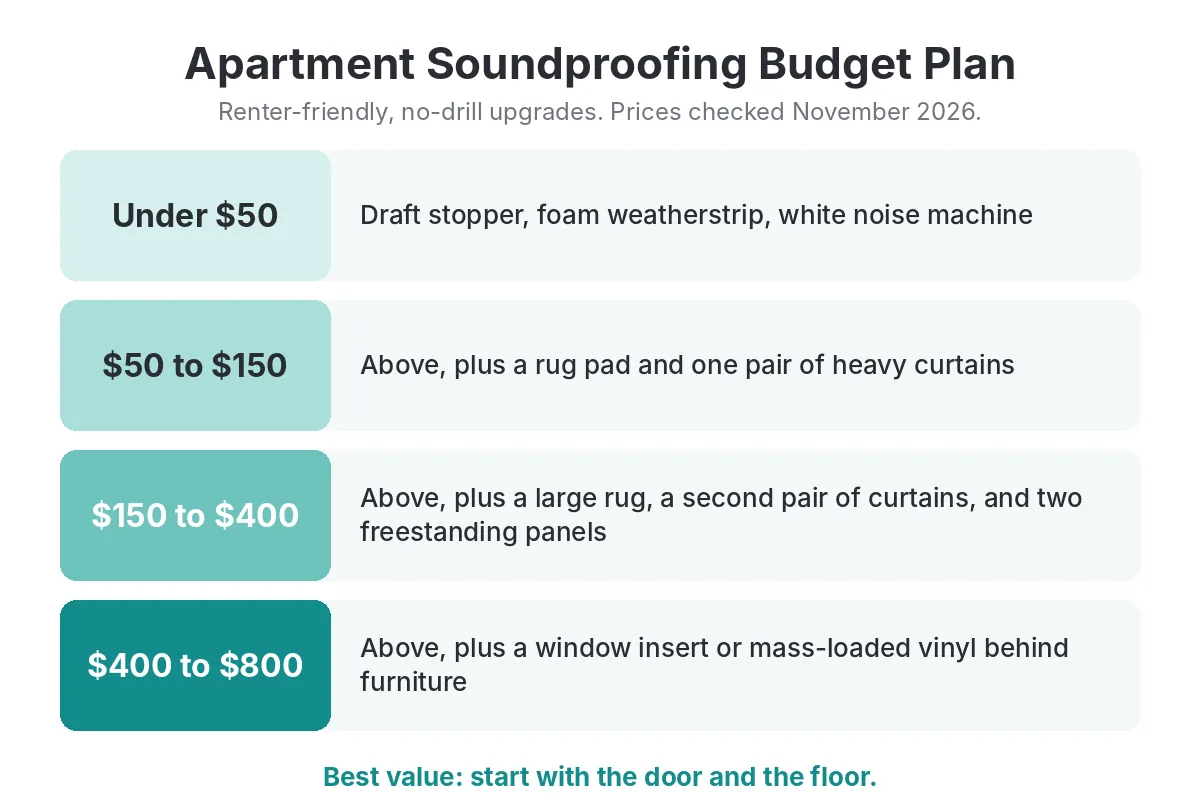
You can make a real difference for about $50 to $150. A more complete setup runs $300 to $800, depending on how many windows and rooms you treat. Prices checked November 2026.
| Budget | What you get |
|---|---|
| Under $50 | Draft stopper, foam weatherstrip, white noise machine |
| $50 to $150 | Above, plus a rug pad and one pair of heavy curtains |
| $150 to $400 | Above, plus a large rug, a second pair of curtains, and two freestanding panels |
| $400 to $800 | Above, plus a window insert or mass-loaded vinyl behind furniture |
The best value is almost always the door and the floor.
Mistakes to avoid when soundproofing an apartment
- Buying foam panels to stop neighbor noise. They help echo, not transmission.
- Ignoring the door gap. It's often the biggest leak.
- Using egg crates. They do almost nothing for sound.
- Hanging curtains on weak adhesive hooks. Heavy fabric pulls them down. Use a tension rod rated for the weight.
- Gluing anything to the walls without testing removal.
- Blocking vents or radiators with mass-loaded vinyl or furniture.
- Expecting to stop bass completely. Low frequencies pass through structure. Masking helps most.
Soundproofing guides in this series
This page is the hub for our soundproofing for renters articles. Pick the one that matches your loudest problem:
- How to Soundproof an Apartment Door Without Drilling
- How to Soundproof Floors in an Apartment (Rugs, Mats & Underlay)
- How to Soundproof an Apartment Ceiling (Renter-Friendly)
- Soundproof Curtains for Apartments: Do They Work?
- Related: How to Hang Heavy & Blackout Curtains Without Drilling
FAQ
How can I soundproof my apartment without drilling?
Seal the door with a sweep or draft stopper, cover floors with a dense rug and pad, hang heavy curtains on tension rods, and place full bookcases against shared walls. None of these need tools or holes.
Do acoustic foam panels block noise from neighbors?
Not much. Foam absorbs echo inside a room, but blocking neighbor noise needs mass and sealing. Use foam for call quality and echo, and use door seals and heavy furniture for blocking.
What is the cheapest way to soundproof an apartment?
A draft stopper under the door and a white noise machine. Together they cost about $30 to $70 and handle the most common complaints.
Can I soundproof my apartment ceiling as a renter?
Only in limited ways. You can't add insulation or a new ceiling without permission. Focus on masking noise and asking your upstairs neighbor about rugs.
Do soundproof curtains really work?
They help with street noise and echo, especially floor-length curtains wider than the window. They won't make a room silent, but they're a useful part of a layered plan.
Will soundproofing stop bass from my neighbor's music?
Rarely. Bass travels through the building structure. Mass helps a little, and masking helps more. If it breaks quiet hours, report it to management in writing.
Conclusion
Soundproofing apartment noise doesn't require construction. Seal the door, cover the floor, treat the windows, and put mass where sound comes through, then mask whatever's left. Start with the 10-minute noise audit, fix your top two sources, and test before you spend more. Most renters are surprised by how much quieter a room gets after just the door seal and a good rug. Every one of these fixes leaves with you when your lease ends. Your next step: read How to Soundproof an Apartment Door Without Drilling, because the door is the fastest win for most renters.
Sources
- Apartments.com: Want a soundproof apartment? Here's what to do
- This Old House: How to soundproof a door
- Angi: Ways to soundproof a door (cost ranges)
