
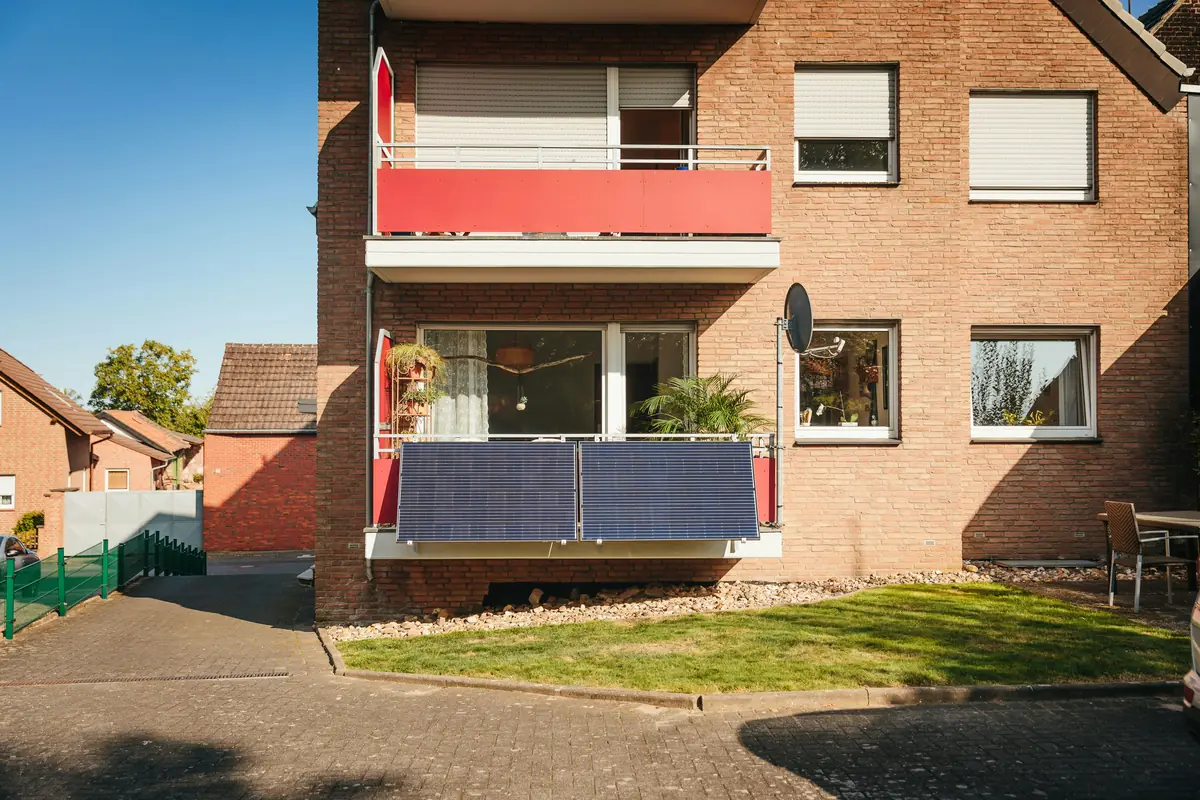
You rent. You don’t own the roof, the electric bill keeps climbing, and every solar ad seems written for homeowners with a big south-facing roof. Here’s the good news: solar panels for apartments are a real option in 2026. You can hang a small plug-in kit on a balcony railing, charge a battery from a folding panel, or join a community solar program with no hardware at all.
Most pages ranking for this topic are a few years old, written before any U.S. state had a balcony solar law. A lot changed in 2026. Ten states now have plug-in solar laws, the federal tax credit is gone, and a few states now limit a landlord’s right to say no. This guide covers what renters can actually do today, what each option costs, and how to ask your landlord without risking your deposit.
Quick answer: Yes, renters can use solar. The three realistic paths are a plug-in balcony kit (best in the 10 states with plug-in solar laws), a portable panel plus battery power station (legal anywhere because it never connects to the wall), and community solar (no equipment, typically 5% to 15% off your bill where available). None of them will power your whole apartment, but each can trim your bill or keep the essentials running in an outage.
Key takeaways
-
As of November 2026, California, Colorado, Connecticut, Maine, Maryland, New Hampshire, New Jersey, Utah, Vermont and Virginia have signed plug-in solar laws. Several don’t start until 2027.
-
Most of those laws cap a kit at 1,200 watts. Colorado allows 1,920 watts, and Maine lets you self-install only up to 420 watts.
-
The 30% federal residential solar tax credit ended on December 31, 2025. Don’t buy anything based on a promised tax credit.
-
A small balcony kit saves tens of dollars to a few hundred dollars a year. It won’t wipe out your bill.
-
Your lease still matters. New Jersey and Vermont add tenant protections, but most states only stop the utility from blocking you.
Table of Contents
-
Solar Power for Apartment Living: How to Choose (Decision Tree)
-
Solar Panels for Renters: Landlord Permission and Your Deposit
-
How Much Does a Solar Panel for Apartment Use Save? (Calculator)
What Renters Can and Can’t Do With Solar
Renters can use solar that’s removable and doesn’t change the building: freestanding or clamped panels, a battery you charge yourself, or a community solar subscription. You can’t put panels on a shared roof, drill into the building, or touch the electrical panel.
| Usually fine | Ask your landlord first | Don’t do it |
|---|---|---|
| Folding panel on your own balcony floor or patio | Clamping panels to the balcony railing | Drilling into walls, railings or the roof |
| Charging a power station indoors from a panel | Plugging a balcony kit into an outdoor outlet | Running a gas generator on a balcony |
| Small panel inside a sunny window | Running a cable through a door or window seal | Homemade double-male plug cords |
| Community solar subscription | Anything visible from the street in an HOA building | Overloading a shared circuit |
A quick word on generators. If backup power is your goal, stick with batteries. Fuel generators create carbon monoxide and don’t belong inside or on a balcony.
Solar Panels for Apartments: Your 4 Options Compared
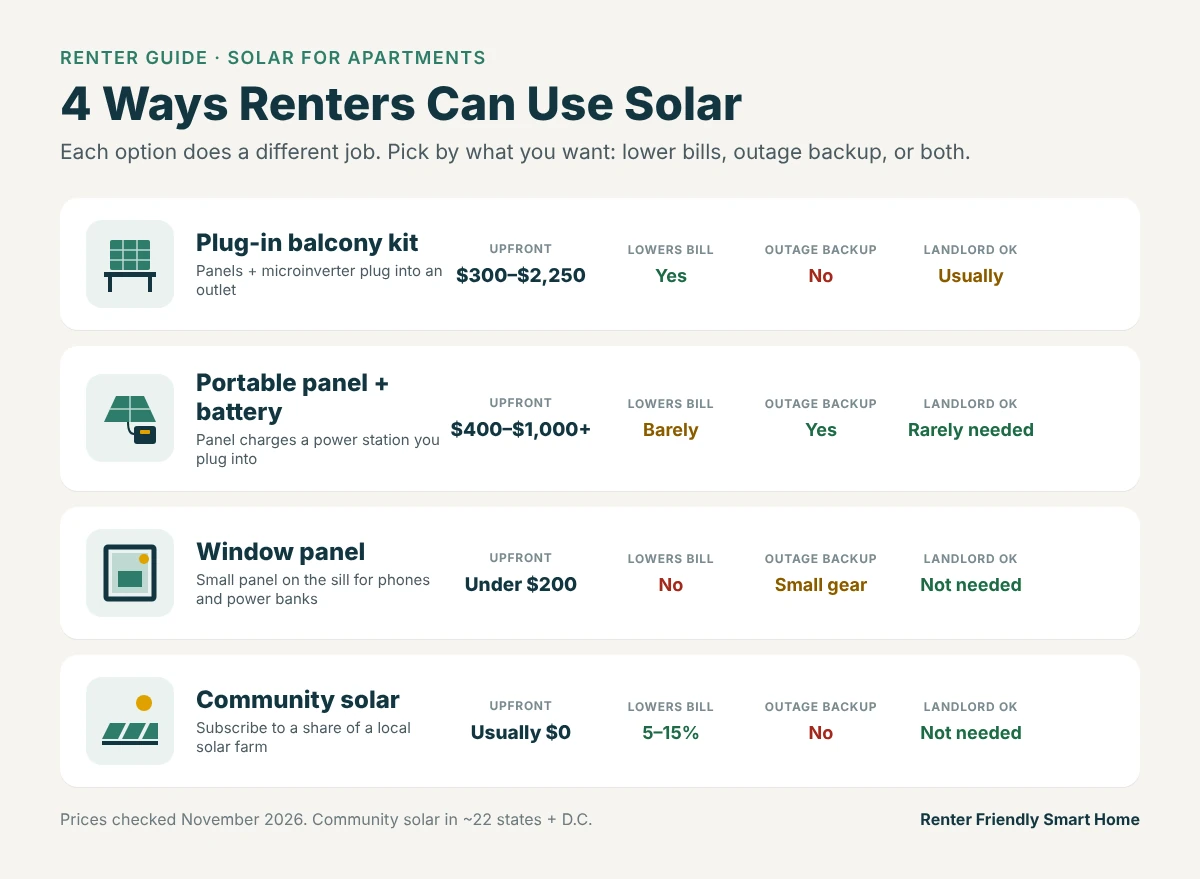
There are four ways solar panels for apartments actually work for renters, and they do different jobs. Plug-in kits lower your bill, battery setups keep things running in an outage, and community solar saves money without any gear.
| Option | Upfront cost (Nov 2026) | Lowers your bill? | Works in an outage? | Needs landlord OK? | Best for |
|---|---|---|---|---|---|
| Plug-in balcony kit | About $300 to $2,250 | Yes, during daylight | No (shuts off for safety) | Usually | Sunny balcony in a plug-in solar state |
| Portable panel + power station | About $400 to $1,000+ | Barely | Yes | Rarely | Outage backup, any state |
| Window panel | Under $200 | No | Phones and small gear only | No | No balcony at all |
| Community solar | Usually $0 | Yes, about 5% to 15% | No | No | Shaded units, strict buildings |
Plug-in balcony kits
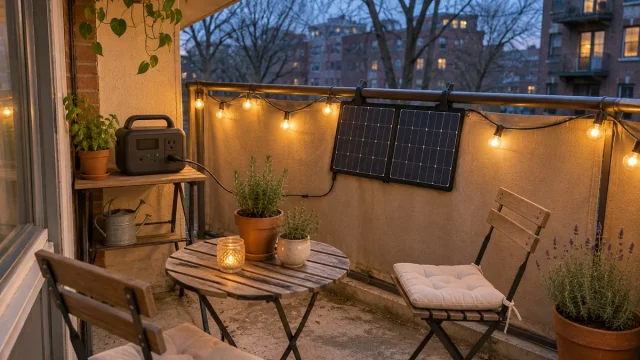
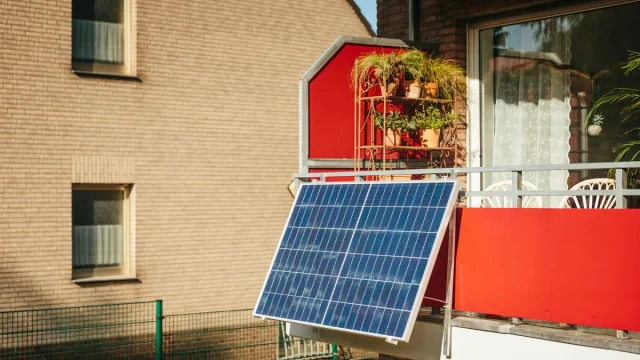
A plug-in kit pairs one to four panels with a small microinverter and a standard three-prong plug. You plug it into an outlet, and your fridge, router and laptop use that solar power first before pulling from the grid. The inverter shuts off instantly if the grid goes down, so it won’t help in a blackout.
Prices run from a single small panel to full 1,200-watt systems. Nonprofit Bright Saver lists its 180W or 360W balcony kit at $399 without a membership and $299 for members. Bigger 800W to 1,200W kits from brands like CraftStrom were listed at about $1,500 to $2,250 in November 2026. The short version: only with a listed microinverter kit.
A few safety basics apply to every kit. Plug into a grounded, GFCI-protected outdoor outlet with a weatherproof in-use cover, never into a power strip or extension cord. Use one kit per outlet. And find out which breaker that outlet is on, because balcony outlets often share a circuit with a living room or bathroom.
Portable solar panels for apartments plus a power station
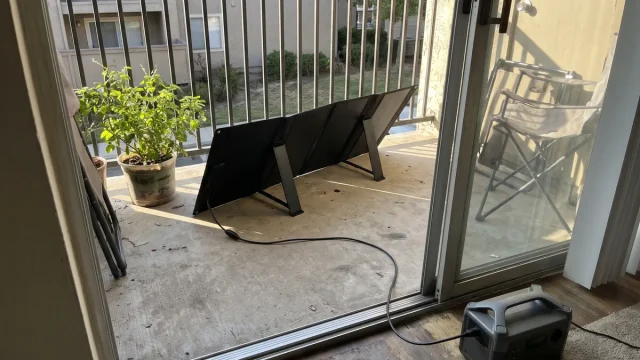
Portable solar panels for apartments don’t plug into your wall. They charge a battery box, and you plug your devices into the battery. Because nothing connects to the building’s wiring, this works in all 50 states and rarely needs permission.
A 1,024Wh station like the EcoFlow DELTA 3 Classic was selling for roughly $409 to $479 at U.S. retailers in fall 2026. Pair it with a 100W to 200W folding panel and you can run a router, laptop, lights and a fan through an outage. You won’t save much on your bill.Best 200W Portable Solar Panels for ApartmentsBest Solar Powered Outdoor Outlets for Balconies & Patios.
Window panels
If you only have windows, a small panel on the sill will top up phones and power banks. Modern double-pane glass cuts output a lot, so don’t expect more than that.
Community solar
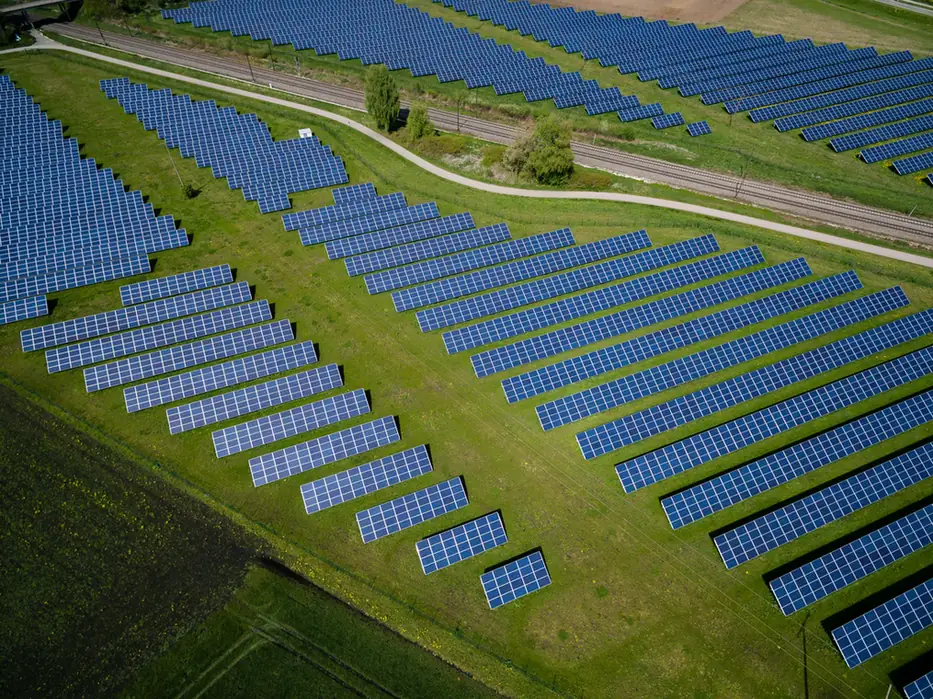
Community solar is a subscription to a share of a local solar farm. Credits show up on your utility bill, and you never touch a panel. Typical savings run about 5% to 15%, but it’s only available in roughly 22 states plus Washington, D.C., and contract terms vary, so read the cancellation rules before you sign.
To find a program, search your state energy office or your utility’s website for “community solar,” then compare a few offers. Look for three things in the contract: the discount rate, whether there’s a cancellation fee, and what happens when you move. A good renter-friendly plan lets you cancel or transfer with 30 to 90 days’ notice and no fee. Be wary of anything that asks for an upfront payment or a long lock-in with an escalating price.
Solar Power for Apartment Living: How to Choose (Decision Tree)
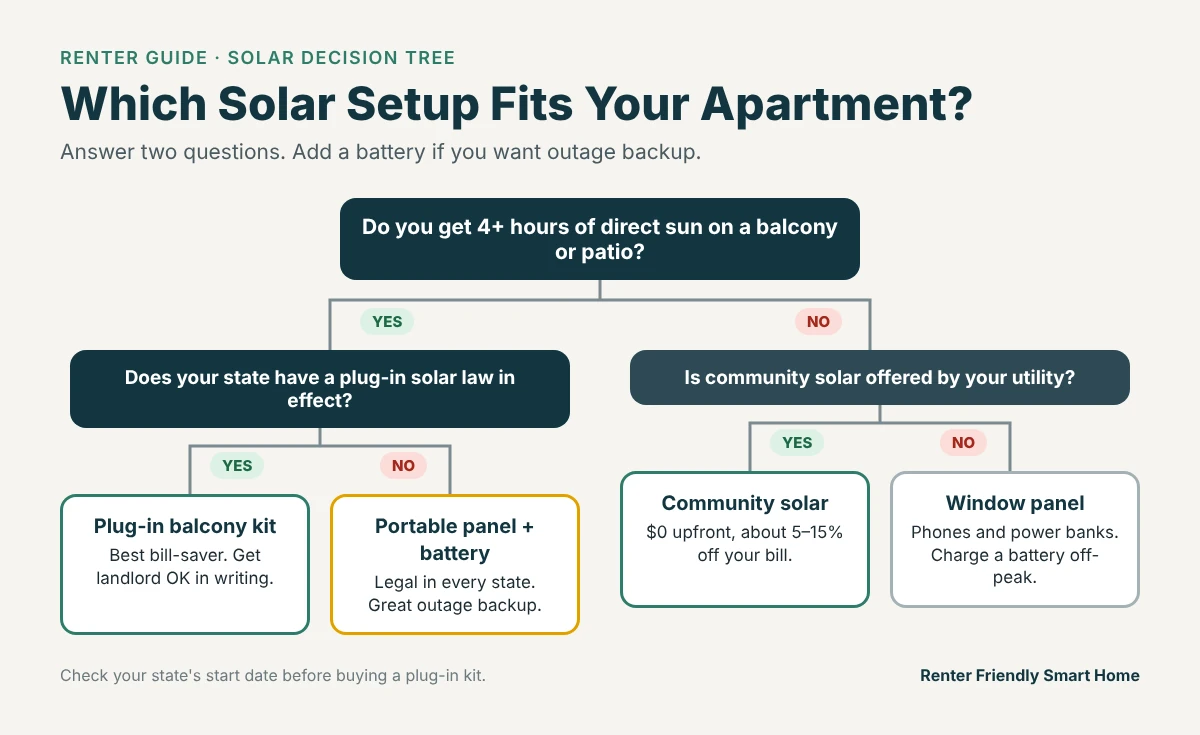
Pick your setup by two things: what outdoor space you have, and whether your state has a plug-in solar law. Everything else follows from those.
-
Do you get at least 4 hours of direct sun on a balcony or patio? Check at 10 a.m., 1 p.m. and 4 p.m. on a clear day. If not, go with community solar.
-
Is your state on the plug-in solar list below, and is the law in effect yet? If yes, a plug-in kit is your best bill-saver. If no, use a portable panel and battery.
-
Do you want backup during outages? Plug-in kits shut off when the grid does. Add a power station, or choose a kit with a built-in battery.
-
Is there an outdoor outlet, and what else is on that circuit? A standard 15-amp circuit shouldn’t also be running a 1,500W space heater while your kit feeds it.
-
Will your landlord say yes? If not, a freestanding panel on the balcony floor and an indoor battery is the low-conflict choice.
Here’s how that plays out. Maya rents a second-floor unit in Denver with a south-facing balcony and an outdoor outlet. Colorado has a plug-in law, so a 360W to 800W kit on her railing makes sense. Jordan rents a shaded ground-floor unit in Chicago with three hours of morning sun. Illinois has no plug-in law yet, so a 200W folding panel and a power station for outages is the smarter buy, plus community solar for the bill.
No balcony? Your solar panel for apartment options
Plenty of renters have nothing but windows. In that case, skip plug-in kits entirely. Community solar is the one option that can actually cut your bill, and a small window panel or a power station you charge from the wall overnight on a cheaper time-of-use rate covers phones, laptops and outage backup. It’s less exciting than panels on a railing, but it costs nothing to set up and nothing to move.
Solar panels for townhouse and patio rentals
Ground-level patios give you room for an angled stand, which catches more sun than a panel hanging flat on a railing. Remember the roof still isn’t yours, and an HOA can set rules on anything visible.
Solar panels for apartment buildings
In a large building, the roof belongs to the owner. The realistic paths are a landlord-installed system that powers common areas, a building-wide community solar arrangement, or each tenant joining community solar separately. Several tenants asking in writing tend to get further than one.
2026 Plug-In Solar Laws: What Renters Need to Know
Ten states have signed plug-in solar laws, but they don’t all start at the same time, and most only stop the utility from blocking you. Your lease and building rules still apply unless your state says otherwise.
| State | Status (Nov 2026) | Size limit | What it means for renters |
|---|---|---|---|
| Utah | In effect since 2025 | 1,200W | Utility can’t block you; lease still applies |
| Maryland | In effect since July 1, 2026 | 1,200W | Notify the utility before installing |
| Vermont | In effect since July 1, 2026 | 1,200W | Tenant gives the landlord 10 days’ notice |
| Maine | In effect since July 2026 | 420W DIY; up to 1,200W with an electrician | Notify the utility within 30 days above 420W |
| Colorado | Signed May 2026; phasing in through Jan 2027 | 1,920W | Landlords and HOAs can’t unreasonably ban it from 2027 |
| Connecticut | In effect since Oct 1, 2026 | 1,200W | Utility can’t block you; lease still applies |
| New Hampshire | Signed 2026; check the start date with your utility | 1,200W | Lease still applies |
| Virginia | Starts Jan 1, 2027 | 1,200W | Lease still applies |
| California | Starts Jan 1, 2027 (SB 868) | 1,200W | Lease still applies |
| New Jersey | Starts Mar 1, 2027 | 1,200W | Landlord can’t ban it if you pay the electric bill; 14 days’ written notice |
New York’s bill passed the legislature but wasn’t law as of mid-October 2026. Laws are moving fast, so check What States Allow Plug-In Solar? (State-by-State Tracker) for the latest.
Two more things matter. First, safety certification: UL 3700, the first North American standard for plug-in solar systems, was published in December 2025, and several state laws require listed equipment. Skip unlisted marketplace kits. Second, outside the U.S. the rules differ.
Solar Panels for Renters: Landlord Permission and Your Deposit
Get permission in writing for anything that clamps to the building or plugs into its wiring. Landlords mostly worry about three things: will it fall, is it electrically safe, and how will it look. Answer all three up front.
Landlord email template
Subject: Request to use a removable solar panel on my balcony (no drilling)
Hi [name], I’d like to put a small solar panel kit ([model, wattage]) on my balcony at [unit/address]. Nothing will be drilled or permanently attached. It mounts with padded railing clamps plus a safety tether, and I’ll remove it and restore everything when I move out. The equipment is certified ([UL listing]) and plugs into the existing outdoor outlet. I’ve attached the spec sheet. Could you confirm in writing that this is OK, or let me know any placement rules? Thanks, [name, phone]
If the answer is no, don’t argue the point by email. Ask whether a freestanding panel on the balcony floor, brought inside at night, would be acceptable instead. Many managers who object to railing clamps don’t mind something that isn’t attached to anything.
In New Jersey, once the law starts, you’ll need to give 14 days’ written notice with proof the device meets the standard. In Vermont, it’s 10 days’ notice. Keep the reply with your lease.
Solar panels for rental property: what to ask the owner
If you want the building itself to go solar, that’s the owner’s decision. Ask whether the building has or plans solar, whether tenants would see lower common-area charges, and whether a community solar program is available for the address.
How tenants benefit from solar energy without their own roof
The tenant benefit from solar energy comes three ways: bill credits from community solar, lower shared costs when solar energy for apartment buildings powers hallways and laundry, and direct savings from your own plug-in kit. Only the first and last are guaranteed to reach you.
Protecting your deposit
-
Photograph the railing, wall and outlet before you install.
-
Put rubber or silicone pads between metal clamps and painted railings.
-
Use a secondary steel tether so a gust can’t drop a panel on the unit below.
-
On move-out, unplug first, then disconnect the panel cables, then remove clamps and photograph again.

How Much Does a Solar Panel for Apartment Use Save? (Calculator)
Expect tens of dollars a year from a small kit and a few hundred from a 1,200W kit in a high-rate state. Use this quick formula with your own numbers.
Annual kWh ≈ panel watts × daily sun hours × 365 × 0.75 ÷ 1,000. Multiply by the price per kWh on your bill. The 0.75 covers heat, angle and inverter losses.
| Kit size | Est. kWh/year (4.5 sun hrs) | Savings at $0.17/kWh | Savings at $0.30/kWh |
|---|---|---|---|
| 180W | About 220 | About $38 | About $67 |
| 360W | About 440 | About $75 | About $133 |
| 800W | About 990 | About $168 | About $296 |
| 1,200W | About 1,480 | About $251 | About $443 |
Treat these as rough estimates. For a real-world check, Bright Saver estimates its 180W kit saves about $45 a year in Colorado, where power averaged about 16.5 cents per kWh in early 2026. Payback depends on price: a $399 kit saving $67 a year pays off in about six years, while a $2,250 kit saving $443 takes about five.
One catch: most plug-in laws don’t pay you for extra power you send back to the grid. Size the kit to what your apartment uses during the day, usually a fridge, router and work setup, so you use every watt you make. A portable 110W panel, by comparison, makes roughly 10 kWh a month, worth about $2. That kind of setup earns its keep during outages.
6 Mistakes Renters Make With Apartment Solar
-
Buying before checking the law’s start date. Several states don’t start until 2027.
-
Ignoring shade. Shading part of a panel can cut its output far more than you’d expect. A railing bar across the cells matters.
-
Buying an unlisted kit. Cheap marketplace kits without UL listings can break state rules and cause insurance problems.
-
Sharing a circuit with a heater or AC. Check what else runs on the outlet you plan to use.
-
Skipping the tether. A folding panel on a fourth-floor balcony acts like a sail in wind.
-
Counting on a tax credit. The 30% homeowner credit ended on December 31, 2025.
Keep panels working well with occasional cleaning.
Frequently Asked Questions
Can I put solar panels on my apartment balcony?
Usually yes, with landlord permission and removable mounts. In the 10 states with plug-in solar laws you can also plug a certified kit into an outlet once the law is in effect. New Jersey and Vermont add tenant notice rules.
Is solar power for apartment renters worth it?
It’s worth it if you have a few hours of direct sun and plan to stay a while. A small kit saves tens of dollars a year, and a 1,200W kit in a high-rate state can save a few hundred. Community solar is the easiest win if it’s available.
Do I need my landlord’s permission for a portable solar panel?
Usually not for a freestanding panel and battery used inside your own unit. You should ask before clamping anything to a railing or plugging into building wiring.
Can a solar panel for apartments run my whole home?
No. Covering a typical apartment would take far more panels than a balcony can hold. Renters use solar to offset daytime use or back up essentials.
What is a solar panel for flats?
It’s the same thing as a solar panel for apartments. Flats is the UK term. UK balcony solar rules differ from U.S. state laws.
Can I take my solar setup when I move?
Yes. Plug-in kits and portable panels go with you. A community solar subscription moves only if the program covers your new address.
The Bottom Line
Solar panels for apartments are no longer a homeowner-only idea. Start with your sun and your state. A sunny balcony in a plug-in solar state points to a small certified kit. No law yet, or you want outage backup, points to a portable panel and power station. No sun at all points to community solar. Ask in writing, mount without drilling, and you can take it all with you when the lease ends.
Explore the Balcony & Plug-in Solar guides
Kits and how they work
Portable panels and backup power
Laws by state and country

1 comments