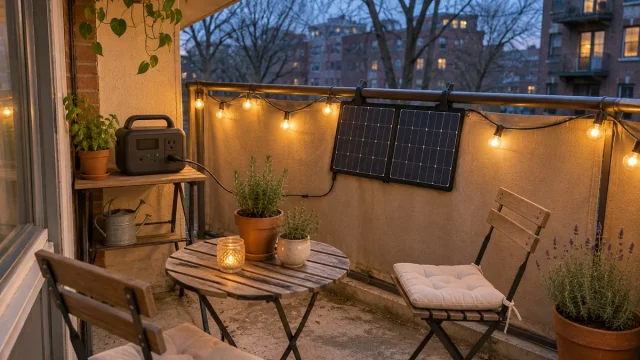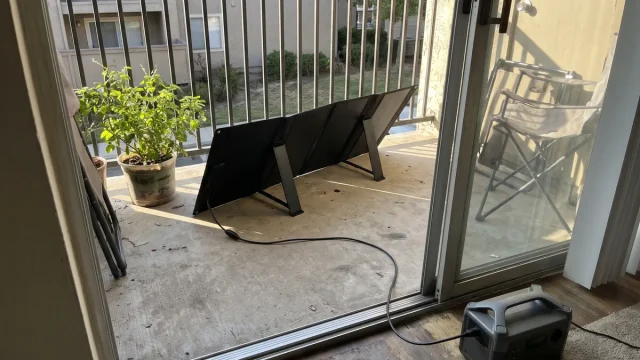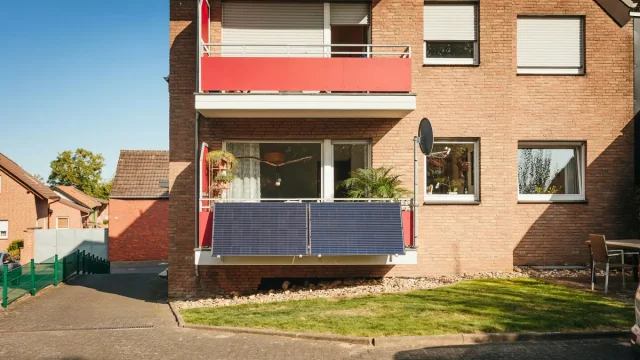
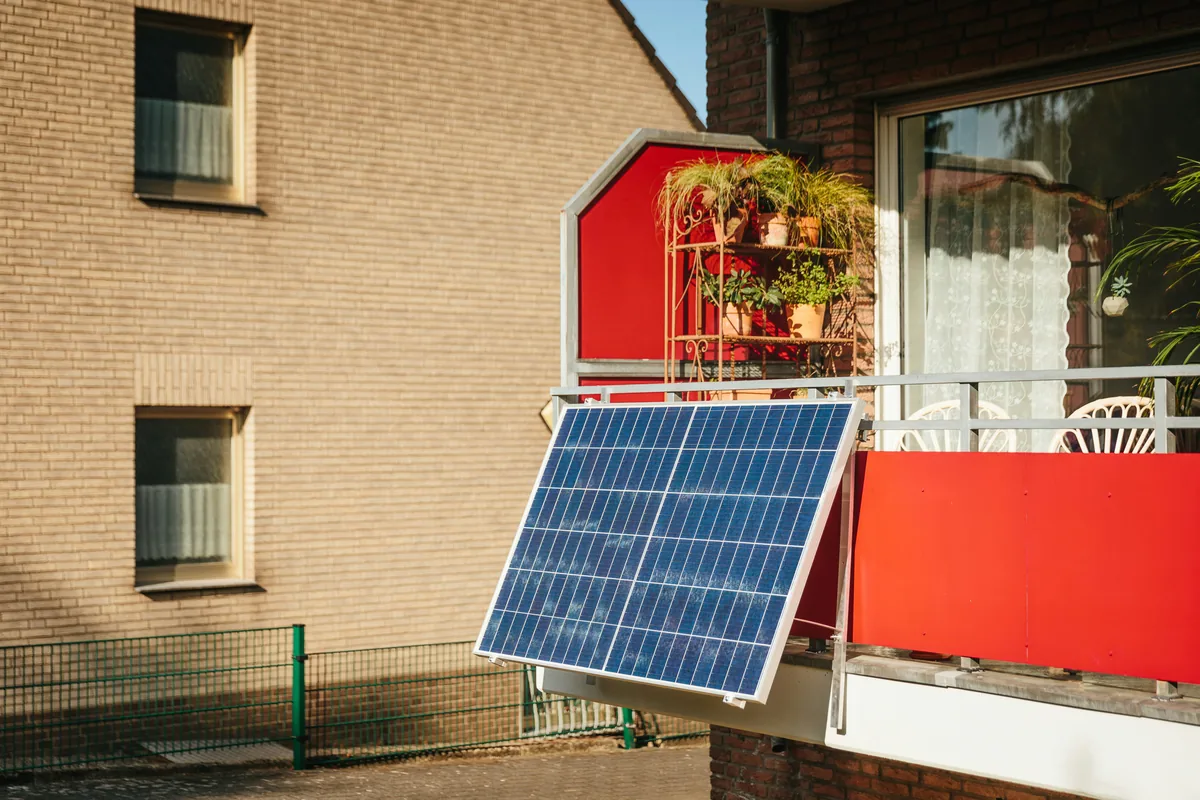
What states allow plug-in solar? As of November 16, 2026, ten states do by law: Utah, Maine, Maryland, Vermont, Colorado, Connecticut, California, Virginia, New Hampshire and New Jersey. Six of those laws are already in effect. California, Virginia and New Hampshire start on January 1, 2027, and New Jersey starts on March 1, 2027. New York’s bill has passed the legislature but still needs the governor’s signature.
If you rent, that list matters more than it does for a homeowner. A plug-in kit is one of the few kinds of solar you can take with you when you move. But a state law only covers the utility side. Your lease, your building and in some states your landlord’s notice rules still decide whether panels can go on your balcony. This tracker covers all of it, with the effective date, watt limit and official source for every state.
Quick answer In effect now (Nov 2026): Utah, Maine, Maryland, Vermont, Colorado, Connecticut. Signed, starting 2027: California, Virginia, New Hampshire (Jan 1, 2027); New Jersey (Mar 1, 2027). Passed, not signed: New York’s SUNNY Act (governor’s deadline is the end of 2026). Usual limit: 1,200 watts per meter or home. Colorado allows 1,920 W. Maine allows 420 W on a regular outlet, or up to 1,200 W with an electrician-installed dedicated circuit. Everywhere else: no plug-in solar law. Your utility’s normal interconnection rules apply, so get a written answer before you plug anything in. |
Key takeaways
|
What Renters Can and Can’t Do With Plug-In Solar
In the ten states with laws, you can plug a certified kit of up to 1,200 watts (1,920 in Colorado) into an outlet without a utility interconnection agreement. You still can’t ignore your lease, mount panels where the building forbids it, or stack kits past the limit.
A plug-in kit is one or two panels, a microinverter that turns the panels’ DC power into household AC, and a cord that plugs into a wall outlet. It feeds power into your home’s circuits, so your fridge, router and TV use solar first and buy less from the grid. It is not a rooftop system and it is not a portable power station that runs devices from its own outlets.
Here’s the split that trips people up:
| You generally can | You generally can’t |
|---|---|
| Use one certified kit up to the state limit, behind your meter | Combine kits to get past 1,200 W (or 1,920 W in Colorado) |
| Skip the full interconnection application in law states | Skip a required utility notice (Maryland, Maine above 420 W, Virginia) |
| Take the kit with you when you move | Expect net metering credits; most laws exclude these devices |
| Use a freestanding or clamp mount that doesn’t drill | Drill into railings or walls without written permission |
| Ask your utility for a written answer in a non-law state | Assume “no law” means “allowed” |
What States Allow Plug-In Solar? The 2026 Tracker
Ten states allow plug-in solar by statute, six of them right now. The table gives each state’s status as of November 16, 2026, the bill, the limit, whether you must tell your utility, and what it means for renters. Official sources are listed at the end.
States Where Plug-In Solar Is Legal Now
| State | In effect since | Law | Limit | Utility notice | What it means for renters |
|---|---|---|---|---|---|
| Utah | May 7, 2025 | HB 340 | 1,200 W | No approval or fee | No tenant rule in the law; your lease decides |
| Maine | July 2026 | LD 1730 (P.L. 2025, c. 644) | 420 W DIY; up to 1,200 W with electrician | Only above 420 W, within 30 days | Above 420 W needs a dedicated circuit, so get landlord sign-off |
| Maryland | 2026 (signed May 12) | HB 1532 (Ch. 353) | 1,200 W, one per meter | Yes, before installing | Utility notice is on you; lease still applies |
| Vermont | July 1, 2026 | S.202 (Act 149) | 1,200 W per meter; smart meter required | No approval or fee | Give landlord 10 days’ notice; silence means you can proceed |
| Colorado | Aug 12, 2026 | HB26-1007 | 1,920 W | Utility can’t require approval | Bans and unreasonable conditions are void; reasonable rules allowed. |
| Connecticut | Oct 1, 2026 | HB 5340 (Public Act 26-127) | 1,200 W, one device per meter | No approval, fee or notice reported | No tenant rule; ask your landlord |
States With Signed Laws Starting in 2027
| State | Starts | Law | Limit | Utility notice | What it means for renters |
|---|---|---|---|---|---|
| California | Jan 1, 2027 | SB 868 (Ch. 985, 2026) | 1,200 W per dwelling | Utility may require a simple online registration | Law covers utility rules; lease and HOA still apply. |
| Virginia | Jan 1, 2027 | HB 395 / SB 250 (Ch. 1052) | 1,200 W per customer or unit | Pre-installation notice form | Covered landlords can’t ban exterior use; tenant pays for any damage. |
| New Hampshire | Jan 1, 2027 (with a catch) | SB 540 (Ch. 262) | 1,200 W, one per metered customer | No interconnection agreement | Use waits on a state certification of a safety standard |
| New Jersey | Mar 1, 2027 | S2368 / A4836 (P.L. 2026, c. 82) | 1,200 W per address or unit | No approval | Landlord can’t ban it if you pay the electric bill; 14 days’ written notice |
Pending and Silent States
| State | Status (Nov 2026) | Bill | What to do now |
|---|---|---|---|
| New York | Passed both houses May 28, 2026; awaiting governor | SUNNY Act (S8512C / A9111C) | Don’t plug in yet. |
| Massachusetts | Bill in progress | H5175 | Ask your utility in writing. |
| Pennsylvania | Bill in progress | HB 1971 | Ask your utility. |
| Michigan | Bill in progress | HB 5764 | Ask your utility. |
| Ohio | Bill in progress | HB 755 | Ask your utility |
| Minnesota | Deferred to 2027 session | SF 4504 | Ask your utility. |
| Oregon | Deferred to 2027 session | HB 4080 | Ask your utility. |
| Arizona | Deferred | SB 1606 | Ask your utility. |
| North Carolina | Bill introduced | HB 1129 | Ask your utility. |
| Texas | No plug-in law found | None | Ask the company that owns your wires. |
| All other states | No plug-in law found | None | Standard interconnection rules apply |
Pending-state statuses come from legislative trackers checked in November 2026 and move fast. Treat them as a starting point and confirm on your legislature’s site.
Why Trackers Disagree on Dates
Trackers disagree because some list the signing date, some the effective date, and some never updated. Colorado is the clearest example: a few sellers and blogs say January 1, 2027, but the legislature’s final fiscal note says the law took effect August 12, 2026, with utility rule updates due by December 31, 2026. New Hampshire’s law starts January 1, 2027, yet local officials note that actual use isn’t legal until the state Department of Energy certifies a recognized safety standard. Always check the date against the official bill page.
The Ten State Laws in Plain English
Each law has its own quirk, and the quirk is usually what matters to a renter. Here’s the short version for each state.
Utah was first. HB 340 took effect May 7, 2025 and caps qualifying devices at 1,200 watts with no utility approval or fee. It says nothing about landlords.
Maine uses two tiers. You can run up to 420 watts of combined inverter output per service address yourself, with no notice. From 420 to 1,200 watts, each system must be installed by a Maine-licensed electrician on a dedicated circuit with a single outlet, and you must notify the utility within 30 days. These systems can’t be used for net energy billing. For a renter, the dedicated circuit is electrical work in your landlord’s building, so get written permission first.
Maryland allows one portable system per meter for residential use, up to 1,200 watts. Your utility can’t require approval or charge a fee, but you must notify it before installing and give a certification of the device’s safety features and maximum output. The Maryland PSC’s Balcony Solar page lists each utility’s notification form.
Vermont allows up to 1,200 watts of combined inverter capacity per meter, only where a smart meter is installed. It’s one of the few laws with a tenant process: give your landlord at least 10 days’ notice. The landlord can respond with reasonable restrictions, including making you pay a licensed electrician for any needed work. If the landlord doesn’t respond in 10 days, you can proceed.
Colorado has the highest limit at 1,920 watts. Utilities can’t require approval, and the law voids covenants that restrict these devices while still allowing reasonable conditions.
Connecticut‘s portable solar section took effect October 1, 2026, inside a larger energy bill. It allows a device of up to 1,200 watts, one behind each meter, with no interconnection agreement or fee.
California‘s SB 868 starts January 1, 2027 and caps devices at 1,200 watts per dwelling. Utilities can ask you to register the device with a simple online form, and the interconnection exemption runs through January 1, 2030. Reporting at signing said compliant products were expected around mid-2027.
Virginia‘s HB 395 starts January 1, 2027 at 1,200 watts per customer, or per unit in multifamily housing. You file a short notice form before installing, and the devices are excluded from net metering. A separate section of the landlord-tenant code bars covered landlords from prohibiting exterior installation, though tenants are responsible for damage.
New Hampshire‘s SB 540 allows one system of up to 1,200 watts per metered customer from January 1, 2027, with no interconnection agreement, but legal use depends on the state certifying a safety standard first.
New Jersey‘s Garden State Balcony Solar Act starts March 1, 2027. It goes furthest for renters: a landlord can’t ban a qualifying device if the tenant pays the unit’s electric bill, HOAs can’t impose blanket bans, and you must give 14 days’ written notice with safety documentation.
Plug-In Solar Regulations: The Rules Under Every State Law
Plug-in solar regulations follow the same pattern in almost every state: a size cap, a safety certification, anti-islanding shutoff, a limit per meter and no net metering. Learn these five and you can read any state’s bill in ten minutes.
Plug-In Solar Legal Requirements Checklist
Size cap. Usually 1,200 watts of AC output per meter, address or unit. Colorado allows 1,920 W; Maine’s no-electrician tier stops at 420 W.
Certified equipment. Laws require listing by UL or another nationally recognized testing lab, and some name UL 3700 outright. UL Solutions launched its UL 3700 certification program in January 2026.
Shutoff during outages. The device must stop sending power when the grid goes down, so line workers aren’t at risk. Maine spells out 0.2 seconds.
One system per meter or service. You can’t stack kits to beat the cap.
No net metering or export credit in most of these laws. Size the kit to what you use while the sun is up.
Is UL 3700 Certified Gear Actually Available?
Barely, as of late 2026. Hoymiles launched its HiFlow Pro microinverter in July 2026 as the first described as meeting UL 3700, though some outlets corrected early reports to say “designed to meet” rather than “certified.” APsystems and Mango Power have since announced UL 3700 certifications for their products. Before you buy, ask the seller for the certificate and the listing number, and check that it covers the whole system you’re buying.
State Law Is Only One Layer
A state law exempts you from the utility’s interconnection process. It doesn’t exempt you from the electrical code, fire code, your lease, your HOA or the manufacturer’s instructions. Several laws say this outright. Can you just plug any panel into an outlet?
How to Check Your Own State Before You Buy
Check four things in order: the law’s status, your utility’s process, your lease, and the product’s certification. It takes about an hour and one or two emails.
Find your state in the tracker above and open the official bill page. If the law isn’t in effect yet, note the date and wait.
Search your utility’s site for “plug-in solar,” “balcony solar” or “portable solar.” Maryland utilities, for example, post notification forms.
Email your utility: Is a certified kit up to [your state’s limit] allowed on my account? Do I need to notify you or register? Does my meter work with it? Save the reply.
Read your lease for clauses on alterations, balcony use and exterior items. Then email your landlord with the kit model, weight, mounting method and cord route.
Buy only a kit with a listed certification at or under your state’s limit, and install it exactly as the manual says.
In a non-law state, don’t plug in until your utility says yes in writing.

Renter Rules: Landlord Permission, Your Lease and Your HOA
In most states your landlord can still say no, because the balcony and exterior wall belong to the building. Colorado, Vermont, Virginia (from 2027) and New Jersey (from March 2027) are the exceptions, and even they allow reasonable conditions.
Here’s how the four renter-protection states compare:
| State | Can the landlord ban it? | What you must do | What the landlord can still do |
|---|---|---|---|
| Colorado | No; restrictive covenants are void | Follow reasonable conditions | Set reasonable conditions |
| Vermont | Can respond within 10 days with reasonable restrictions | Give 10 days’ notice | Require you to pay an electrician for needed work |
| Virginia (2027) | Covered landlords can’t prohibit exterior use | File the utility notice; you’re liable for damage | Require written approval if wiring or panel changes are needed |
| New Jersey (Mar 2027) | No, if you pay the electric bill | 14 days’ written notice plus safety documents | Set reasonable size and placement rules |
Everywhere else, get written permission before you buy. Picture this: you’re in a Maryland one-bedroom, the law covers you with the utility, but your lease bans anything attached to the railing. A freestanding floor stand that sits inside the balcony line usually solves that, and it’s the kind of mount most landlords approve.
Copy-paste landlord email Subject: Request to use a plug-in solar kit on my balcony, [unit] Hi [name], I’d like to use a small plug-in solar kit on my balcony. It’s [model], [wattage] W, certified to [UL 3700 / listing], and it weighs [X] lbs. It sits on a freestanding stand inside the railing with no drilling, and the cord runs to an existing outlet. [State] law allows this type of device, and I’ll notify the utility as required. I’ll remove it and leave the balcony as I found it when I move out. Could you confirm in writing that this works for you, or tell me any conditions? Thanks, [your name] |
What Plug-In Solar Costs and Saves (Nov 2026)
Most plug-in kits run about $1.50 to $2.50 per watt in the US, so expect roughly $900 to $2,000 for a 600 to 1,000 watt setup, more with a battery. Savings depend on your sun and your electricity rate, not the box.
| Example (checked Nov 2026) | What it is | Listed price |
|---|---|---|
| APsystems EZ1 microinverter | Microinverter only, pair with your own panels | $299 at one retailer |
| EcoFlow STREAM microinverter | Microinverter, 1,200 W | From $349 (pre-order listing) |
| NAZ Solar Electric 870 W kit | Two panels, APsystems EZ1, roof-mount rack | $938.68 |
| CraftStrom 800 W kit | Complete plug-and-play kit | $2,031 (May 2026 listing) |
| Mango Power S 1,200 W kit | Kit with zero-export gateway | $3,799 |
Solar United Neighbors’ state savings map estimates roughly $180 to $800 a year for a 1,200 W system, depending on the state. Here’s a cautious renter example you can redo with your own numbers. Say an 800 W kit on a south-facing balcony makes about 700 kWh a year (balconies get less sun than roofs), and you pay 30 cents per kWh. That’s about $210 a year if you use the power as it’s made. On a $940 kit, payback is around 4.5 years. Most of these laws give you no credit for exported power, so if nobody’s home during the day, plan on less.
Mistakes to Avoid With Plug-In Solar
Most problems come from buying before checking the rules or from treating a signed law as an active one.
Plugging in before the effective date. A law signed in 2026 that starts in 2027 doesn’t cover you today.
Stacking kits past the cap. Every law limits total output per meter or unit.
Skipping a required notice. Maryland, Virginia and Maine above 420 W all require one.
Buying uncertified gear. Laws require a listed product, and an unlisted one may also affect your renters insurance.
Counting on net metering or the federal credit. Most laws exclude export credits, and the federal residential credit doesn’t cover 2026 purchases.
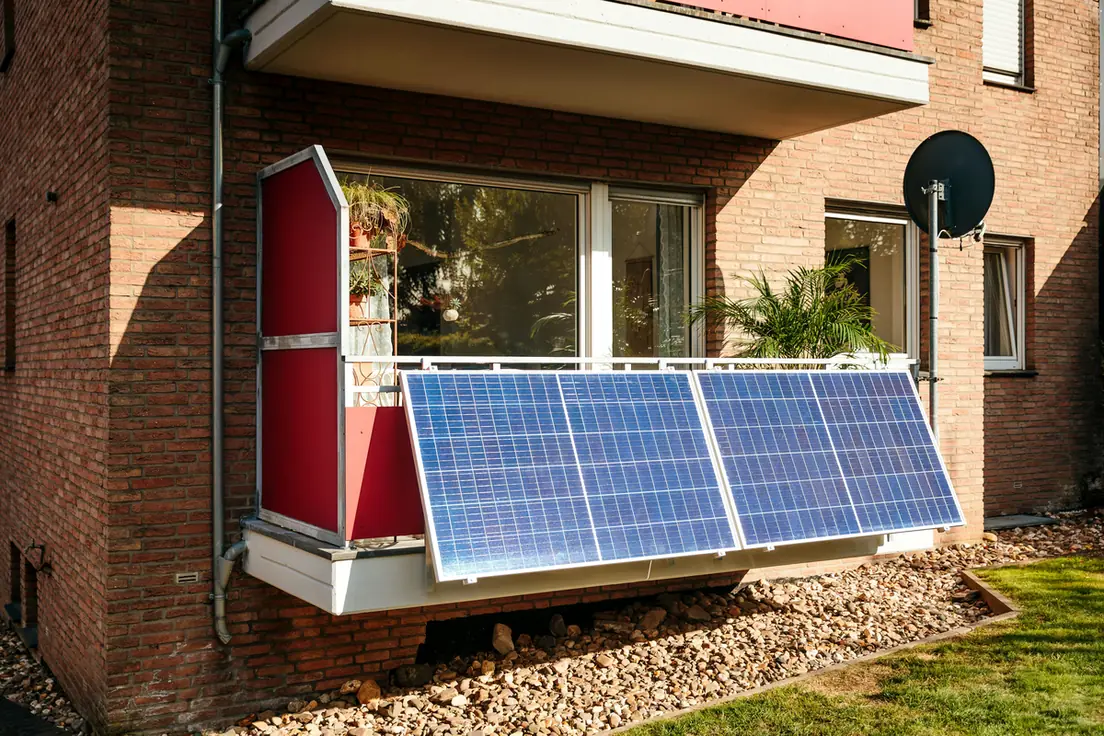
Hanging panels outside the railing. A panel is a sail in wind. Keep it inside the balcony line on a rated mount.
Frequently Asked Questions
Is plug-in solar legal in all 50 states?
No single federal law covers it. As of November 2026, ten states have plug-in solar laws, six in effect. In other states it isn’t banned outright, but your utility’s interconnection rules apply, so you need its written approval.
What are the plug-in solar legal requirements?
Most laws require a certified device of up to 1,200 watts per meter or unit, automatic shutoff during outages, and one system per meter. Some add a utility notice (Maryland, Virginia, Maine above 420 W) or a smart meter (Vermont).
Do I need to tell my utility about a plug-in solar kit?
It depends on the state. Maryland requires notice before installation, Virginia uses a pre-installation form starting in 2027, Maine requires notice within 30 days above 420 watts, and California utilities may require online registration. In non-law states, assume you need approval.
Can my landlord stop me from using plug-in solar?
In most states, yes, because the lease and building rules still apply. Colorado voids outright restrictions, Vermont uses a 10-day notice process, and Virginia (2027) and New Jersey (March 2027) limit landlord bans, all with room for reasonable conditions.
Which state allows the biggest plug-in solar system?
Colorado, at 1,920 watts. Most other states cap plug-in systems at 1,200 watts, and Maine’s no-electrician tier stops at 420 watts.
Is plug-in solar legal in New York?
Not yet. The SUNNY Act passed both houses on May 28, 2026, and was still awaiting Governor Hochul’s decision in mid-November 2026, with a deadline at the end of the year.
More Plug-In Solar Guides
The Bottom Line
So, what states allow plug-in solar? As of November 2026, ten have laws and six are in effect: Utah, Maine, Maryland, Vermont, Colorado and Connecticut. California, Virginia and New Hampshire follow on January 1, 2027, and New Jersey on March 1, 2027. If you rent anywhere else, your utility’s written answer is what counts.
Your next step: find your state in the tracker, open the official bill page, and email your utility and landlord before you spend a dollar. Then start comparing certified kits in Solar Panels for Apartments & Renters: Complete Guide.
Last checked: November 16, 2026. This tracker is general information, not legal advice.
Sources (external links for the article)
Utah HB 340 (2025): le.utah.gov
Maine 35-A M.R.S. §3475 (LD 1730, P.L. 2025 c. 644): legislature.maine.gov/legis/statutes/35-A/title35-Asec3475.html
Maryland PSC Balcony Solar page (HB 1532, Ch. 353): psc.maryland.gov/regulated-utilities/electricity/renewable-energy/balcony-solar/
Vermont 30 V.S.A. §256 (S.202, Act 149): legislature.vermont.gov/statutes/section/30/005/00256
Colorado HB26-1007 final fiscal note (effective Aug 12, 2026): leg.colorado.gov/bills/hb26-1007
Connecticut HB 5340 / Public Act 26-127: cga.ct.gov
California SB 868 (Ch. 985, 2026): leginfo.legislature.ca.gov
Virginia HB 395 (Ch. 1052, 2026): lis.virginia.gov
New Hampshire SB 540 (Ch. 262): gc.nh.gov/bill_status/billinfo.aspx?id=1317
New Jersey S2368 (P.L. 2026, c. 82): njleg.state.nj.us
New York SUNNY Act S8512C / A9111C: nysenate.gov
UL Solutions UL 3700 certification program (Jan 8, 2026): ul.com
Solar United Neighbors plug-in solar savings map: solarunitedneighbors.org