
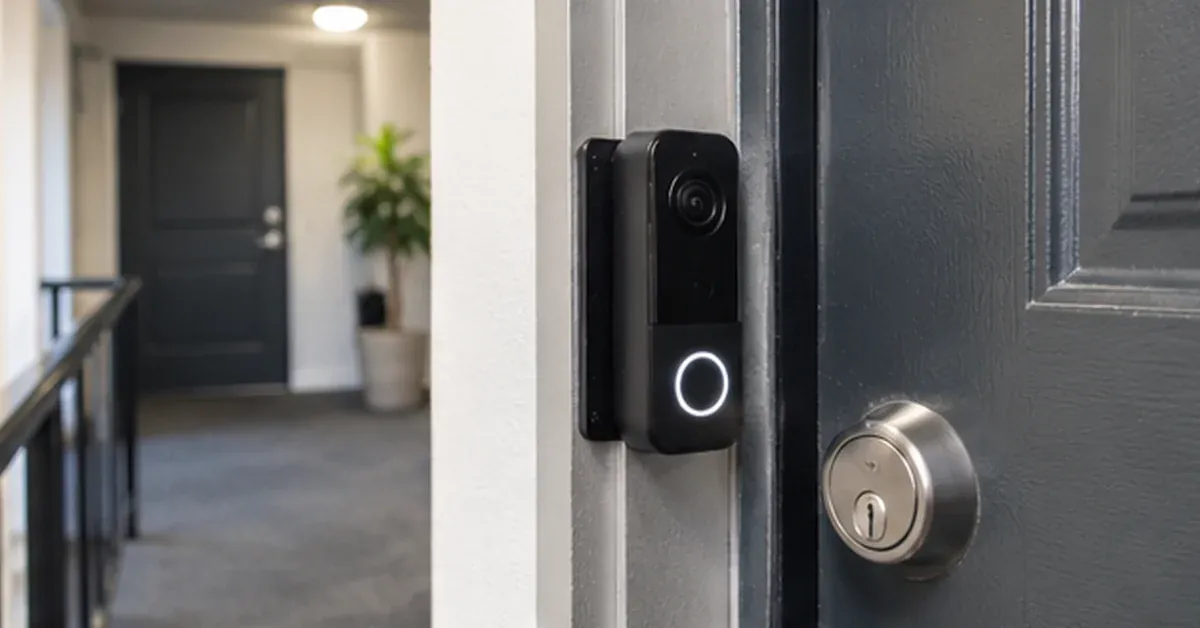
Yes, you can install a video doorbell in an apartment without drilling in many cases. Battery-powered doorbells work with no-drill mounts that hang over the door, stick on with adhesive, or replace the peephole viewer. The catch is permission and privacy: your entry may face a shared hallway, and your landlord or building may limit what you put on the door or record in common areas. Ask first, choose a mount that doesn't touch the door frame's paint, and point the camera at your own doorway.
Also read: How to Hang Window Boxes Without Drilling (Brick, Siding & Rails) · Mounting a TV on the Wall Without Drilling – 5 Renter Methods · Troubleshooting Connectivity Issues in Multi Device Smart Home Setups · Best No-Drill TV Wall Mounts for Renters (2026) · No-Tool, No-Screw Window Blinds – Easiest Installs Ranked
Quick answer
- Use a battery video doorbell, not a wired model.
- Mount it with an over-the-door bracket, a no-drill adhesive plate, or a peephole camera that replaces the viewer.
- Get written landlord approval, especially for shared hallways.
- Check door clearance so the mount doesn't stop the door from closing and latching.
- Respect privacy: frame your door, not neighbors' doors, and be careful with audio recording.
Video doorbell apartment without drilling: mounting options
| Mount | How it attaches | Pros | Cons |
|---|---|---|---|
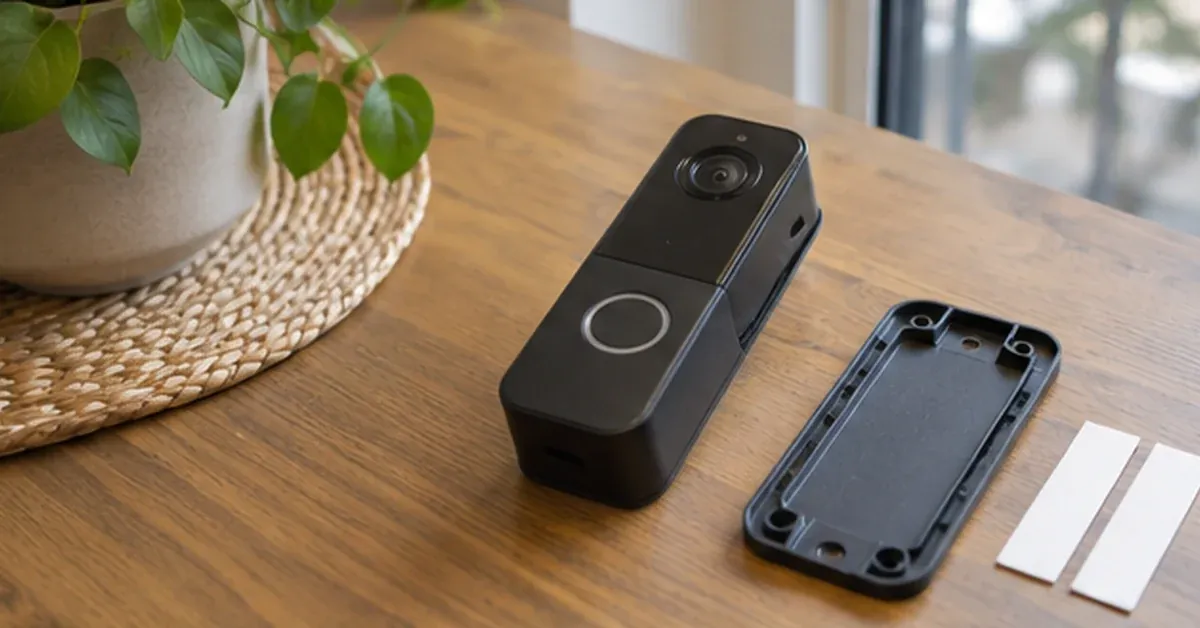
| Over-the-door bracket | Thin metal plate slips over the top of the door | No adhesive on walls | Can interfere with door seals and latching |
| Adhesive mounting plate | Strong double-sided tape on the door or frame | Simple, clean look | Can pull paint; heat and cold weaken bond |
| Peephole camera apartment option | Replaces the peephole viewer, no holes | Invisible from outside except the lens | Must swap the viewer back at move-out; check landlord rules |
| Door-mounted clamp | Clamps to the door edge | No adhesive | Fit depends on door thickness and gap |
| Indoor camera facing the door | Sits inside on a shelf | No door changes at all | Only sees inside your unit |
Check door clearance first
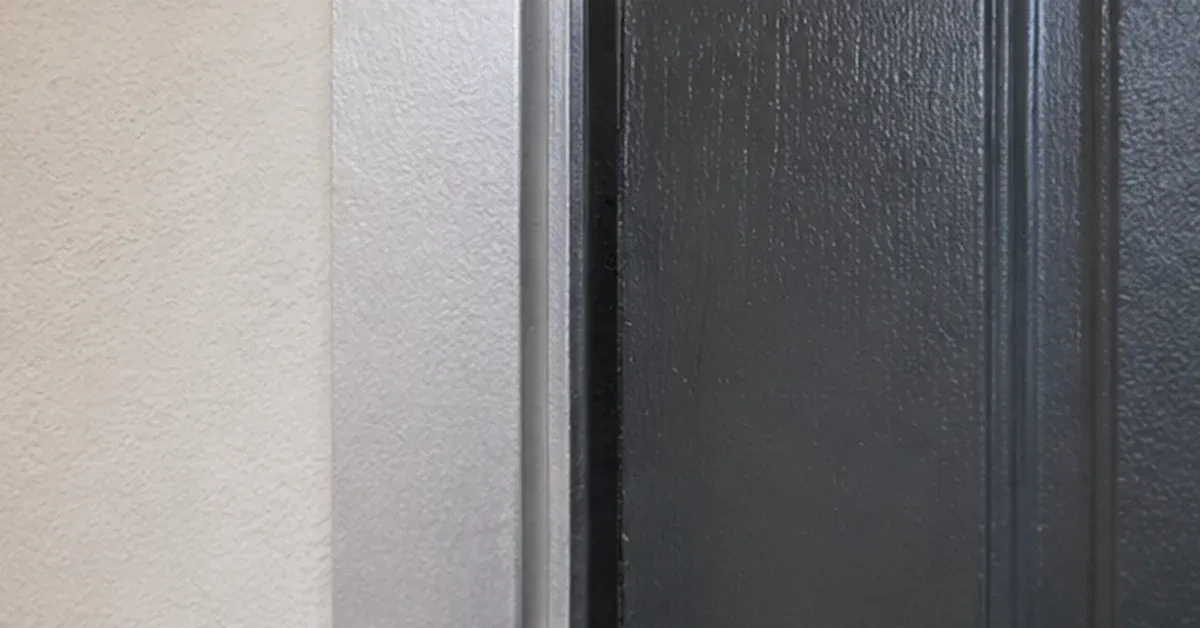
Apartment entry doors are often fire-rated and self-closing. Anything that stops the door from closing and latching on its own is a safety problem and may break building rules.
- Measure the gap between the top of the door and the frame.
- Compare it with the over-door bracket's thickness.
- Close the door gently and let the closer pull it shut. It must latch fully.
- Check that weatherstripping isn't crushed.
If it doesn't latch, choose an adhesive plate or peephole camera instead.
Get landlord approval
Doorbell landlord permission matters because the device attaches to the building's door. Ask before installing anything on your entry door. Include:
- The doorbell model and how it mounts
- Where it will point and what it will record
- That you'll remove it and restore the door at move-out
- Whether you'll swap the peephole viewer, and that you'll keep the original
Some buildings ban devices on doors facing shared hallways. Others allow them if they don't record common areas.
Privacy and recording rules
A doorbell in a shared hallway can capture neighbors coming and going. Be considerate and careful:
- Frame the camera on your doorway, not across the hall at other doors.
- Use privacy zones in the app to block other doors and windows.
- Be cautious with audio. Some states require consent from everyone recorded in a conversation, so consider turning audio recording off in shared spaces.
- Don't share footage of neighbors publicly.
How to install a battery video doorbell without drilling
- Charge the battery fully.
- Set up the doorbell in the app indoors first, near your router, to confirm Wi-Fi works at the door. See How to Set Up Smart-Home Wi-Fi in an Apartment.
- Clean the mounting spot with rubbing alcohol if using adhesive.
- Attach the mount and press firmly for 30 seconds or longer as directed.
- Wait the cure time before attaching the doorbell, often a few hours.
- Attach the doorbell and adjust the angle.
- Test the door closes and latches.
- Set motion zones and privacy zones.
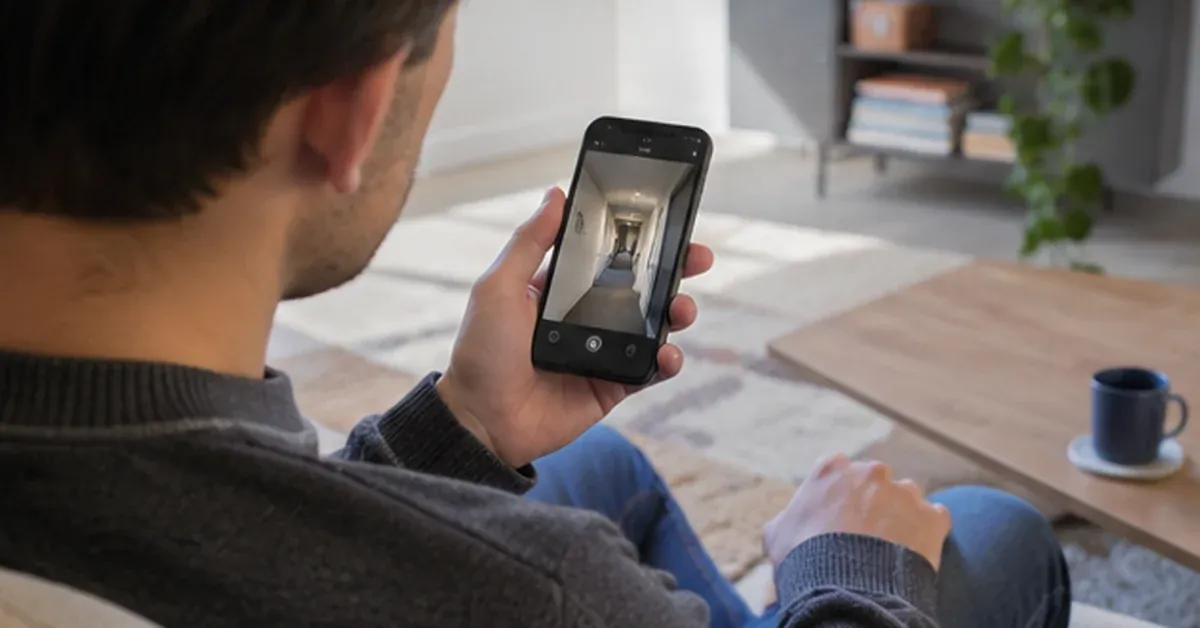
- Check notifications on your phone.
Choosing a renter video doorbell
Look for these features when you shop:
- Battery power with a removable or rechargeable pack, so you don't need doorbell wiring.
- Head-to-toe or tall field of view if packages land at your door.
- Local storage or a reasonable subscription. Many brands charge monthly for video history. Check the cost before you buy.
- Privacy zones to block neighbors' doors.
- Two-factor login for the app.
- Cold and heat ratings if your entry is outdoors. Batteries drain faster in cold weather.
- Slim profile so it doesn't snag in a narrow hallway.
Battery life in apartments
Hallway doorbells often see a lot of motion from neighbors walking by. That drains batteries fast. Narrow the motion zone to your doormat and turn down sensitivity to stretch battery life. Expect to recharge more often in busy buildings and cold weather.
What about the chime?
Battery doorbells usually ring your phone and smart speakers. Some sell a plug-in chime, so you don't need the building's doorbell wiring. If your doorbell isn't ringing inside, see Ring Doorbell Chime Not Working: Fixes for Renters (No Hardwiring).
Alternatives if your landlord says no
- An indoor camera facing the inside of your door. See How to Install Indoor Security Cameras in an Apartment Without Drilling.
- A door contact sensor that alerts you when the door opens. See How to Set Up Contact Sensors Without Drilling in an Apartment.
- A smart lock with entry logs, with approval. See Door Lock Without Drilling: Renter Options for Doors & Glass.
A real renter scenario
Ana lives in a fourth-floor apartment where packages get left outside her door in a shared hallway. Her landlord allows doorbells as long as they don't record other units. She picks a slim battery doorbell, checks that an over-door bracket lets her fire-rated door latch, and sets a privacy zone that blacks out the doors across the hall. She turns off audio recording. Now she gets package alerts and sees who knocks, and nothing touches the paint.
Removal at move-out
- Remove the doorbell from its mount.
- For adhesive, warm with a hair dryer and peel slowly. Clean residue.
- For over-door brackets, lift off and check the door edge for marks.
- For peephole cameras, reinstall the original viewer.
- Remove the device from your account and reset it.
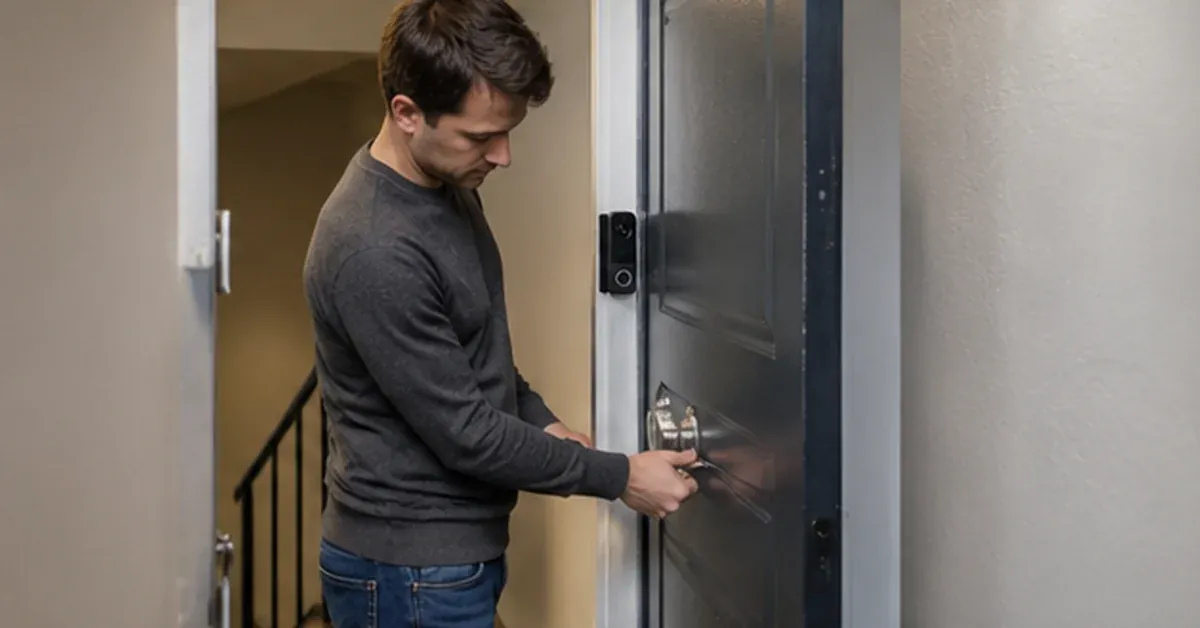
Mistakes to avoid
- Not checking door clearance. A doorbell plate under a bulky mount can stop the door from closing or rub the frame.
- Mounting adhesive in the cold. Most adhesive mounts need room temperature to bond. Install on a mild day, or warm the surface first.
- Pointing the camera at a neighbor's door. Aim at your own doorway and use privacy zones where the app offers them.
- Leaving it easy to steal. Use a mount with a security screw or anti-theft clip, and turn on theft protection if your brand offers it.
- Forgetting to remove it from your account. At move-out, reset the doorbell and delete it from the app before you hand back the keys.
Questions
Frequently asked questions.
Can I install a video doorbell in my apartment without drilling?
Yes, with a battery doorbell and a no-drill mount such as an over-door bracket, adhesive plate, or peephole camera. Get landlord approval first.
Will an over-the-door doorbell mount stop my door from closing?
It can. Check that the door still closes and latches on its own. If not, use an adhesive plate or peephole camera.
Is it legal to record a shared apartment hallway?
Rules vary by state and building. Point the camera at your own door, use privacy zones, and be careful with audio recording.
Do I need my landlord's permission for a video doorbell?
Usually yes, because it attaches to the building's door. Some buildings don't allow them on hallway-facing doors.
Conclusion
A video doorbell in an apartment without drilling is very doable with a battery model, the right mount, and your landlord's approval. Check door clearance, protect your neighbors' privacy, and remove it carefully at move-out. For more renter security ideas, read Renter-Friendly Home Security Systems (No Drilling, No Contract).
Sources
- Manufacturer installation guides for battery video doorbells and no-drill mounts
- Building fire door guidance (self-closing and latching doors)
