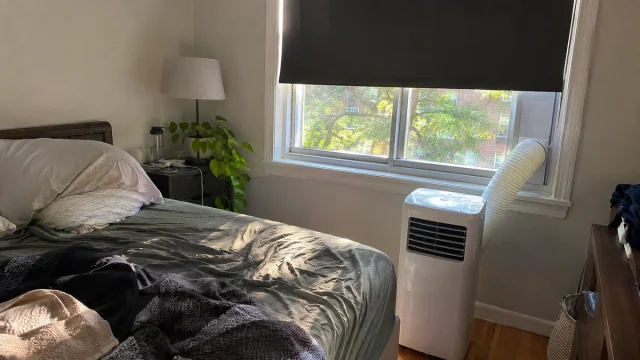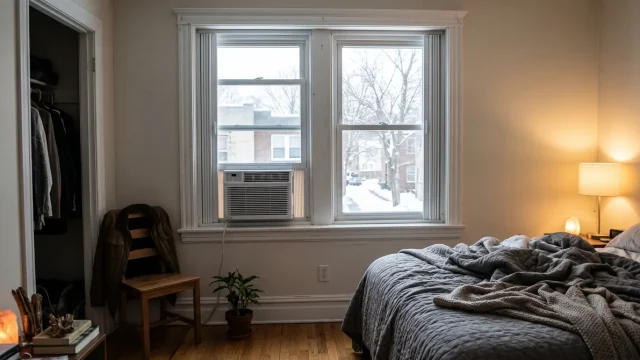
The best apartment cooling and heating options for renters are the ones you can add without changing the building: a window or portable air conditioner sized to your room, fans to move air, an electric space heater used safely, and removable insulation for windows and doors. Your landlord is usually responsible for heat, and in a growing number of places for cooling too. This guide compares every renter-friendly option by room size, cost, lease rules, and safety, so you can pick the right one for your apartment.
Also read: Soundproofing Apartment Noise: How to Soundproof an Apartment Without Drilling · Balcony Solar for Renters: What It Is, Laws, Cost & Setup · What Is a Smart Plug? How It Works & What Renters Can Do With One · Best Smart Home Devices for Renters: What to Buy First (No Drilling)
Quick answer
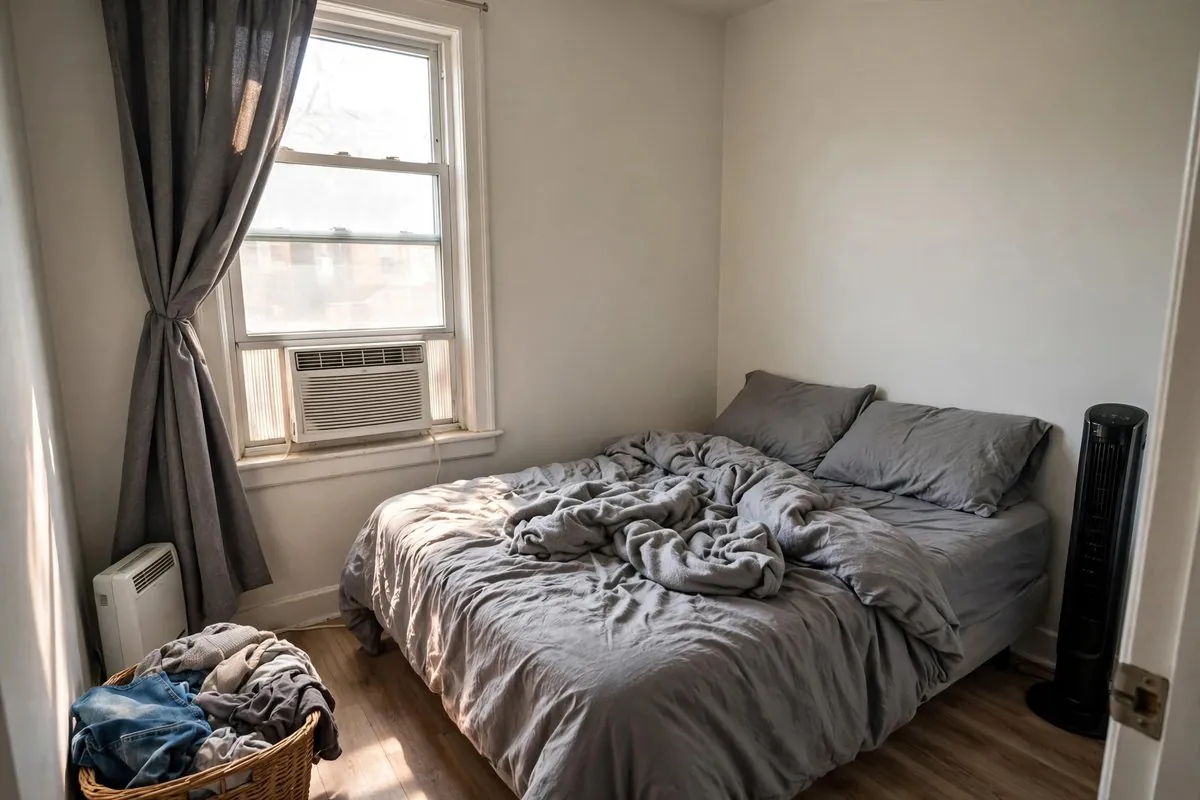
For cooling, a correctly sized window AC is the most efficient renter option, followed by a dual-hose portable AC when windows or lease rules don't allow a window unit. Fans and blackout curtains stretch any AC further. For heating, ask your landlord to fix the building heat first. Then use a tip-over-protected electric space heater plugged directly into the wall, plus draft stoppers and window film to keep heat in.
Key takeaways
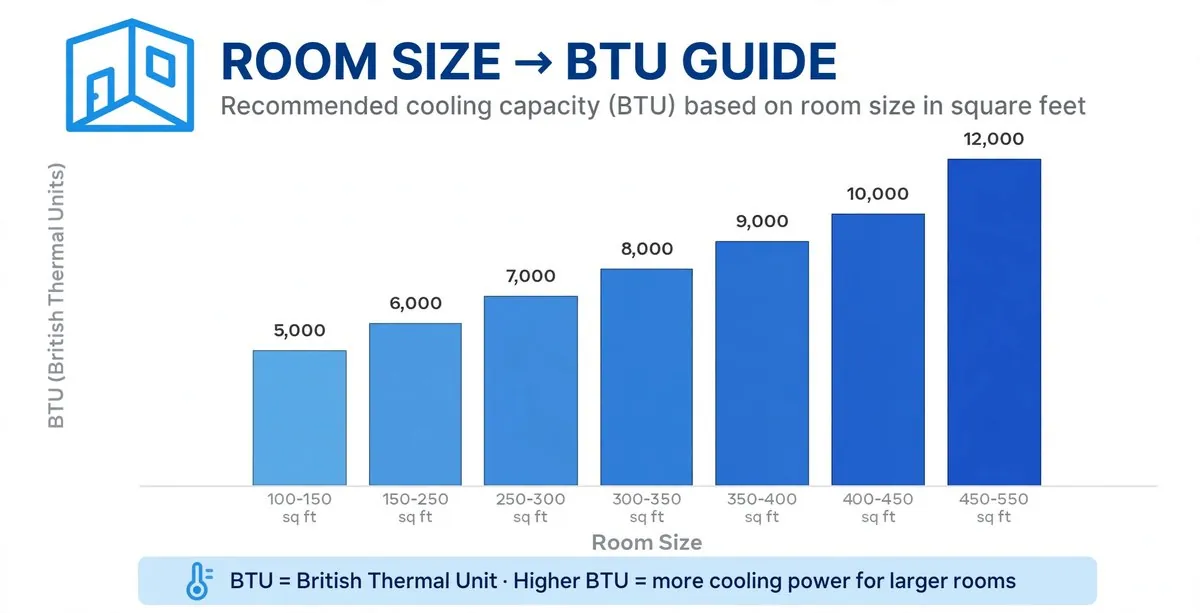
- Size your AC to the room. Energy Star's chart starts at 5,000 BTU for 100 to 150 square feet and reaches 12,000 BTU for 450 to 550 square feet.
- Window ACs usually cool better per dollar than portable ACs, but many leases restrict them.
- Landlords must provide working heat in most US places. A growing list of cities, and now Maryland, also require cooling in some rentals.
- Space heaters cause about 1,700 fires a year in the US, according to CPSC estimates. Plug them straight into the wall and keep 3 feet of clearance.
- Removable insulation (film, draft stoppers, thermal curtains) helps in both summer and winter.
What renters can and can't do
Most renter cooling and heating options are portable appliances. The lease mostly matters for window units, anything attached to the building, and changes to heating or thermostats.
| Option | Usually allowed? | Ask first? | Deposit risk |
|---|---|---|---|
| Fans (box, tower, pedestal) | Yes | No | None |
| Portable AC with window kit | Usually | Often | Low |
| Window AC | Varies by building | Yes | Low to medium (sill marks, brackets) |
| Electric space heater | Usually | Check lease and building rules | Low if used safely |
| Fuel-burning heater (kerosene, propane) | Usually not indoors | Yes, and often banned | High safety risk |
| Window insulation film | Usually | Good idea | Low |
| Smart thermostat | Rarely without approval | Yes | Medium (wiring) |
| Mini-split heat pump | Only with landlord install | Yes | Not a renter project |
Some buildings ban window units on upper floors because of falling-object risks. Always check before you buy.
Does your landlord have to provide heat or air conditioning?
Whether there's a landlord AC requirement depends on your state and city. Landlords almost everywhere in the US must provide working heat, often to a minimum temperature set by local code. Cooling rules are newer and patchier, but they're spreading.
Examples of cooling requirements (check your local law for current details):
- Maryland: Starting June 1, 2026, some landlords with 10 or more units must provide air conditioning that keeps homes at 80°F or below. Units without AC today may stay unchanged unless renovated.
- Montgomery County, MD: Since 2020, most rental units must have cooling that keeps the inside at 80°F or less during summer months.
- Phoenix, AZ: Rooms with AC must stay at or below 82°F, and evaporative-cooled units at or below 86°F.
- Dallas, TX and Tempe, AZ: Landlords must provide air conditioning.
- Houston, Austin, New York City, and New Orleans have also adopted cooling protections or maximum indoor temperatures.
If your heat or AC is the landlord's responsibility and it breaks, report it in writing first. For your state's rules, see Renter-Friendly vs Landlord-Friendly States: How They Compare.
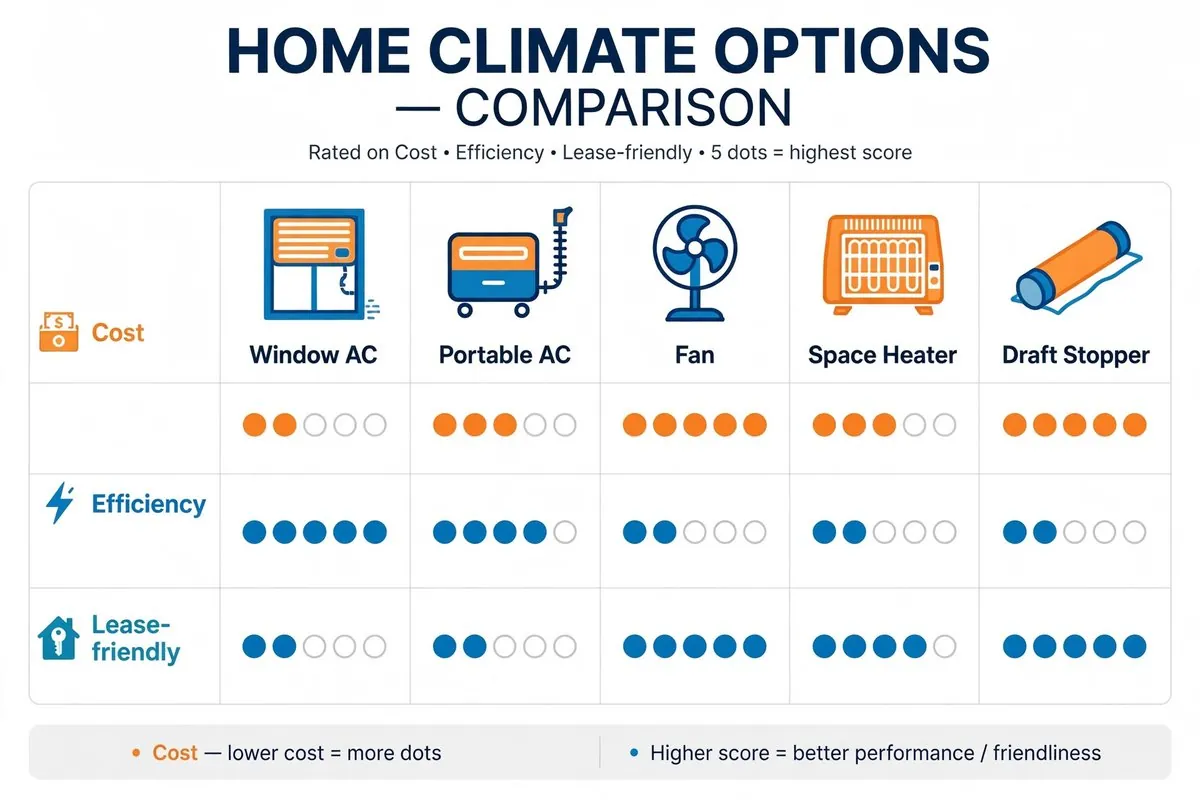
Apartment cooling and heating options compared
This table compares the main options side by side. Costs are typical ranges checked November 2026.
| Option | Cools | Heats | Best for | Upfront cost | Notes |
|---|---|---|---|---|---|
| Window AC | Yes | Some models | Single rooms with a suitable window | $200 to $600 | Most efficient renter AC |
| Window heat pump unit | Yes | Yes | Year-round single-room use | Higher than a standard window AC | Heating drops off in deep cold |
| Single-hose portable AC | Yes | Some models | Small rooms, no window AC allowed | $270 to $500 | Creates negative pressure |
| Dual-hose portable AC | Yes | Some models | Larger or drafty rooms | $400 to $650 | Bulkier, faster cooling |
| Fans | Feels cooler | No | Mild heat, moving AC air | $20 to $120 | Very low running cost |
| Electric space heater | No | Yes | Spot heating | $30 to $150 | Fire safety rules apply |
| Thermal curtains and window film | Helps | Helps | Every rental | $20 to $150 per window | Removable |
| Draft stoppers and weatherstrip | Helps | Helps | Older buildings | $10 to $40 | Cheapest efficiency win |
How to cool an apartment
The most effective way to cool an apartment is to keep heat out first, then remove what's left with a correctly sized AC, and move the cool air around with fans.
Step 1: Block heat before it gets in
- Close blinds and curtains on sunny windows during the day. Blackout or thermal curtains help most.
- Add removable window film on west- and south-facing glass.
- Turn off heat-making appliances in the afternoon, like the oven and old incandescent bulbs.
Our How to Insulate Apartment Windows Without Permanent Changes guide covers film and inserts.
Step 2: Choose the right air conditioner
Size matters more than brand. Here's Energy Star's sizing chart for room air conditioners:
| Room size (sq ft) | Capacity needed (BTU per hour) |
|---|---|
| 100 to 150 | 5,000 |
| 150 to 250 | 6,000 |
| 250 to 300 | 7,000 |
| 300 to 350 | 8,000 |
| 350 to 400 | 9,000 |
| 400 to 450 | 10,000 |
| 450 to 550 | 12,000 |
Energy Star warns that bigger isn't always better. An oversized unit cools quickly but leaves the room damp and clammy. Add about 10% for very sunny rooms and reduce about 10% for heavily shaded ones. If the room includes a kitchen, add capacity.
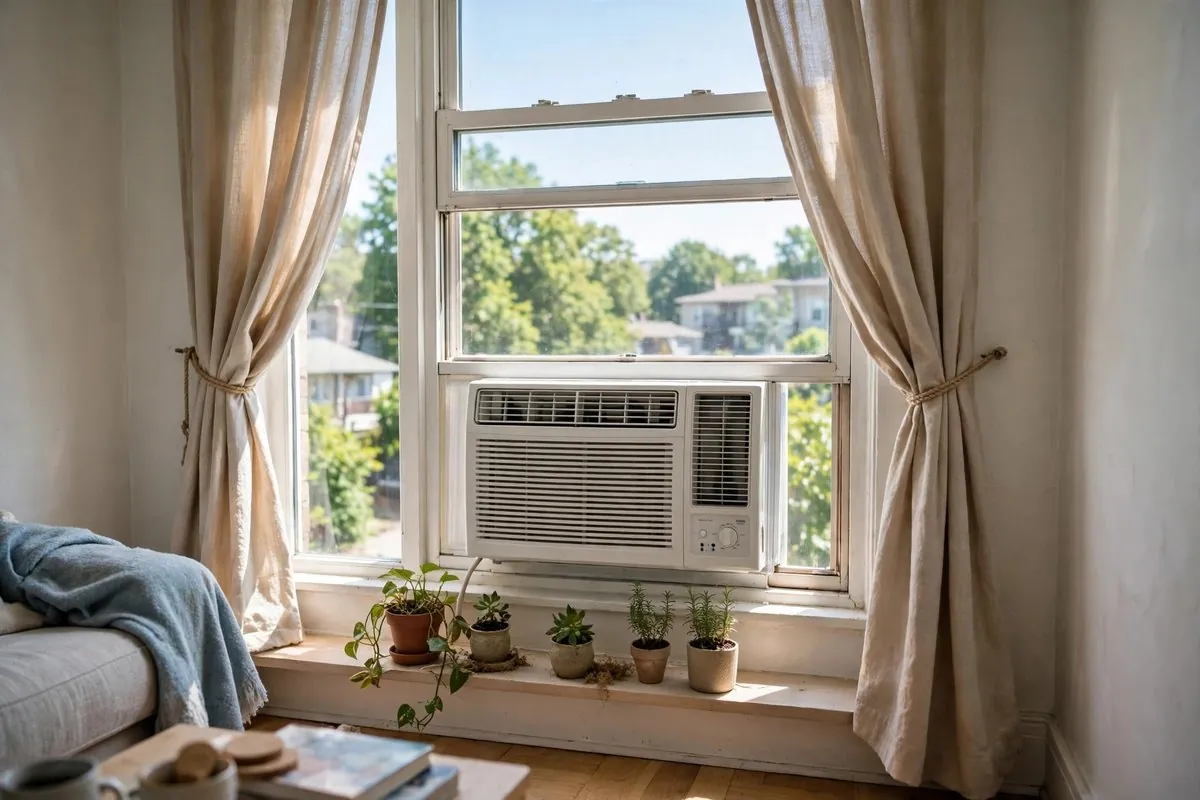
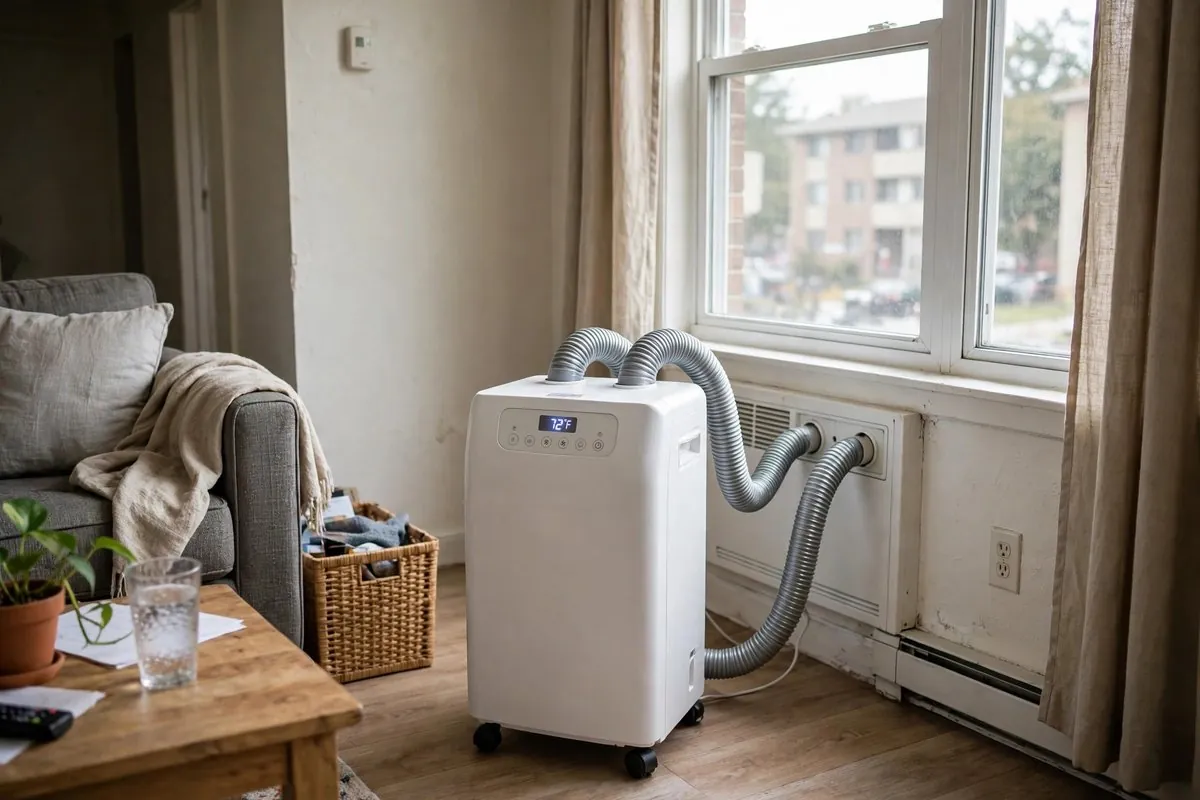
Window AC vs a portable AC apartment setup: A window unit is usually more efficient and quieter inside, because the hot parts sit outside. A portable AC is easier to get approved and works with more window types, but loses some efficiency through the hose. Compare portable units by their SACC rating, not the bigger ASHRAE number. For a full breakdown, read Single-Hose vs Dual-Hose Portable AC: How Each System Works.
Installation guides:
- How to Install a Window Air Conditioner in a Rental Apartment
- How to Install and Vent a Portable Air Conditioner in an Apartment
- Can You Use a Window Air Conditioner Without a Window?
If you want one unit for summer and winter, a window heat pump can do both. Our published guide Window AC With Heat Pump: Midea & Best Options for Renters explains when that works.
Step 3: Move air with fans
A ceiling, tower, or box fan doesn't lower the temperature, but the breeze makes you feel several degrees cooler. Use a fan to push AC air into other rooms, or set a box fan in a window at night to pull in cooler outside air. For no-AC strategies, see our published How to Keep a Rental Cool Without Installing AC: Portable & No-Drill Options.
Step 4: Control humidity
Humid air feels hotter. Most ACs remove moisture, but if your apartment stays damp, a dehumidifier helps. Read How to Reduce Humidity and Condensation in an Apartment.
How to heat an apartment
The safest way to heat an apartment is to get the building heat working properly and keep heat from escaping. Use electric space heaters only for spot heating, with strict safety habits.
Step 1: Report heat problems in writing
If radiators, baseboard heat, or the furnace don't keep your home warm, tell your landlord in writing with dates and indoor temperatures. Many local codes set minimum indoor temperatures during heating season.
Step 2: Keep heat in
- Stop drafts under doors with a draft stopper or door sweep. See How to Stop Drafts Around an Apartment Door Without Drilling.
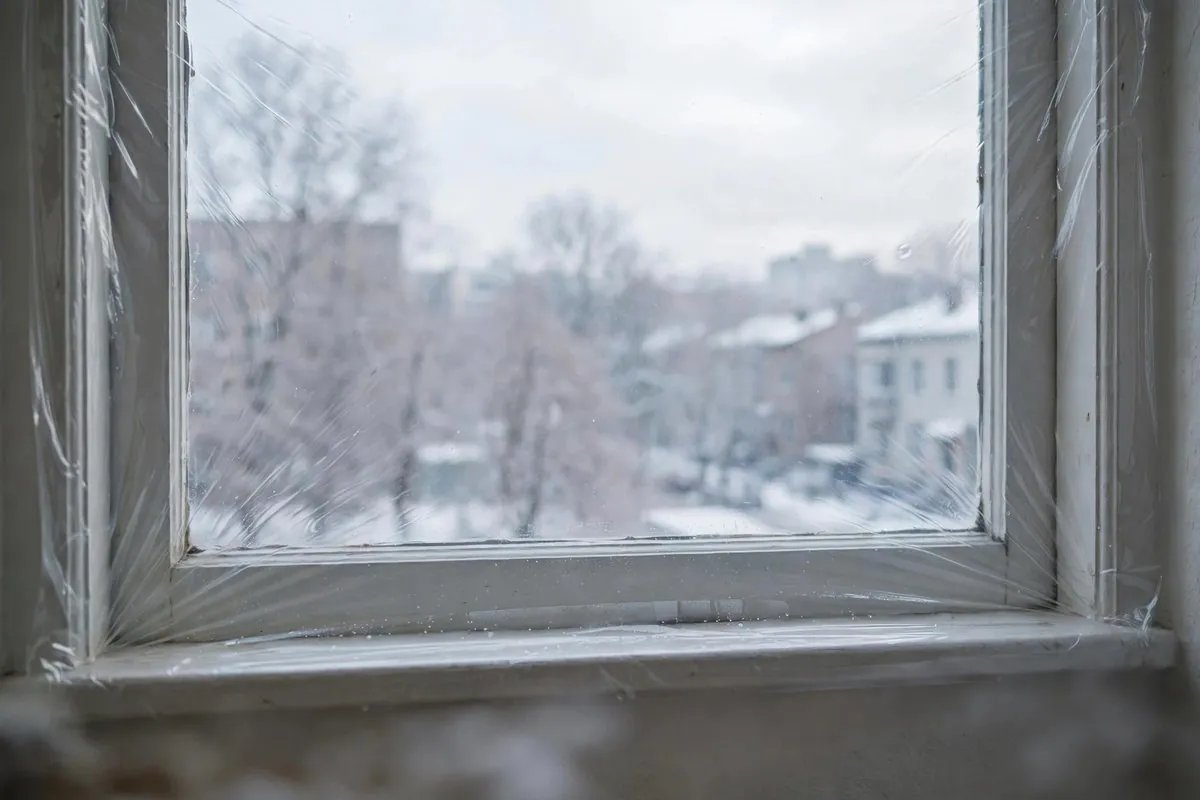
- Add shrink-film window insulation kits or removable inserts.
- Close thermal curtains at night and open them on sunny winter days.
- Put rugs on cold floors.
- Don't block radiators or vents with furniture.
Step 3: Use space heaters safely
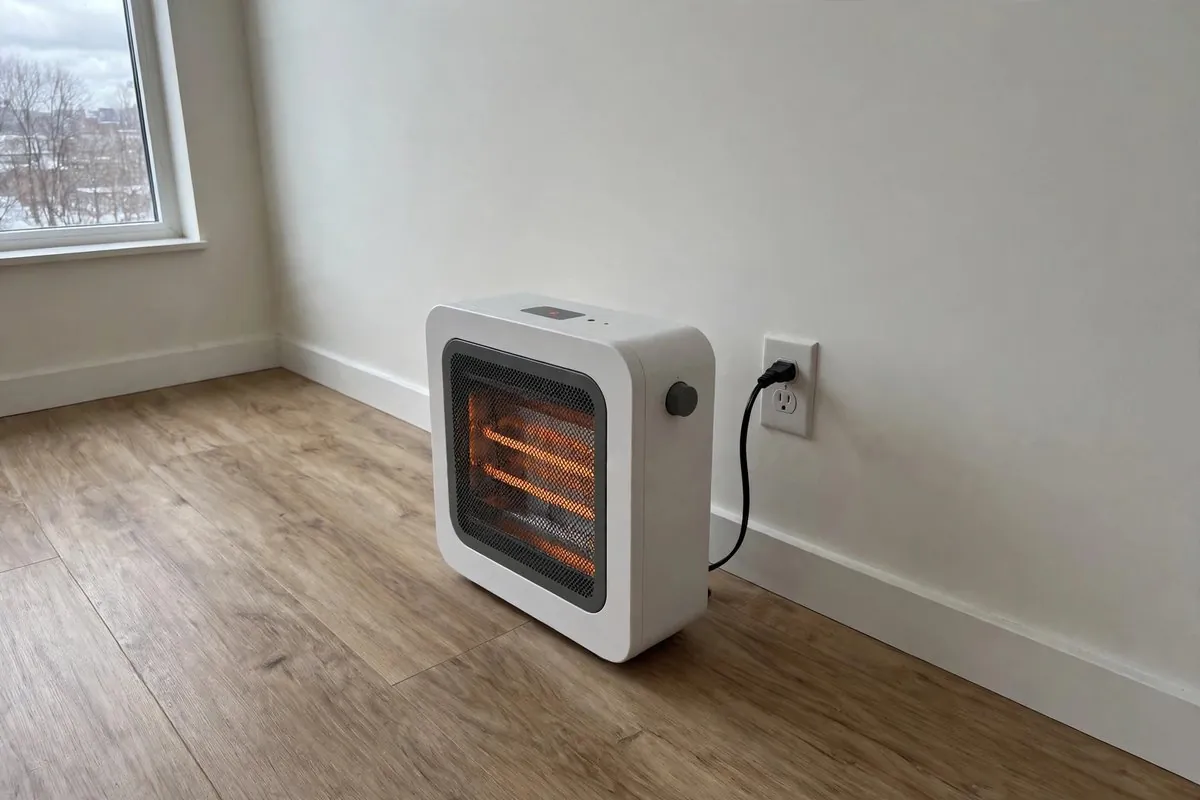
Electric space heaters are the most common renter heating add-on, and the riskiest. The US Consumer Product Safety Commission estimates portable space heaters cause about 1,700 fires, 80 deaths, and 160 injuries each year.
Safety rules that matter most:
- Plug directly into a wall outlet. Never use an extension cord or power strip.
- Keep 3 feet of clearance from bedding, curtains, furniture, and clothes.
- Choose tip-over and overheat shutoff features and a recognized safety listing.
- Never run the cord under a rug.
- Turn it off when you leave or go to sleep.
- Only one heater per outlet.
- Check the plug for heat or discoloration. A hot plug means stop using it.
Read Space Heater Safety for Renters for the full checklist and How Much Does It Cost to Run a Space Heater? (1500W Calculator) for running costs. For all no-central-heat options, see How to Heat a Rental Apartment Without Central Heating.
Never use an oven or stove to heat your home, and never use fuel-burning heaters indoors unless they're designed and approved for it. These create carbon monoxide risks.
Which fan works best in a rental?
Fans are the cheapest cooling tool you can own, and they pair well with an AC. Each type has a job.
| Fan type | Best use | Renter tip |
|---|---|---|
| Box fan | Window exhaust or intake at night | Face it outward in the evening to push hot air out, and open a window on the shady side |
| Tower fan | Bedrooms and small living rooms | Slim footprint, quieter on low settings |
| Pedestal fan | Larger rooms, directed airflow | Height helps move AC air across a room |
| Air circulator | Moving AC air into a second room | Point it from the cooled room toward the doorway |
| Clip-on fan | Desks and bunk beds | Clamps on without screws |
| Ceiling fan (if installed) | Whole-room airflow | Counterclockwise in summer, clockwise on low in winter (check your fan's switch) |
A simple cross-breeze setup works well at night when outdoor air is cooler. Put one fan blowing out of a window on the warm side of the apartment and open a window on the cool side. The outward fan pulls fresh air through the whole space.
Fans cool people, not rooms. Turn them off when you leave, because a fan running in an empty room only adds a little heat and uses power.
Running costs: what each option costs per month
To estimate running cost, multiply the appliance's watts by hours used, divide by 1,000, then multiply by your electricity rate.
| Appliance | Typical watts | 8 hours a day for 30 days at $0.18/kWh |
|---|---|---|
| Box fan | 50 to 100 W | About $2 to $4 |
| Tower fan | 40 to 60 W | About $2 to $3 |
| 6,000 BTU window AC | About 500 W | About $22 |
| 10,000 BTU portable AC | About 1,000 W | About $43 |
| 1,500 W space heater (high) | 1,500 W | About $65 |
| Dehumidifier | 300 to 500 W | About $13 to $22 |
Real costs depend on your rate and how often the unit cycles. An energy-monitoring smart plug shows actual use for lighter appliances, and our Air Conditioner Electricity Cost Calculator (Window & Portable ACs) and BTU Calculator: Size a Space Heater or AC for Your Rental (Free Tool) help you plan.
Window AC rules in rentals: what to check first
Choosing a window AC for renters starts with the lease. Window air conditioners are the most common renter cooling upgrade, and the one landlords most often restrict. Before you buy, check these points.
- Written approval. Many leases require it, and some buildings ban window units on certain floors or facing the street.
- Support method. Some buildings require an exterior support bracket. Brackets usually mean screws in the sill or siding, so the landlord should approve or install them. Our buying guide Window AC Support Brackets Without Drilling: Are They Safe? covers no-drill options and their limits.
- Window type. Standard window ACs fit double-hung windows. Sliding and casement windows need a vertical unit, a special kit, or a portable AC.
- Electrical. Plug the unit directly into a grounded outlet that's in good shape. Larger units may need a dedicated circuit.
- Condensate. Window units drip outside. Make sure water won't land on a neighbor's balcony or a walkway.
- Fire escapes. Never block a fire escape window with an AC.
If your window or building rules rule out a window unit, a portable AC or a window heat pump approved by the landlord is the next step.
How to talk to your landlord about heat or AC problems
A clear, written request gets faster results than a phone call. Keep it short and factual.
- Describe the problem: "The bedroom radiator has been cold since November 10."
- Add measurements: "Indoor temperature was 61°F at 7 a.m. on three mornings."
- Mention any local rule you've found, without threats.
- Ask for a repair date.
- Keep a copy and follow up after a few days.
For cooling, the same approach works if your lease includes AC or your city requires it. If repairs stall, local housing agencies or tenant unions can explain your options.
A seasonal checklist for renters
Spring:
- Clean or replace AC filters.
- Check window AC approval and support before the first heat wave.
- Test fans and set up blackout curtains on sunny windows.
Summer:
- Close blinds by mid-morning on hot days.
- Empty or drain portable AC tanks.
- Watch for condensation on window frames.
Fall:
- Remove and store window units if your lease requires it.
- Put up draft stoppers and window film.
- Test space heaters, inspect cords, and check smoke and carbon monoxide alarms (and report any problems to your landlord).
Winter:
- Report heat problems in writing right away.
- Keep 3 feet clear around heaters and radiators.
- Crack a window briefly after showers and cooking to reduce condensation.
Cooling and heating for renters outside the US
The same ideas apply in Canada, the UK, Australia, and Europe, but rules differ. Many European rentals don't allow window units at all, so portable ACs and fans are common. UK and Australian guidance on heaters stresses the same basics: plug directly into the wall, keep clearance, and never leave heaters running unattended. Check your local tenancy rules for minimum heating standards.
How to choose the right option for your apartment
Use this quick decision path:
- Is the building heat or AC the landlord's job? If yes and it isn't working, report it first.
- How big is the room? Use the BTU chart to size any AC.
- What window do you have? Double-hung windows fit most window ACs. Sliding and casement windows often need a portable AC or a special unit.
- What does the lease say? Window units and anything attached may need approval.
- What's your budget? Fans and draft fixes first, then an AC or heater.
- Do you need both heating and cooling? Consider a window heat pump or a portable AC with heat mode.
Renter scenarios
The top-floor studio in Texas. Heat comes through the roof all afternoon. Blackout curtains, a 6,000 BTU window AC approved by the landlord, and a tower fan keep the studio comfortable for about $350 upfront.
The old radiator apartment in the Northeast. The bedroom is cold because of a leaky window. Shrink-film insulation, a draft stopper, and a written request to the super to bleed the radiator fix most of it. A small tip-over-protected heater covers early mornings.
The casement windows in a new build. Window ACs don't fit. A dual-hose portable AC with a casement kit, approved by management, cools the living room. See Why Is My Apartment AC Not Cooling? Troubleshooting Checklist if it struggles in a heat wave.
Mistakes to avoid
- Buying an oversized AC that leaves the room clammy
- Comparing portable ACs by the big ASHRAE number instead of SACC
- Installing a window unit without approval or proper support
- Running a space heater on an extension cord or power strip
- Leaving space heaters on overnight or when you're out
- Blocking radiators or vents with furniture
- Ignoring condensation, which can lead to mold and deposit deductions
Cooling and heating guides in this series
- Single-Hose vs Dual-Hose Portable AC: How Each System Works
- How to Heat a Rental Apartment Without Central Heating
- How to Insulate Apartment Windows Without Permanent Changes
- How to Reduce Humidity and Condensation in an Apartment
- Why Is My Apartment AC Not Cooling? Troubleshooting Checklist
- How to Stop Drafts Around an Apartment Door Without Drilling
- Space Heater Safety for Renters
- How Much Does It Cost to Run a Space Heater? (1500W Calculator)
- Window AC With Heat Pump: Midea & Best Options for Renters
- How to Keep a Rental Cool Without Installing AC: Portable & No-Drill Options
- Buying guides: Best Window Air Conditioners for Apartments, Best Portable Air Conditioners for Apartments, Air Conditioners for Sliding Windows: Renter Install Guide
- Up: Renter-Friendly Smart Home: The Complete Guide
FAQ
What is the best way to cool an apartment without central air?
A window AC sized to the room is usually the most efficient choice. If your lease or window doesn't allow one, use a dual-hose portable AC, plus blackout curtains and fans.
Do landlords have to provide air conditioning?
In most places, no, but this is changing. Maryland, Montgomery County, Phoenix, Dallas, Tempe, Houston, and several other cities have cooling requirements. Landlords who provide AC usually must keep it working.
What size air conditioner do I need for my apartment?
Use Energy Star's chart: about 5,000 BTU for 100 to 150 square feet, 8,000 BTU for 300 to 350 square feet, and 12,000 BTU for 450 to 550 square feet. Adjust for sun and kitchens.
Is it safe to use a space heater in an apartment?
Yes, if you plug it directly into the wall, keep 3 feet of clearance, use a model with tip-over shutoff, and turn it off when you sleep or leave.
Can I install a window AC in my rental?
Often, but many buildings restrict window units. Get written approval and use the support method your building allows.
What's the cheapest way to heat an apartment?
Stop drafts and add window insulation first. Then heat only the room you're in with a safe electric space heater, and ask your landlord to fix any building heat problems.
Conclusion
The right apartment cooling and heating options depend on your room size, windows, lease, and local laws. Keep heat out in summer and in during winter with removable insulation, size your AC with the Energy Star chart, and treat space heaters with respect. Your next step: read How to Install a Window Air Conditioner in a Rental Apartment or, if a window unit isn't allowed, Single-Hose vs Dual-Hose Portable AC: How Each System Works.
Sources
- ENERGY STAR: Room air conditioner sizing chart
- People's Law Library of Maryland: Air conditioning requirement (Md. Code, Real Property § 8-122)
- U.S. PIRG / CPSC: Space heater fire estimates and safety tips
- Rocket Lawyer: Do landlords have to provide AC?