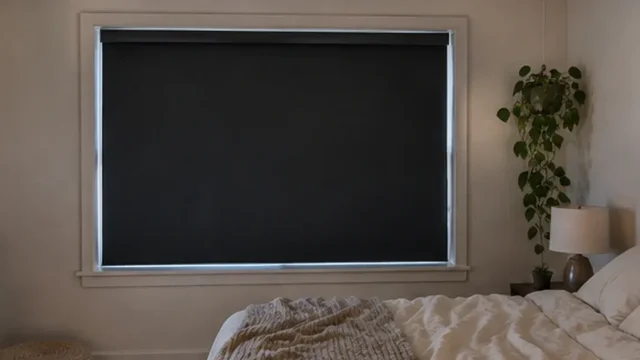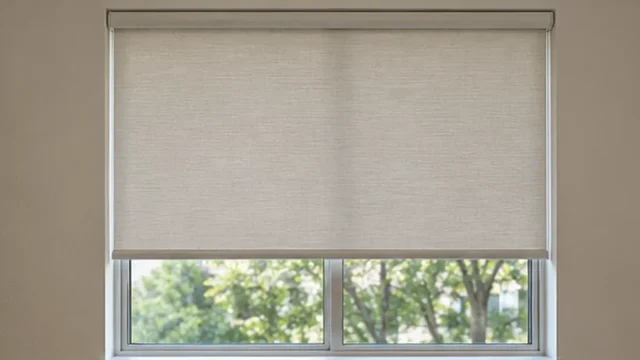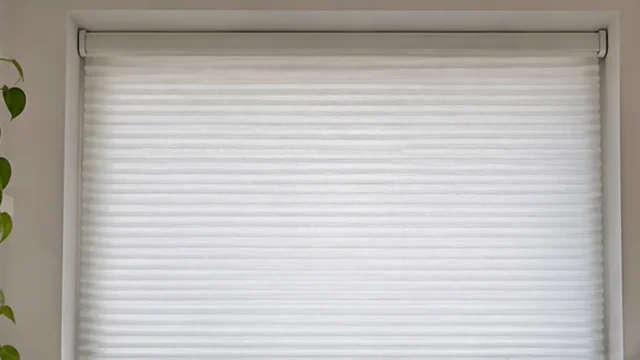
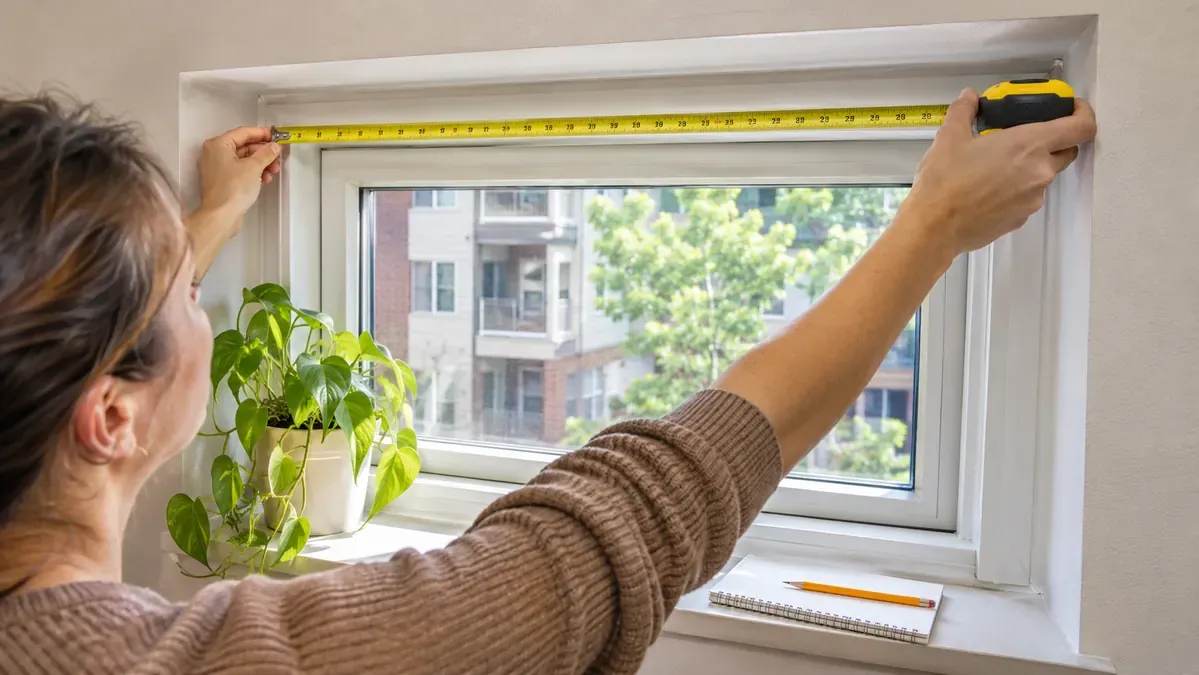
Here's how to measure for no drill blinds in one sentence: measure the window recess width at the top, middle, and bottom, measure the height on the left, center, and right, and check the depth, then use the smallest width and the size range your blind lists. No-drill blinds rely on tension, pressure, or clips, so precise measurements matter more than they do for screwed-in blinds. A quarter inch can decide whether a blind holds or falls.
Also read: Blinds Without Strings: Cordless No-Drill Options for Renters · Best No-Drill Window Shades for Renters (2026) – No Tools Window Shades Compared · Blackout Shades Light Gaps Fix: How to Block Every Edge Without Drilling · No-Tool, No-Screw Window Blinds – Easiest Installs Ranked
Quick answer
1. Use a steel tape measure, not a fabric one.
2. Measure width inside the recess at top, middle, and bottom. Record the smallest.
3. Measure height at left, center, and right. Record the longest (for length) unless the maker says otherwise.
4. Measure the recess depth and check for handles, cranks, and locks.
5. Check the product's width range (for tension-fit) or frame compatibility (for click-fit).
6. Measure to the nearest 1/8 inch and don't round up.
What you need
- Steel tape measure
- Pencil and paper or a phone note
- Small level (optional)
- A helper for tall windows
Inside mount vs outside mount
| Inside mount | Outside mount | |
|---|---|---|
| Where it sits | Inside the window recess | On the wall or frame face, covering the recess |
| No-drill method | Tension, pressure, click-fit | Adhesive brackets, over-frame hooks, tension rods spanning the frame |
| Best for | Recesses with enough depth | Shallow or no recess |
| Light gaps | Small gaps at sides | Overlap reduces gaps |
| Deposit risk | Low | Higher with adhesive on paint |
Most no-drill blinds are inside mount. If your window has no recess, see outside-mount options in Best No-Drill Blinds for Windows (Renter Guide).
How to measure for no drill blinds: inside mount measurement
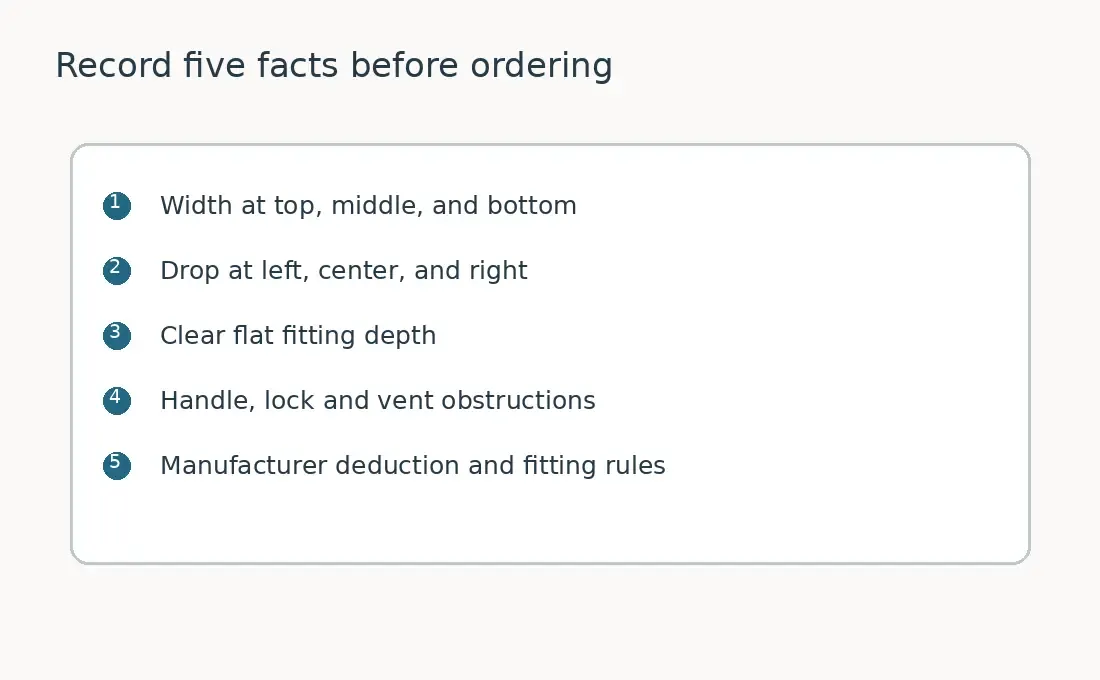
Step 1: Measure width in three places
Measure the inside of the recess from side to side at the top, middle, and bottom. Old rental windows are rarely square. Write down all three and use the smallest number. For tension-fit blinds, check that this width falls inside the product's listed range.
Step 2: Measure height in three places
Measure from the top of the recess to the sill on the left, center, and right. For length, most makers want the longest measurement so the blind reaches the sill everywhere. Check the specific product instructions.
Step 3: Measure depth
Window recess depth decides whether the headrail fits. Measure from the front edge of the recess to the window frame or glass. Then check the product's minimum mounting depth. Note anything that sticks out, like crank handles, locks, or window latches, because the headrail has to clear them.
Step 4: Check the sides for tension mounts
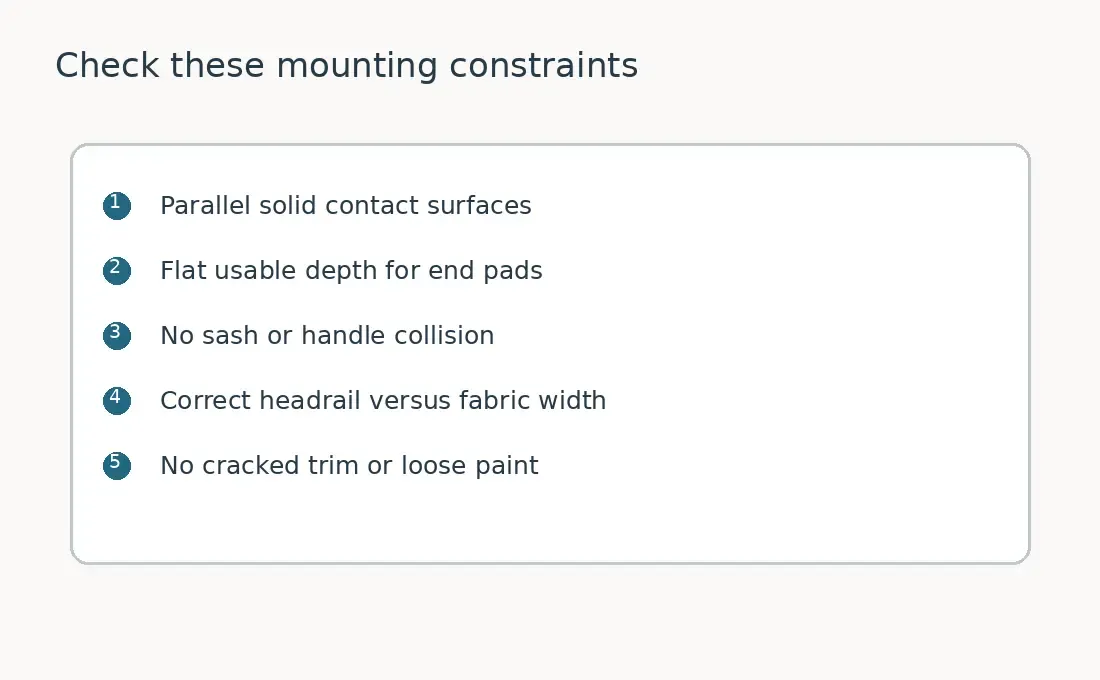
Tension and pressure blinds push against the sides of the recess. Check that both sides are:
- Solid (not cracked or crumbling plaster)
- Roughly parallel (width differs by less than about 1/4 inch from top to bottom)
- Clean and not freshly painted
Measuring for click-fit blinds
Click-fit blinds clip onto the glazing beads of uPVC windows. Measure:
- The glass width and height between the beads
- The bead depth, which must fit the brackets
- The angle of the bead (some brackets only fit certain profiles)
If your windows are wood or aluminum without suitable beads, click-fit won't work. See No-Drill Blinds for Tilt-and-Turn Windows: Installation Constraints.
Measuring for outside mount no-drill options
For adhesive brackets or tension rods outside the recess:
- Measure the width of the frame or recess, then add 1.5 to 3 inches on each side for overlap.
- Measure height from where the headrail will sit to the sill or just below it.
- Check that the wall or frame face is smooth for adhesive.
Measurement record template
| Window | Width top | Width middle | Width bottom | Height L | Height C | Height R | Depth | Obstructions | Order size |
|---|---|---|---|---|---|---|---|---|---|
| Bedroom | |||||||||
| Living room |
Common measuring mistakes
| Mistake | What happens | Fix |
|---|---|---|
| Measuring only once | Blind too wide at one spot or loose at another | Measure three places |
| Rounding up | Blind won't fit inside | Round down to the nearest 1/8 inch |
| Ignoring depth | Headrail sticks out and gets knocked | Measure depth and obstructions |
| Using a cloth tape | Stretch errors | Use a steel tape |
| Measuring the old blind | Copies its errors | Measure the window |
| Forgetting handles | Blind hits the crank | Note every obstruction |
If your blinds slip after installing, read How No-Drill Blinds Mount: Tension vs Pressure vs Click-Fit.
Measuring different window types
| Window type | What to measure | Tip |
|---|---|---|
| Double-hung | Recess width and height, depth past the sash locks | Locks often stick out; check headrail clearance |
| Sliding | Recess width and height | Make sure the blind won't block the slide track |
| Casement | Recess width, height, and crank handle depth | Cranks often block inside-mount blinds |
| Tilt-and-turn | Glass size between beads for click-fit | The sash opens inward, so frame-mounted blinds must move with it |
| Bay window | Each section separately | Treat each panel as its own window |
| Door glass | Glass size or door frame size | Use door-specific no-drill blinds |
Tall and wide windows
For windows over about 6 feet tall or 5 feet wide, check the product's maximum sizes and weight. Wide tension blinds can sag, and long cordless shades can be hard to lift. Two narrower blinds side by side often work better than one wide one.
Sills and obstructions
Note radiators, outlets, and window AC units near the window. A blind that reaches the sill may rest on a radiator, which can damage the fabric.
What if your window is out of square?
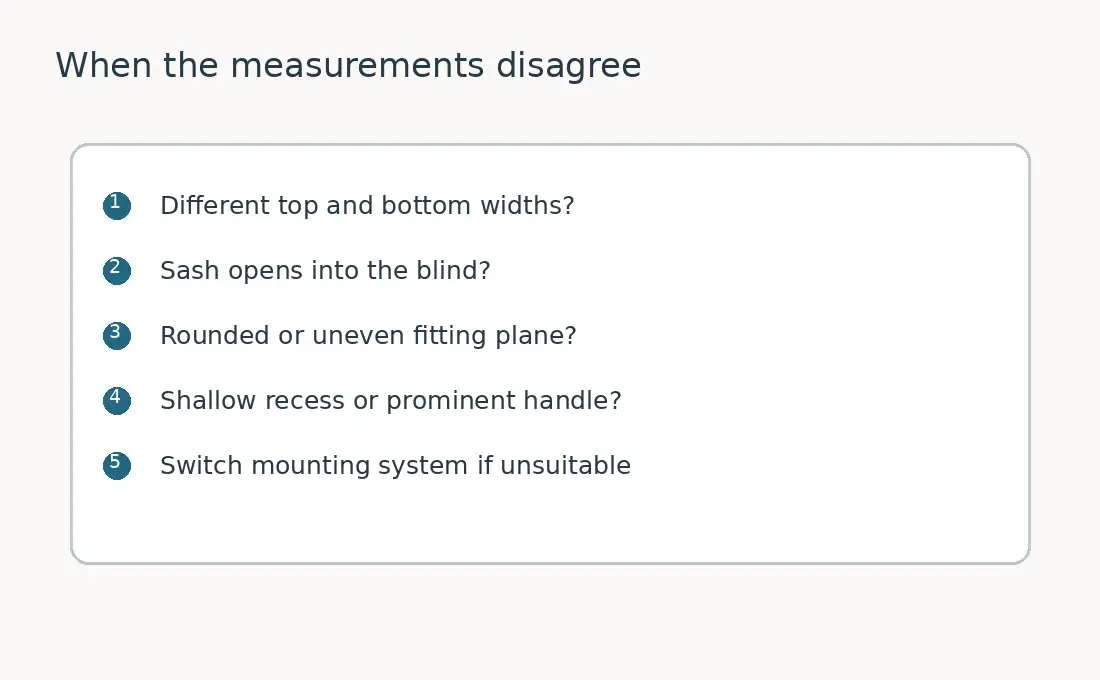
If the width differs by more than about 1/4 inch from top to bottom:
- Tension blinds may slip at the wider end. Set tension for the widest point, or mount at the narrowest section if possible.
- Consider an outside-mount option that covers the whole frame.
- Add a valance or curtain to hide uneven gaps.
A real renter scenario
Jo's living room window measures 35 1/4 inches at the top, 35 1/8 in the middle, and 34 7/8 at the bottom. The depth is 2 1/2 inches, and a window lock sticks out 3/4 inch at the center. She orders a tension-fit pleated shade with a range of 34 to 36 inches and a slim headrail that clears the lock. She mounts it near the top, where the sides are most even, and it hasn't moved in months.
Move-out notes
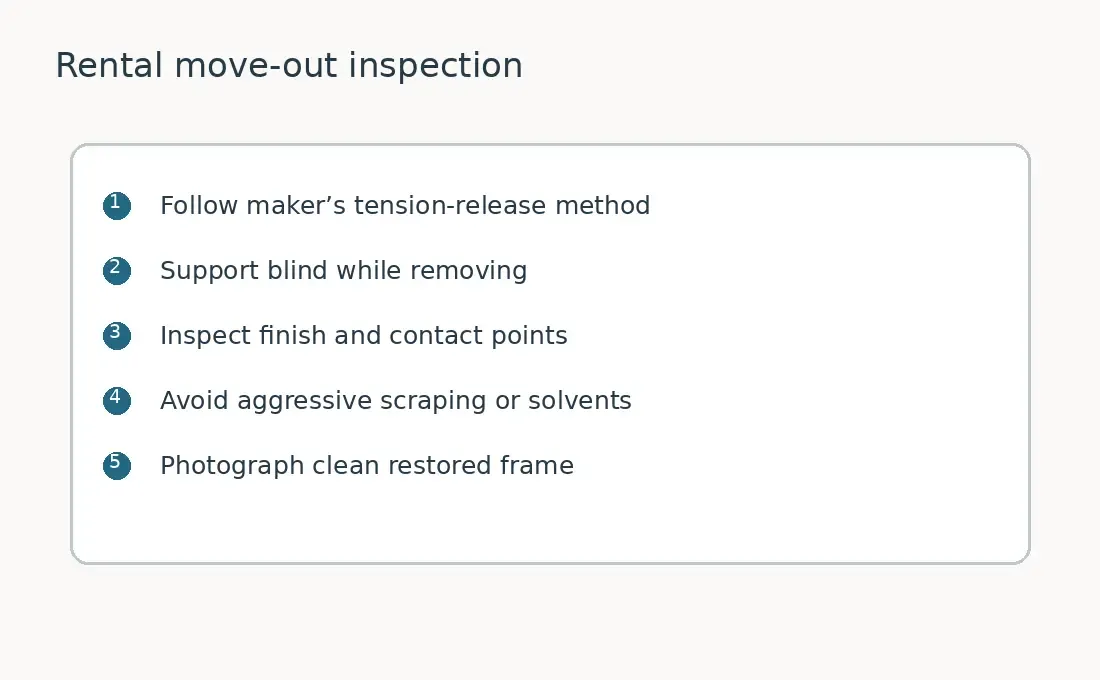
Keep your measurements in a note on your phone. If you move to a place with similar windows, you'll know if your blinds will fit. At move-out, remove blinds slowly, check for marks, and touch up if needed.
Questions
Frequently asked questions.
How do I measure for no drill blinds?
Measure the recess width at top, middle, and bottom (use the smallest), the height at three points, and the depth. Check the product's size range.
Should I round up or down when measuring blinds?
Round down to the nearest 1/8 inch for inside mounts so the blind fits.
How deep does a window recess need to be for no drill blinds?
It depends on the product. Check the minimum mounting depth listed by the maker.
Can I use no drill blinds on a window with no recess?
Use outside-mount options like adhesive brackets or tension rods spanning the frame, or a curtain.
Conclusion
Knowing how to measure for no drill blinds saves returns and keeps your blinds from falling. Measure in three places, check depth and obstructions, and match your numbers to the product's range. Then pick your blinds from Best No-Drill Blinds for Windows (Renter Guide).
Sources
- Manufacturer measuring guides for tension-fit and click-fit blinds