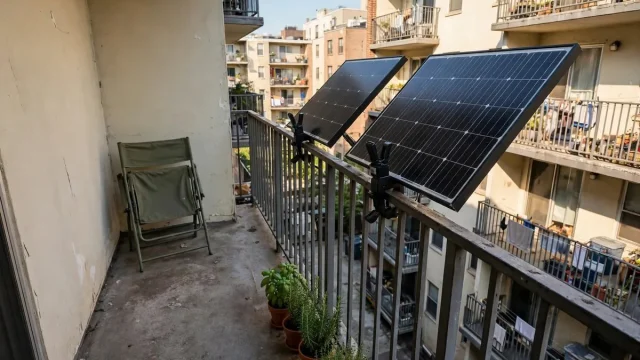
Balcony solar panel electricity output depends on panel size, direction, tilt, shade, and season. As a ballpark, a typical 800W balcony kit makes about 600 to 900 kWh a year in most US climates, according to EcoFlow, and sunny locations can reach 1,000 to 1,400 kWh. A single 400W panel might make 300 to 600 kWh a year. In winter and cloudy weather, output drops a lot, but it doesn't stop.
Also read: What States Allow Plug-In Solar? 2026 State-by-State Tracker · Best Solar Powered Outdoor Outlets for Balconies & Patios (2026) · Portable Power Station Runtime Calculator: How Long Will It Run Your Apartment Essentials?
Quick answer
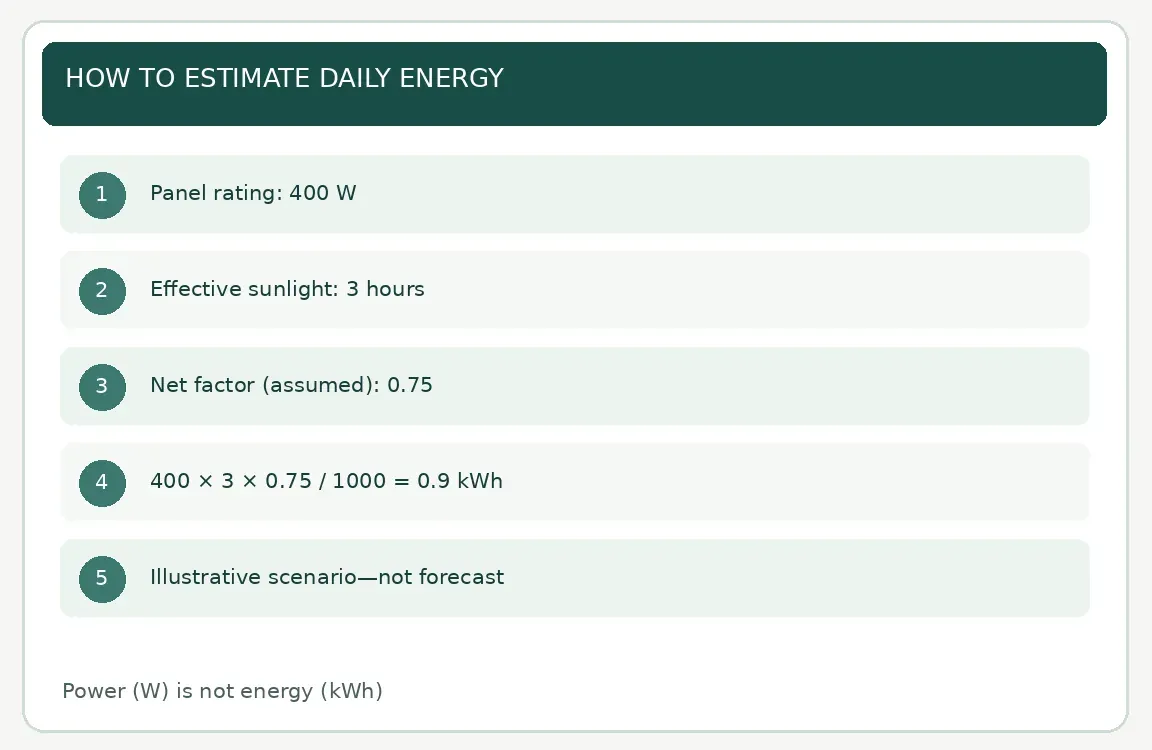
- Rough yearly output: kit watts × peak sun hours × 365 × about 0.75 (real-world losses) ÷ 1,000 = kWh per year.
- 800W kit: about 600 to 900 kWh/year in most US climates.
- Vertical railing mount: can lose around 30% compared with an ideal tilt.
- East or west facing: often 10% to 20% less than south.
- Winter: shorter days and low sun cut output sharply, though vertical panels do relatively better in winter.
The simple output formula (kWh per year balcony solar estimate)
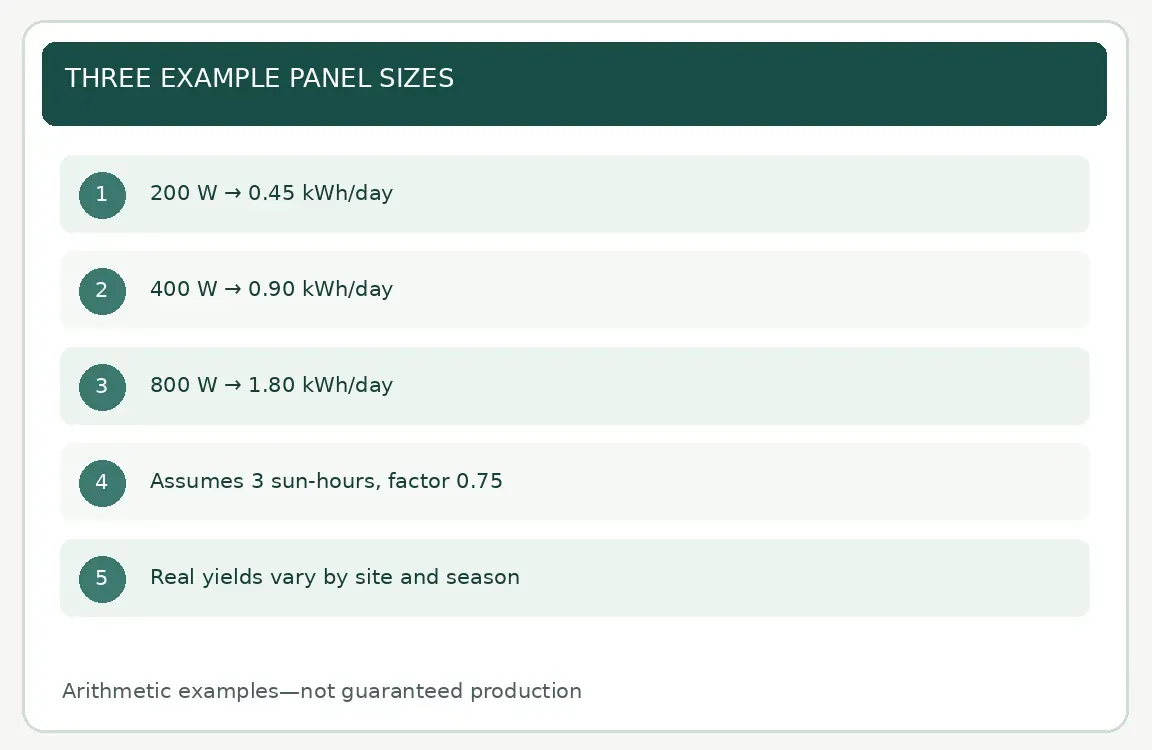
kWh per year ≈ panel watts × average peak sun hours per day × 365 × system factor ÷ 1,000
- Panel watts: the kit's rated DC watts.
- Peak sun hours: about 3 to 6 in most of the US, depending on location.
- System factor: about 0.7 to 0.8 for balcony setups, covering inverter losses, heat, dirt, and non-ideal angles. Use lower values for vertical or shaded installs.
Example: 800W × 4.5 peak sun hours × 365 × 0.75 ÷ 1,000 ≈ 985 kWh per year (good south-facing tilt). A vertical, partly shaded railing might be closer to 600 kWh.
Balcony solar panel electricity output by kit size
| Kit size | Typical yearly output (most US climates) | Monthly average |
|---|---|---|
| 180W | About 200 to 270 kWh | About 17 to 23 kWh |
| 400W | About 300 to 600 kWh | About 25 to 50 kWh |
| 800W (typical 800W balcony solar output) | About 600 to 900 kWh (up to 1,000 to 1,400 in sunny areas) | About 50 to 75 kWh |
| 1,200W | About 900 to 1,400 kWh | About 75 to 115 kWh |
Ranges are estimates from manufacturer and industry sources. Your balcony may be higher or lower.
What affects balcony solar output
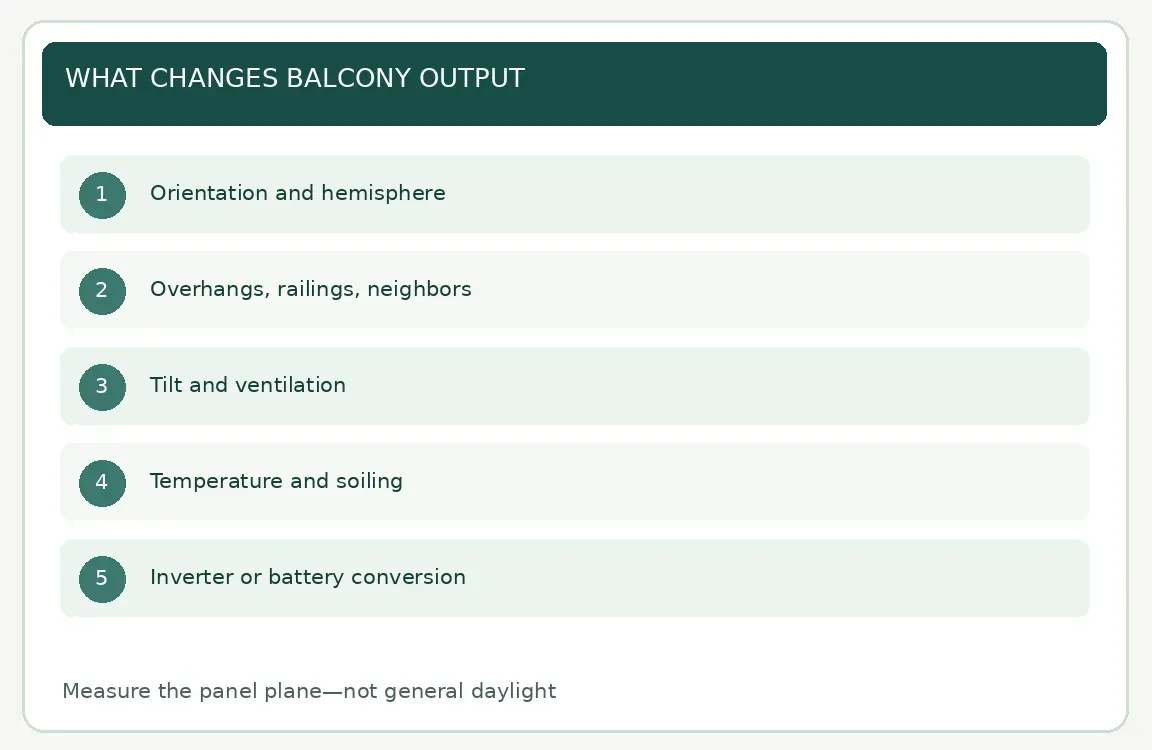
Direction
South-facing panels produce the most in the US. East or west facing panels often produce about 10% to 20% less, and north-facing much less. See How Balcony Direction and Shading Affect Solar Output.
Tilt
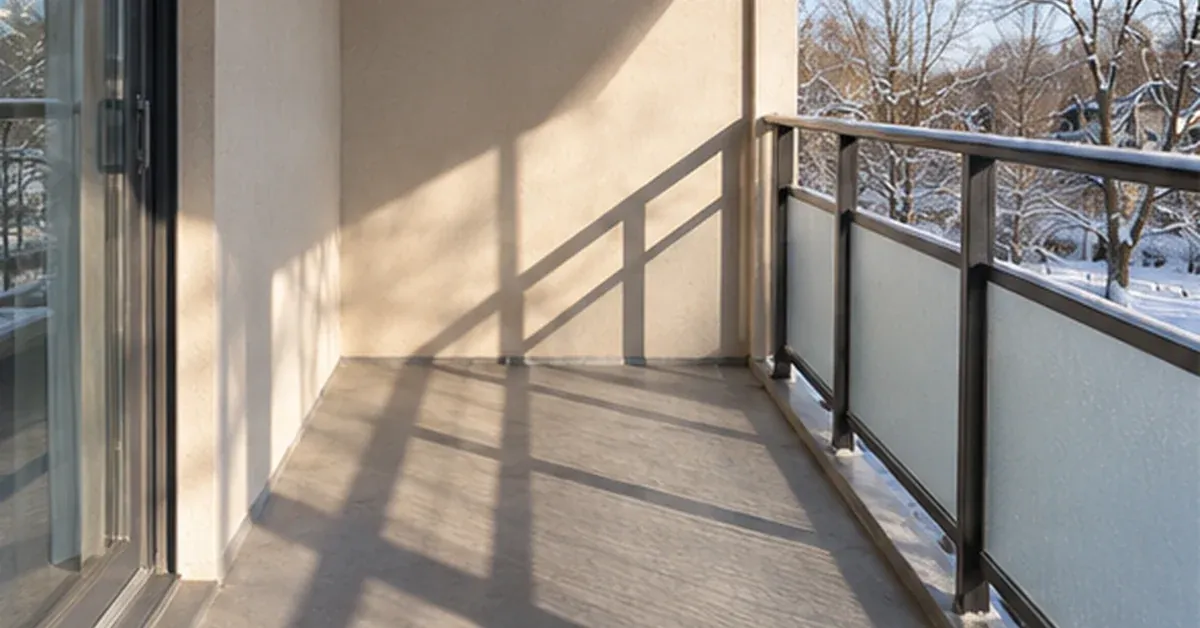
Balcony panels often hang vertically on railings. A vertical panel might lose around 30% of potential output compared with an optimal tilt, though it does relatively better in winter when the sun is low. Tilting panels 20 to 40 degrees, where allowed, usually helps.
Shade
Shade is the biggest output killer. Railings, the balcony above, trees, and nearby buildings can cut output sharply, even when only part of a panel is shaded.
Temperature and dirt
Panels lose some efficiency when hot. Dust and pollen reduce output too; see How to Clean Portable Solar Panels.
Balcony solar in winter and cloudy weather
Balcony solar winter output is lower because days are shorter and the sun is lower. Clouds reduce output but don't stop it entirely; panels still produce from diffuse light.
| Season (northern US) | Relative output |
|---|---|
| Summer | Highest |
| Spring and fall | Moderate |
| Winter | Lowest, often a fraction of summer |
Tips for winter and cloudy weather:
- Clear snow gently, never with sharp tools.
- Tilt panels more steeply if your mount allows it.
- Vertical railing panels catch low winter sun relatively well.
- Expect most of your yearly kWh to come from spring through fall.
How to measure your actual output
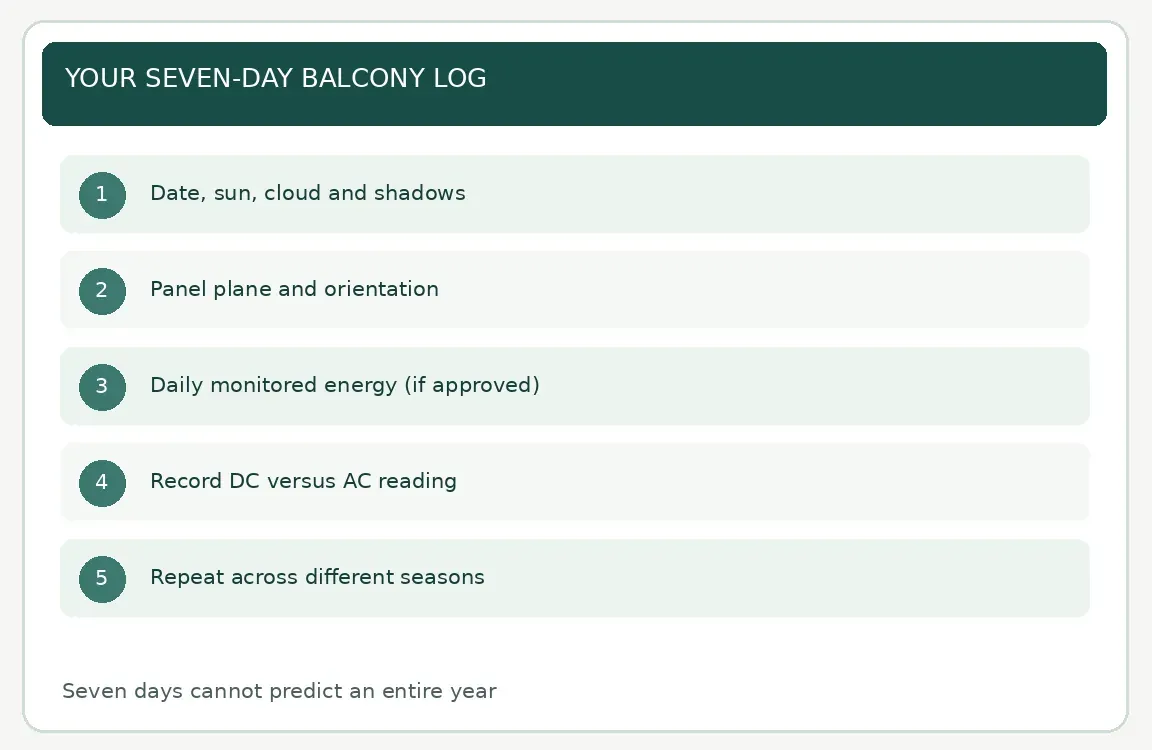
- Most microinverters have an app that shows daily and lifetime kWh.
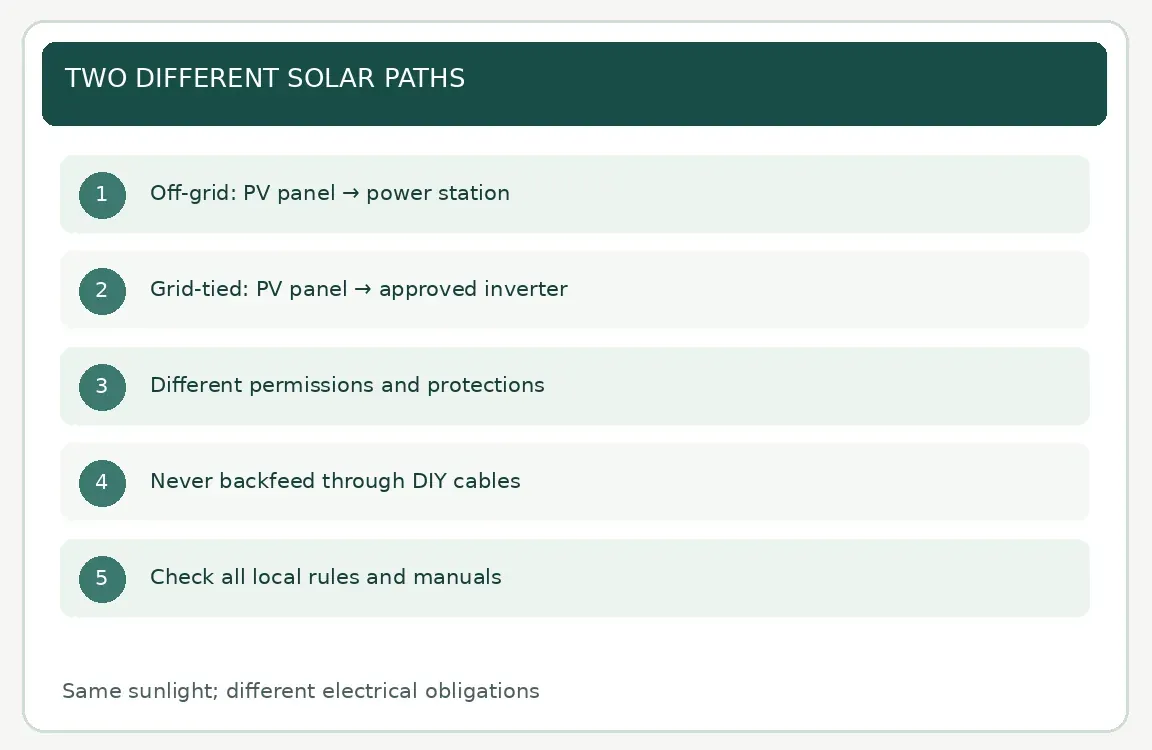
- A smart plug with energy monitoring won't measure solar output correctly unless it's designed for bidirectional power; use the inverter's app or a dedicated meter.
- Keep a simple log: date, weather, kWh. Patterns show you where shade hurts.
What does that output save?
Multiply kWh by your electricity rate. At 18 cents per kWh, 750 kWh a year saves about $135. EnergySage estimates typical balcony solar savings of about $13 to $50 a month, higher in high-rate states. Run your numbers in Balcony Solar Payback Calculator for Renters.
A real renter scenario
Ravi has a south-west-facing third-floor balcony in Sacramento with a 400W kit clamped vertically to the railing. His inverter app shows about 1.4 kWh on sunny summer days and under 0.5 kWh on cloudy winter days. Over the year he logs a little over 400 kWh, which fits the estimates for a vertical mount with some afternoon shade from a tree.
Rough output by climate
The same 800W kit makes very different amounts of power in different places. These examples use the formula above with a 0.75 system factor and an assumed average number of peak sun hours:
| Climate example | Assumed peak sun hours | Estimated yearly output (800W) |
|---|---|---|
| Cloudy, northern | 3.5 | About 770 kWh |
| Average US | 4.5 | About 985 kWh |
| Sunny Southwest | 6 | About 1,315 kWh |
Treat these as ideal-tilt numbers. A vertical railing mount or partial shade can cut them by a third or more. For a free estimate based on your address, direction, and tilt, try NREL's PVWatts calculator.
Mistakes to avoid
- Using the brochure number. Manufacturer figures often assume ideal tilt and no shade.
- Ignoring the balcony above. Overhang shade can wipe out midday summer output.
- Measuring with a regular smart plug. Use the inverter's app instead.
- Judging the kit on one cloudy week. Look at a full month, ideally a full season.
- Forgetting to clean the panels. Dust and pollen quietly cut output.
Questions
Frequently asked questions.
How much power does a balcony solar panel produce?
A single 400W panel often makes about 300 to 600 kWh a year, depending on location, direction, tilt, and shade. An 800W kit often makes about 600 to 900 kWh.
Do balcony solar panels work in winter?
Yes, but output drops because of short days and low sun. Most yearly production comes from spring through fall.
Do balcony solar panels work on cloudy days?
Yes, at reduced output. Panels still produce from diffuse light.
How can I increase my balcony solar output?
Reduce shade, tilt panels where allowed, face them as close to south as possible, and keep them clean.
Conclusion
Balcony solar panel electricity output is modest but real: plan on roughly 600 to 900 kWh a year from an 800W kit in most US climates, less with shade or vertical mounts. Use the formula, log your results, and set realistic expectations. For the full renter guide, go back to Solar Panels for Apartments & Renters: Complete Guide or Balcony Solar for Renters: What It Is, Laws, Cost & Setup.
Sources
- EcoFlow: What is balcony solar (800W yearly output estimate)
- Jackery: Balcony solar power (vertical mounting loss)
- EnergySage: Plug-in and balcony solar savings
- SolarReviews: Panel direction and output